
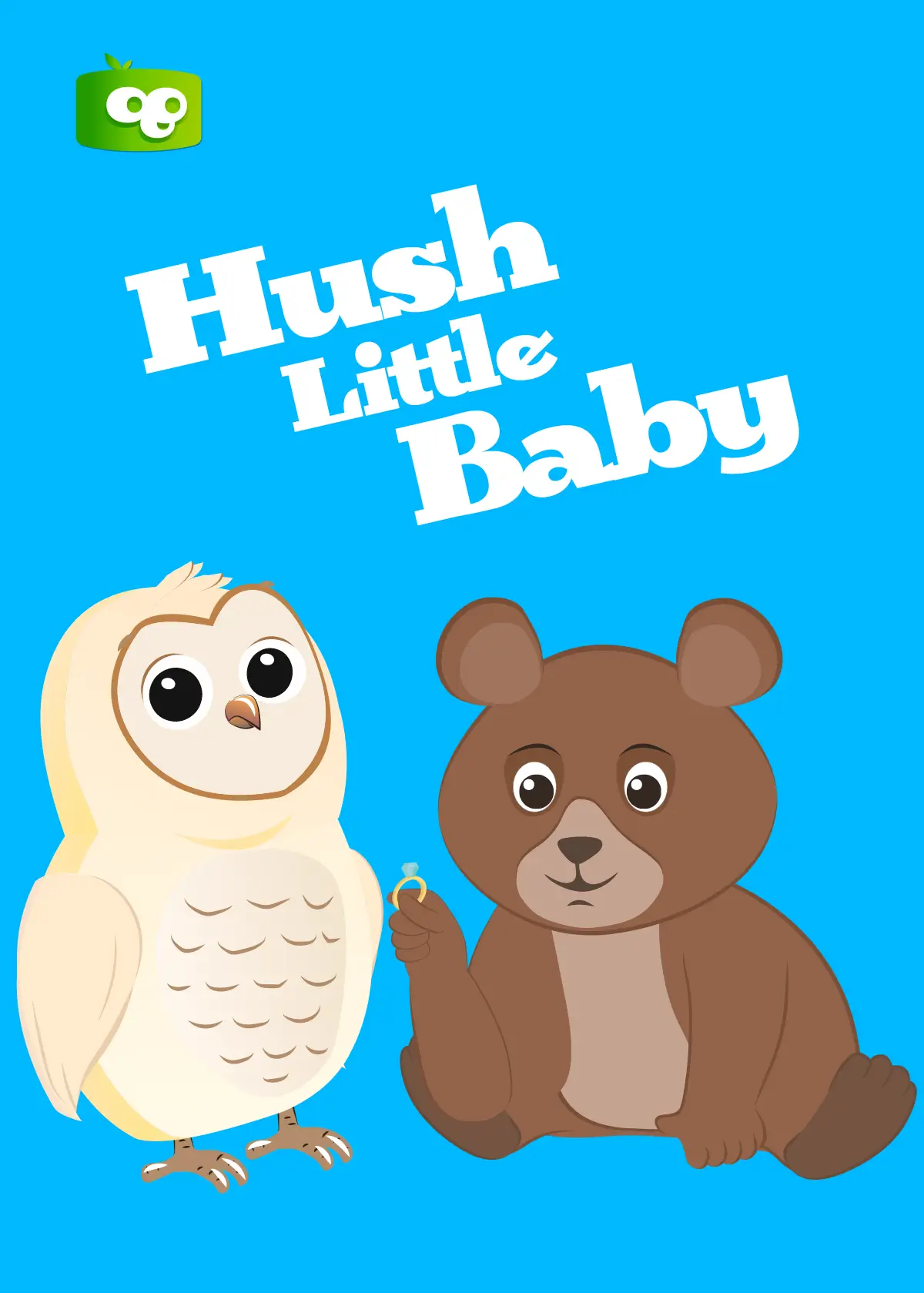
What's Hush Little Baby About?
This gentle lullaby takes your child on a soothing journey through rhyming verses featuring friendly animal characters. Your little one will absorb calming rhythms while building early language awareness and emotional regulation skills.
2 minutes
Ages 1-6
Skill: Calming routines & rhyme recognition
Your kid watches gentle animals sing a soothing lullaby. You get 2 minutes to [take a breath yourself].
Soft, friendly animal characters from the Kokotree universe gently sing this classic lullaby with calming visuals. The repetitive melody and rhyming patterns create a peaceful atmosphere while little eyes follow along with the comforting imagery.
What your child learns:
This lullaby introduces foundational literacy concepts through gentle repetition and rhyming word pairs. Children naturally absorb language patterns while practicing emotional regulation and calm-down routines.
- Recognizes rhyming word pairs (word/bird, ring/sing)
- Practices self-soothing and calming techniques
- Builds listening skills through melodic patterns
- Develops early phonemic awareness
- Associates bedtime routines with positive feelings
They'll use these skills when:
- Settling down for nap time or bedtime independently
- Recognizing rhymes in books you read together
- Calming themselves when feeling overstimulated
- Singing along to songs and noticing word patterns
The Story (what keeps them watching)
Friendly Kokotree animal characters guide little ones through this beloved lullaby with warm, gentle visuals. Each verse introduces playful items—from a songbird to a friendly goat named Rover—all wrapped in soothing melodies. The repetitive structure helps children anticipate what comes next, building confidence while the calming rhythm naturally slows their breathing and prepares them for rest. The sweet ending reminds every child they're loved and cherished.
How We Teach It (the clever part)
- First 45 seconds: The lullaby begins softly, establishing the calming melody and introducing the first rhyming pairs. Children's attention is captured by gentle visuals and the predictable rhythm.
- Seconds 45-90: The verses continue with new rhyming words, each building on the pattern. Children begin anticipating the rhymes and may start mouthing along.
- Final 38 seconds: The lullaby winds down with reassuring words of love, reinforcing emotional security and signaling rest time.
Teaching trick: The repetitive "Mama's gonna..." phrase creates a predictable pattern that helps toddlers feel secure while their brains naturally pick up on the rhyming endings of each verse.
After Watching: Quick Wins to Reinforce Learning
- Mealtime activity: "What rhymes with spoon?" Point to items and find silly rhymes together. (Practices phonemic awareness in a playful way)
- Car/travel activity: Hum the melody together and let your child fill in rhyming words they remember. (Reinforces memory and rhythm recognition)
- Bedtime activity: Softly sing or hum the tune while tucking in, asking "What comes next?" (Builds prediction skills and calming associations)
- Anytime activity: Create your own silly verse: "Mama's gonna find you a friendly frog, and if that frog wants to jog..." (Extends rhyming practice creatively)
When Kids Get Stuck. And How to Help.
- "My child doesn't seem to notice the rhymes yet." - Totally normal for ages 1-3! Their brains are absorbing the patterns even without conscious recognition. Keep singing—one day they'll surprise you by finishing a rhyme on their own.
- "They get too energized instead of calm." - Try dimming lights and using the video specifically during wind-down routines. Pairing it consistently with calm time helps their brain make the connection.
- "Is this actually educational or just entertainment?" - Lullabies are powerful learning tools! The repetition builds neural pathways for language, and the rhyming structure is foundational for reading readiness. You're building their literacy brain while they relax.
What Your Child Will Learn
Prerequisites and Building Blocks
This lullaby is perfect for children at any stage—no prerequisites needed! It builds on basic listening skills and supports the development of phonemic awareness that will later help with phonics instruction. For children who have watched other Kokotree music videos, this adds to their growing library of rhythmic patterns and rhyming experiences. It pairs beautifully with shape and color videos, as the calm state it creates optimizes learning readiness.
Cognitive Development and Teaching Methodology
Lullabies leverage the brain's natural response to repetitive, melodic patterns. For ages 1-6, this approach works because young children learn through repetition and emotional connection. The video addresses auditory learners through melody, visual learners through gentle imagery, and kinesthetic learners who may rock or sway along. The predictable structure reduces cognitive load, allowing children to focus on language patterns.
Alignment with Educational Standards
This video supports early literacy standards including phonological awareness benchmarks found in kindergarten readiness assessments. Children develop the ability to recognize and produce rhyming words—a key indicator measured in early childhood assessments. The self-regulation component aligns with social-emotional learning standards that teachers expect children to develop before entering formal schooling.
Extended Learning Opportunities
Pair this video with Kokotree's rhyming games and phonics activities for extended practice. Create a "rhyme time" routine where you watch together, then find rhyming objects around the house. Print simple rhyming word cards to match during quiet time. The Kokotree app includes interactive rhyming activities that build on this foundation, turning passive listening into active learning.
Transcript Highlights
- Opening establishes the calming tone and introduces the first rhyme pair
- Middle verses demonstrate the consistent rhyming pattern with words like "sing/ring" and "brass/glass"
- The gentle repetition of the melodic phrase creates predictability
- Closing verses reinforce emotional security and love
Character Development and Story Arc
The Kokotree animal characters in this video model peaceful, nurturing behavior throughout. Their gentle presence demonstrates how to create calm environments and shows children that rest time is safe and loving. The consistent, soothing demeanor of the characters helps children associate the learning experience with security and comfort—essential for optimal brain development and learning readiness.
The Science of Lullabies: Early Language Development Deep Dive
Lullabies are among humanity's oldest teaching tools, and modern research confirms what caregivers have known intuitively for generations: singing to young children powerfully supports brain development. The rhyming structure in this lullaby directly builds phonological awareness—the ability to hear and manipulate sounds in language—which is the strongest predictor of later reading success.
When children hear rhyming pairs repeatedly, their brains begin categorizing sounds and recognizing patterns. This is pre-reading work happening naturally! The predictable melody also supports working memory development, as children learn to anticipate what comes next.
Beyond literacy, lullabies serve crucial emotional regulation functions. The slow tempo (typically 60-80 beats per minute) naturally synchronizes with a resting heart rate, helping children's bodies physically calm down. This isn't just nice—it's neuroscience. When children are calm, their prefrontal cortex (the learning center) functions optimally.
The repetitive structure also builds what educators call "pattern recognition"—a foundational math skill. Children who can predict "what comes next" in a song are exercising the same mental muscles they'll use for number sequences and mathematical reasoning.
For multilingual families, lullabies transcend language barriers. The melodic patterns and emotional warmth communicate love and security regardless of the words, making this video appropriate for diverse global audiences while still building English language exposure.