

Preschool App for Families with a New Baby
You’re nursing the baby for the third time this morning, and your older child is pulling at your leg asking for attention you simply can’t give right now. The Kokotree preschool app is exactly what you need: educational content that holds your older child’s attention during nursing sessions, diaper changes, and all those moments when the newborn’s needs must come first. This isn’t random YouTube videos—it’s a complete curriculum in an ad-free, safe environment. The newborn phase is survival mode. Kokotree makes that survival easier and less guilty.

Why Having a Preschooler and a Newborn Feels Impossible—And What Actually Helps
Nobody prepares you for how overwhelming it is. The nursing sessions taking 20–40 minutes, happening 8–12 times a day. The sleep deprivation making everything harder. And through all of it, your older child—who was the center of your world just weeks ago—suddenly competing for attention they used to get automatically.
Your Older Child Is Struggling Too
Your preschooler doesn’t understand why you can’t play right now. They don’t understand why the baby gets held constantly while they’re told to wait. Their world has been completely upended, and they don’t have the words or emotional tools to process it.
So they act out. They regress. They demand. Not because they’re bad kids—because they’re dealing with the biggest transition of their young lives and they need connection they can’t get right now.
You’re Drowning in Guilt
And you? You’re trying to bond with your newborn while not neglecting your older child. The guilt is constant:
- Guilt about attention to the baby when your older child needs you
- Guilt about attention not given to your older child because the baby needs you
- Guilt about the screen time you’re using just to survive the day
It feels like you’re failing everyone, including yourself.
Kokotree: Transform One Guilt Into Something Good
Kokotree doesn’t solve the impossible math of having more children than hands. But it transforms one source of guilt—the screen time—into something you can actually feel good about.
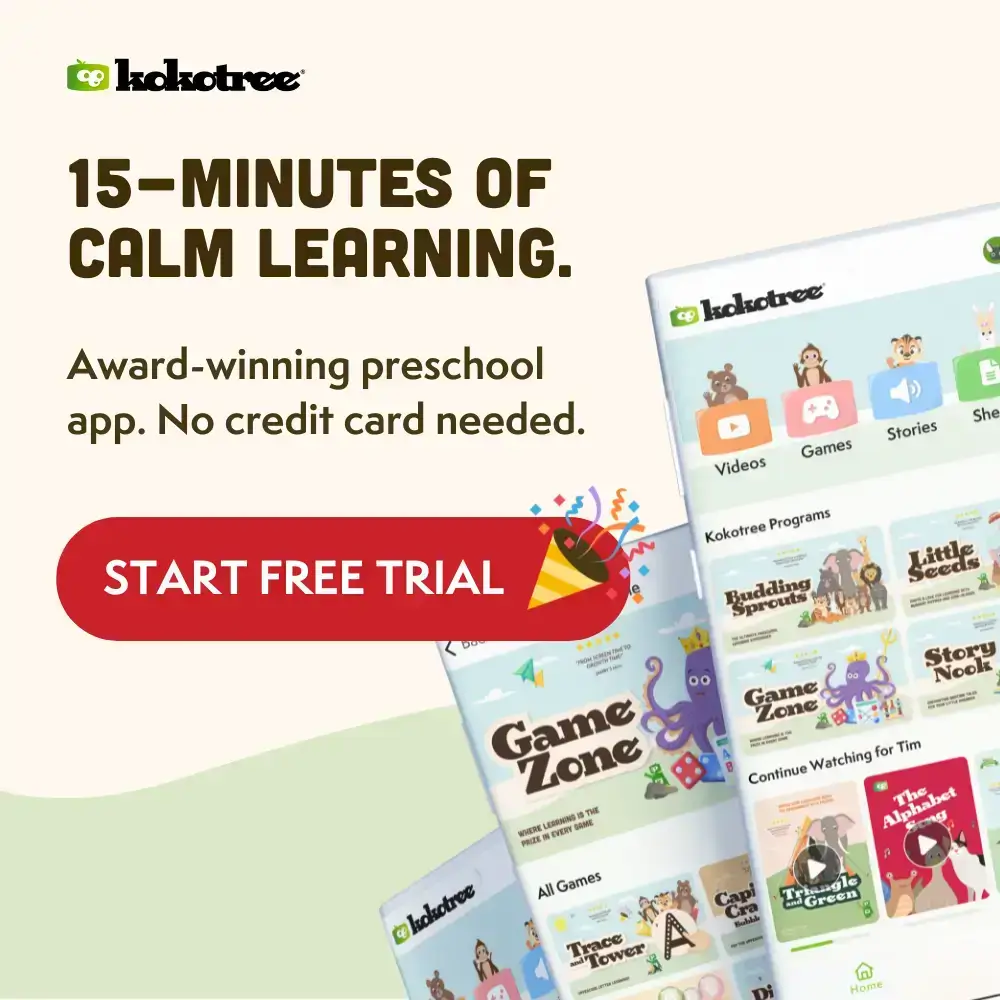
When your older child watches Kokotree during nursing, they’re not just being occupied. They’re learning. They’re engaging with a curriculum covering phonics, math, science, social-emotional skills, and creativity. Real educational content designed by early childhood specialists.
That matters. Especially now, when everything else feels like failure.
Why Kokotree Works When Random Videos Make Things Worse
In survival mode, it’s tempting to grab whatever works. YouTube seems easy—until it creates more problems.
The Problems with Random Videos
- Infinite scroll: Algorithm-driven content leads from one video to another without natural endpoints. Your child might watch for an hour because nothing signals “time to stop.”
- Variable quality: Some videos are educational. Others are loud, chaotic, overstimulating garbage that leaves your child wired instead of calm.
- No curriculum: Hours of watching without developing actual skills. Time passes, but learning doesn’t happen.
- Ads and surprises: Interruptions that jar your child and might expose them to inappropriate content.
During the newborn phase, you need things that make your life easier, not harder. Random videos often make things harder.
What Kokotree Provides Instead
- Content designed by educators: Every video has learning objectives. Your child is actually developing skills.
- Structured learning paths: Progressive skill development, not random content.
- Natural session lengths: 15–20 minute sessions that align with nursing/feeding duration.
- Completely ad-free: Nothing unexpected. No jarring interruptions.
- Predictable routine: When everything else has been disrupted, Kokotree learning time can be consistent and reliable.
The Specific Moments When Kokotree Becomes Essential
Nursing and Feeding Sessions
Each feeding takes 20–40 minutes, happening 8–12 times daily in the newborn phase. That’s 4–8 hours per day when you’re physically occupied with the baby. A Kokotree session matches feeding duration almost perfectly, providing educational engagement while you focus on the newborn.
When the Baby Finally Sleeps
The baby is down. You desperately need to shower, eat, or maybe even rest. But your older child needs attention too. Kokotree provides quiet, focused engagement that keeps your preschooler happily occupied while you take care of basic needs.
Emotional Regulation Moments
When your older child is struggling—acting out, feeling jealous, having big feelings about the baby—the social-emotional content provides age-appropriate stories about feelings, change, and being a big sibling. Sometimes a video about emotions helps children process what they’re feeling better than a conversation they’re not ready to have.
The Framing Matters Enormously
How you present Kokotree to your older child shapes their experience:
- “Go watch something while I deal with the baby” → Your child feels dismissed and secondary to the baby.
- “This is YOUR special learning time” → Your child feels valued and like they have something that’s theirs.
Kokotree can become their special activity—something the baby is too little for. That reframe transforms screen time from a rejection into a privilege.

Preschool App for New Baby Families vs. Random Screen Time: What Actually Helps?
| Factor | Kokotree | Random Videos |
|---|---|---|
| Duration Match | 15–20 min sessions align with feeding times. | Infinite scroll. No natural stopping point. |
| Educational Value | Real curriculum. Actual skill development. | Variable. Often no learning at all. |
| After-Effect | Calm, regulated, ready for next activity. | Often wired, overstimulated, harder to manage. |
| Parent Guilt | “My child is learning.” | “My child is just being occupied.” |
| Sibling Framing | “Your special learning time.” | “Something to keep you busy.” |
| Safety | Ad-free. Nothing unexpected. | Ads, algorithm recommendations, surprises. |
Helping Your Older Child Feel Special, Not Replaced
The hardest part of the newborn phase isn’t the sleeplessness—it’s watching your older child struggle with feeling replaced. Kokotree can become part of your strategy for helping them feel special.
Position Kokotree as Exclusively Theirs
Make Kokotree something the baby can’t do yet. “This is YOUR show. The baby is too little for learning videos.” Your older child gets something the baby doesn’t have. The progress they make—letters learned, concepts understood—becomes evidence of how big and capable they are compared to the baby.
Create Rituals Around Learning Time
- A dedicated spot: “This is where we do your learning time.”
- A special blanket: Something that’s theirs during Kokotree.
- A routine of setting up together: Even if it’s just 30 seconds, this ritual transforms screen time from reactive measure into planned, valued activity.
These rituals help your older child feel like Kokotree time is intentional and special, not just a way to get them out of your hair.
Watch Together When You Can
When the baby allows—during a nap, when another caregiver is present—occasionally watch Kokotree with your older child. Ask questions, engage with the content, make it a connection activity. These moments don’t have to happen often, but they reinforce that Kokotree time is valuable, not just convenient.
What Parents with New Babies Say About Kokotree
“Kokotree saved my sanity during maternity leave. Every nursing session became my older daughter’s ‘learning time.’ She actually looked forward to feeding times because it meant Kokotree. That reframe was everything.” — Mom of a newborn and 3-year-old
“My son was so jealous of the baby. Having Kokotree as ‘his special thing’ helped him feel less displaced. It was something he could do that the baby couldn’t, and he was proud of what he was learning.” — Mom of a newborn and 4-year-old
“The social-emotional content was unexpected gold. There are videos about feelings and being a big sibling. I could tell they were helping her process what she was feeling about her new brother.” — Mom of a newborn and 3-year-old

Frequently Asked Questions for Families with New Babies
Is it okay to use this much screen time during the newborn phase?
The newborn phase is survival mode, and perfect parenting isn’t the standard—survival is. The AAP distinguishes between passive entertainment and high-quality educational content. Kokotree is firmly educational. Using educational content during feeding sessions is a reasonable adaptation to extraordinary circumstances that benefit your older child.
How do I prevent my older child from feeling like screen time is just to get rid of them?
Frame Kokotree as their special activity, not a distraction. Create positive rituals around it. Occasionally watch together when circumstances allow. The positioning matters as much as the content. “Your special learning time” feels completely different than “go watch something while I deal with the baby.”
Can my older child use Kokotree completely independently?
Yes. Once you set up their profile, children as young as 2–3 can navigate and watch independently. The safe environment means nothing inappropriate can be accessed, so you don’t need to hover while nursing or caring for the baby.
When can the baby start using Kokotree too?
Kokotree’s Little Seeds program is designed for children starting at age 1. When your baby reaches that age, they can have their own profile—but by then, your older child will have had Kokotree as “their thing” for a while, which helps maintain that special feeling.
Survive the Newborn Phase Without Sacrificing Your Older Child’s Learning
You’re in one of the hardest phases of parenting. The guilt you feel about screen time, about divided attention—that guilt isn’t helping anyone. You’re doing the best you can under impossible circumstances. Kokotree lets you do a little better. Your older child gets educational content during moments when you can’t give them attention. You get the break you need. Screen time transforms from guilt into actual learning.
Start Your Free 7-Day Trial — No Credit Card Required → Join 5,000+ families who have found a calmer, smarter way to learn.