
What's Friendship Is Joy About?
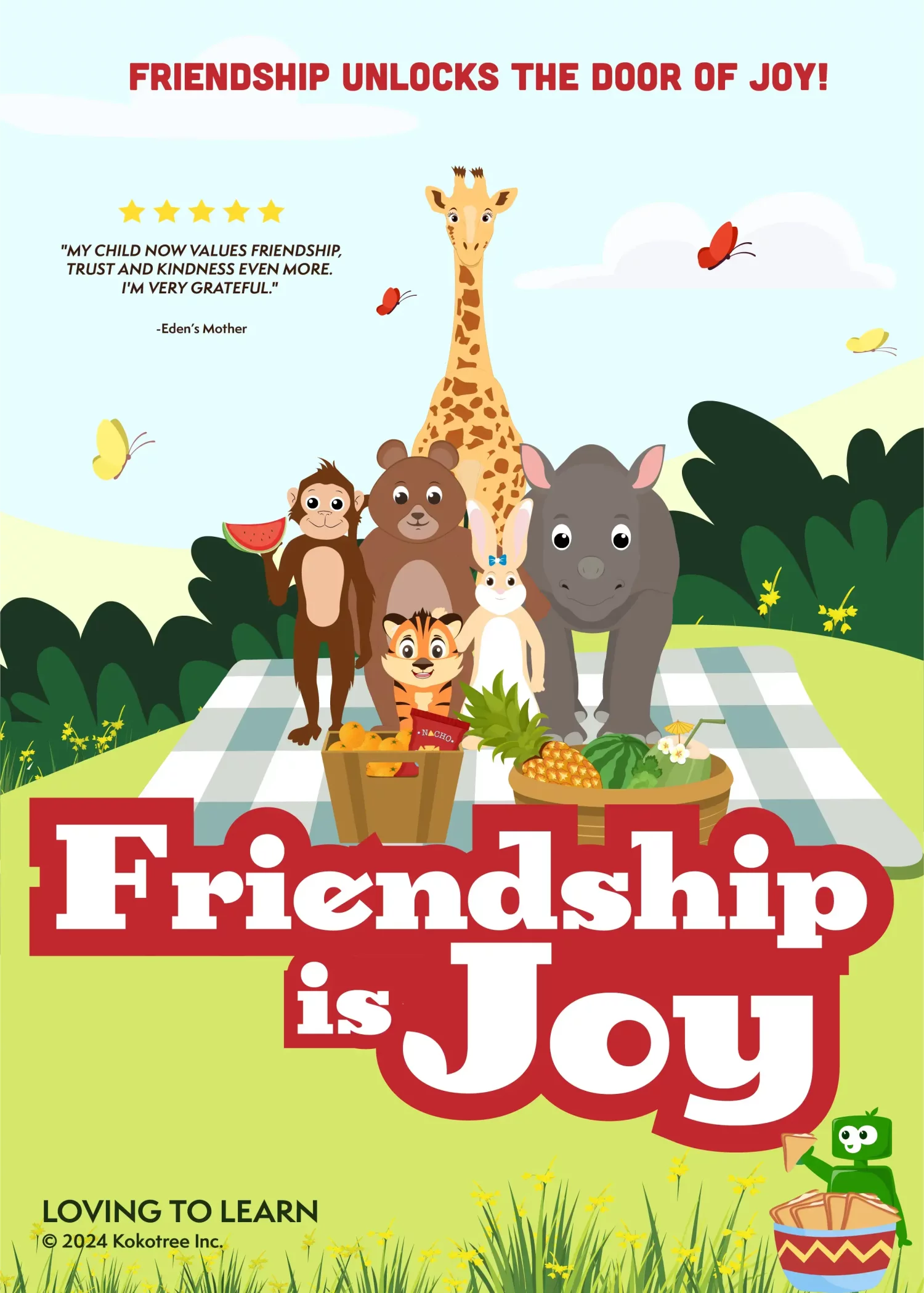
Your child joins the Kokotree class for a cozy riverside picnic and a touching story about friends who go above and beyond to help someone feel better. They'll learn what it truly means to be a caring friend and discover creative ways to spread joy!
6 minutes
Ages 3-6
Skill: Understanding friendship and kindness
Your kid watches friendly animals learn about caring for friends. You get 6 minutes to enjoy your coffee while it's still warm.
Miss Meera gathers Bobby Bear, Maddy Monkey, Ruby, and the rest of the Kokotree class around for storytime during their riverside picnic. She tells an engaging tale about a boy named Joy whose friends dress up in silly animal costumes to make him laugh and feel better when he's sick. The story unfolds with delightful surprises—a panda chewing sugarcane, a monkey in a diaper blowing balloons, and a dog reading a newspaper with glasses!
What your child learns:
This video teaches children that friendship means showing up for others, especially during difficult times. Kids discover that small acts of creativity and kindness can make a big difference in how someone feels.
- Recognizing acts of kindness and caring
- Understanding that friends help each other feel better
- Learning creative ways to cheer someone up
- Appreciating the friends in their own life
- Connecting laughter and happiness to feeling good
They'll use these skills when:
- A friend at preschool is feeling sad or left out
- A sibling or family member isn't feeling well
- Making get-well cards or drawings for someone they care about
- Deciding how to include others in play and make them smile
The Story (what keeps them watching)
It's picnic time by the river! Bobby Bear munches his honey-dipped jam sandwich while Maddy Monkey enjoys banana cream pie. Miss Meera gathers everyone for a special story about a boy named Joy who gets very sick and can't see his friends. But wait—strange things start appearing outside his window! A panda? A monkey in a diaper? A dog reading a newspaper?! Joy laughs so hard he starts feeling better. The twist? His clever friends were dressing up in costumes the whole time just to cheer him up! The Kokotree class learns that true friends find creative ways to help each other.
How We Teach It (the clever part)
- First 2 minutes: Sets up the cozy picnic scene and introduces the concept of storytelling about friendship. Children are drawn in by the relatable setting and yummy food descriptions.
- Minutes 2-5: The story builds curiosity with increasingly silly animal appearances outside Joy's window. Each surprise reinforces how creativity and effort can bring joy to others.
- Final 1 minute: The heartwarming reveal shows that Joy's friends were behind everything, followed by Miss Meera's gentle lesson about being thankful for friends who make our lives better.
Teaching trick: The video uses mystery and surprise to keep kids engaged—they're wondering "why are these silly animals appearing?" right alongside Joy, making the friendship reveal extra meaningful and memorable.
After Watching: Quick Wins to Reinforce Learning
- Mealtime activity: "Can you think of something silly that would make your friend laugh?" (Practices creative thinking and considering others' feelings)
- Car/travel activity: "Let's play pretend—if your friend was feeling sad, what funny animal would you dress up as?" (Reinforces the story's lesson about creative kindness)
- Bedtime activity: "Who is a friend you're thankful for? What do they do that makes you happy?" (Builds gratitude and awareness of friendship qualities)
- Anytime activity: Draw a silly picture together to give to someone who needs cheering up. (Turns the lesson into real-world action)
When Kids Get Stuck. And How to Help.
- "My child doesn't know how to help when someone is sad" - That's completely normal at this age! Start small by suggesting simple actions like drawing a picture or sharing a toy. The video shows that even silly ideas can make someone feel better.
- "They seem confused about why the friends dressed up" - Ask "How did Joy feel when he saw the funny animals?" Help them connect that making someone laugh is a way of showing you care about them.
- "My child is shy about reaching out to friends" - Reassure them that being a good friend doesn't require big gestures. Even a smile or wave counts! Practice small friendly actions at home first.
What Your Child Will Learn
Prerequisites and Building Blocks
This video is ideal for children who have basic understanding of emotions like happy and sad. It builds on foundational social awareness developed through earlier Kokotree content about playing together and being kind. Children benefit most when they've had some experience with peer relationships, whether at preschool, playgroups, or with siblings. The storytelling format requires basic attention span for narrative sequences, making this perfect for children ready to follow a simple plot with a beginning, middle, and satisfying end.
Cognitive Development and Teaching Methodology
The nested storytelling approach—Miss Meera telling a story to the Kokotree class—works brilliantly for preschoolers because it models active listening while maintaining engagement through visual surprises. The mystery element ("why are these animals appearing?") activates curiosity-driven learning. Visual learners benefit from the vivid costume reveals, auditory learners from Miss Meera's expressive narration, and kinesthetic learners can act out the silly animal movements afterward. The delayed reveal teaches patience and rewards attention.
Alignment with Educational Standards
This video supports social-emotional learning standards found in most early childhood frameworks, including recognizing and responding to others' emotions, understanding friendship behaviors, and demonstrating empathy. It aligns with kindergarten readiness indicators for prosocial behavior and cooperative play. Teachers expect entering kindergarteners to show awareness of others' feelings and attempt to comfort peers—exactly what this video models through Joy's friends' creative kindness.
Extended Learning Opportunities
Pair this video with simple craft activities like making "cheer up" cards using animal shapes. The Kokotree app's drawing activities let children create their own silly animal costumes. Practice the concepts through puppet play where stuffed animals "visit" someone who needs cheering up. For extended learning, read picture books about friendship and discuss: "What did the friends do to help? What would you do?" Role-playing different scenarios builds real-world application skills.
Transcript Highlights
- "A strong friendship does not only refresh our hearts but our bodies too." - Miss Meera connects emotional and physical wellbeing in child-friendly terms.
- "Joy laughed so much that he fell asleep. And the next day he started to feel better!" - Shows the tangible impact of happiness on health.
- "Sometimes talking to a friend is the only therapy one needs." - Introduces the healing power of connection in simple language.
- "We should always be thankful for our friends." - Directly teaches gratitude as a friendship skill.
Character Development and Story Arc
Miss Meera models ideal teaching behavior—gathering children comfortably, using engaging storytelling, and drawing clear lessons without being preachy. The Kokotree class demonstrates active listening and enthusiastic participation. Within the story, Joy's friends show remarkable persistence and creativity, planning elaborate costumes and performances over multiple days. Joy himself models appropriate emotional responses—sadness when isolated, wonder at surprises, and gratitude when discovering the truth. The group hug at the end reinforces that expressing appreciation strengthens friendships.
Social-Emotional Development: Understanding Friendship and Prosocial Behavior
At ages 3-6, children are developing what developmental psychologists call "prosocial behavior"—voluntary actions intended to benefit others. This video brilliantly illustrates prosocial behavior through the friends' elaborate plan to cheer up Joy. Research shows that preschoolers learn empathy and helping behaviors primarily through modeling and storytelling, making this narrative approach highly effective.
The concept of "friendship as support during difficulty" is developmentally appropriate for this age group. Children around age 4 begin understanding that friends have feelings that can be different from their own, and by age 5-6, they can grasp that their actions directly impact how friends feel. This video scaffolds that understanding by showing the clear cause-and-effect: friends' silly costumes lead to Joy's laughter, which leads to Joy feeling better.
The creative problem-solving shown—friends couldn't visit, so they found another way to help—teaches flexible thinking within social contexts. This cognitive flexibility is a crucial executive function skill that develops throughout early childhood. The video also introduces the concept of gratitude in friendships, which research links to stronger social bonds and greater life satisfaction even in young children.
Importantly, the video presents friendship as reciprocal and active rather than passive. Joy's friends don't just feel bad for him—they take creative action. This models the important lesson that being a good friend requires effort and thoughtfulness, preparing children for the give-and-take nature of healthy relationships.