
What's Number Splash About?
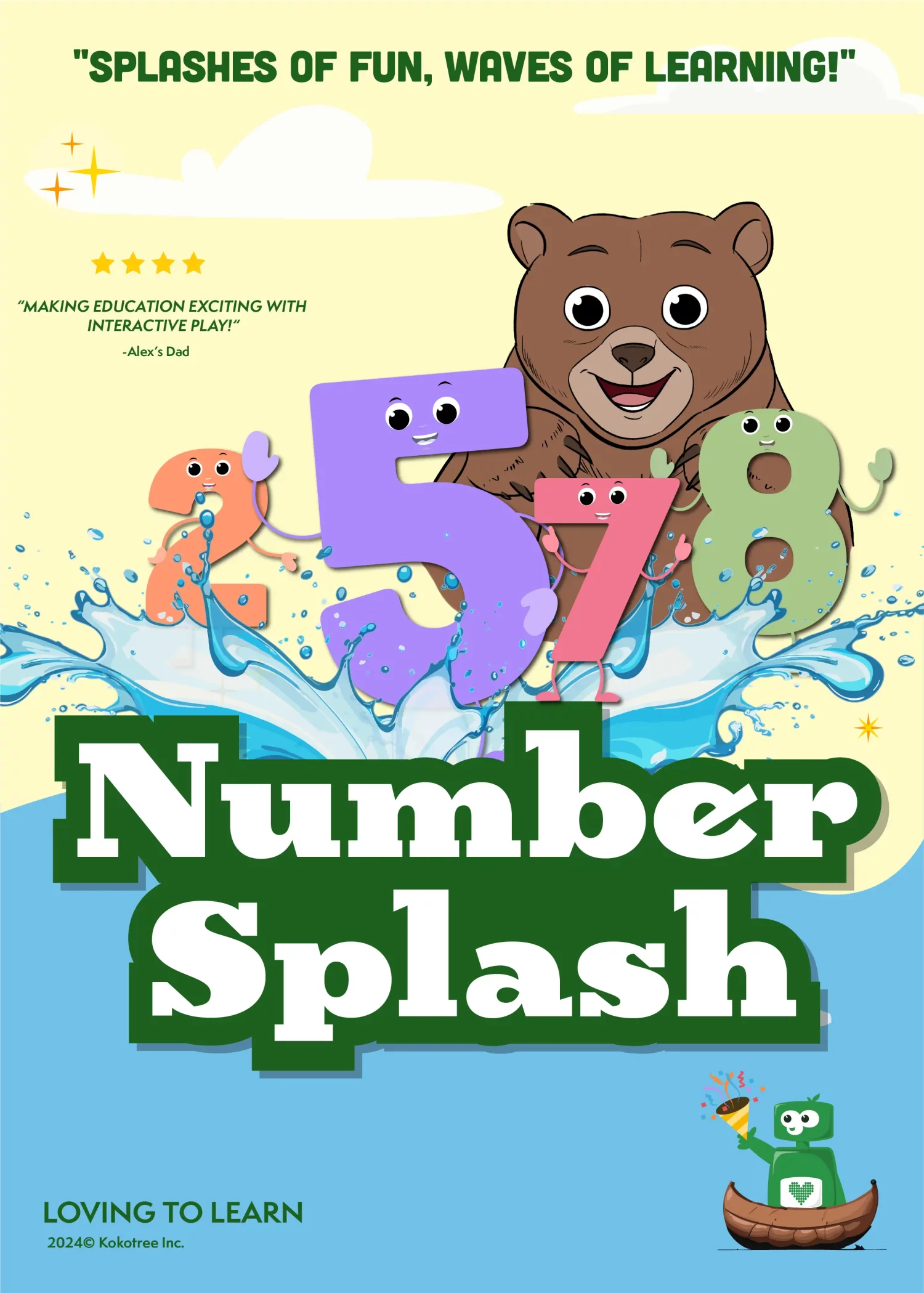
Your child hears a number spoken aloud, then drags the matching digit into a cheerful pond. It's calm, focused practice that builds rock-solid number recognition from 0-9.
Interactive Game
Ages 2-5
Skill: Number Recognition
Your kid matches spoken numbers to digits by dragging them into water. You get guilt-free screen time knowing they're learning.
A friendly voice calls out a number. Your child scans the screen, finds the matching digit, and drags it into a gentle pond with a satisfying splash. No timers, no pressure—just focused practice at their own pace.
What your child practices:
This game strengthens the connection between hearing a number and recognizing its written form. It's the essential skill that makes counting, math, and everyday number use click into place.
- Recognizing written digits 0-9 on sight
- Connecting spoken number words to their symbols
- Fine motor control through drag-and-drop interaction
- Focused listening and auditory processing
- Building confidence with numbers before formal math begins
They'll use these skills when:
- Spotting their age on a birthday card or finding their shoe size
- Recognizing house numbers on a walk or apartment doors
- Playing board games that use dice or numbered spaces
- Starting kindergarten math with number writing and counting exercises
The Gameplay (what keeps them engaged)
Each round presents a simple, satisfying challenge: hear the number, find it, splash it into the pond. The water ripples, friendly animations celebrate success, and a new number appears. There's no fail state—just gentle encouragement to try again if needed. The calm pond setting and unhurried pace make this perfect for winding down or focused learning moments. Kids love the tactile feel of dragging and the rewarding splash, so they keep playing without realizing they're drilling essential math foundations.
How It Teaches (the clever part)
- Immediate feedback: Correct matches create a cheerful splash animation and sound. Wrong attempts gently bounce back, encouraging another try without frustration.
- Progression: Numbers appear in varied arrangements, keeping the challenge fresh while covering all digits 0-9 repeatedly.
- Repetition: Each session naturally cycles through multiple numbers, building automatic recognition through spaced practice disguised as play.
Learning trick: By requiring children to HEAR the number before finding it visually, the game builds the auditory-visual connection that's critical for following verbal math instructions in school.
Beyond the App: Reinforce the Learning
- Mealtime activity: "Can you find the number on this box?" Point to cereal boxes, milk cartons, or food packaging and ask your child to identify numbers they spot. (Practices real-world number recognition)
- Car/travel activity: "Number hunt! Yell SPLASH when you see a 5!" Pick a digit and have your child watch for it on signs, license plates, or buildings. (Practices scanning and quick recognition)
- Outdoor activity: "Chalk splash!" Draw numbers on the sidewalk with chalk and call them out—your child jumps or stomps on the right one. (Adds whole-body movement to number learning)
- Anytime activity: "Which one did I say?" Write 3-4 numbers on paper, say one aloud, and have your child point to it or circle it. (Mirrors the exact game mechanic for offline practice)
Common Questions Parents Ask
- "Is dragging numbers into a pond really teaching anything?" - Absolutely. This game builds automatic number recognition—the ability to see "7" and instantly know it's seven without counting. That instant recall is the foundation for all future math work.
- "How long until my child knows all the numbers?" - Most children need dozens of exposures to each digit before recognition becomes automatic. Playing a few minutes daily for several weeks builds stronger retention than occasional long sessions.
- "What if my child keeps picking the wrong number?" - That's normal and valuable! Each mistake is the brain working to distinguish similar-looking digits. The gentle feedback helps them self-correct without frustration—stay encouraging and let them figure it out.
What Your Child Will Learn
Prerequisites and Building Blocks
Children benefit most from Number Splash after basic exposure to counting objects aloud (1-2-3) and understanding that numbers represent quantities. This game bridges the gap between verbal counting and symbol recognition—a crucial step in early numeracy. It pairs well with counting games and prepares children for number writing activities. No reading ability required; the auditory prompts make it accessible to pre-readers while building the visual discrimination needed for digit identification.
Cognitive Development and Game Design
The drag-and-drop mechanic aligns perfectly with how 2-5 year olds learn: through touch and manipulation. Young children process information best when multiple senses engage simultaneously—here, they hear, see, and physically move the answer. The calm, uncluttered interface reduces cognitive load, letting working memory focus entirely on the number-matching task. The pond metaphor provides a consistent, predictable environment that feels safe for experimentation.
Alignment with Educational Standards
Number Splash directly supports Common Core Math Standard K.CC.3 (write and recognize numbers 0-20) and Head Start Early Learning Outcomes for Mathematics. Kindergarten teachers expect incoming students to recognize single digits on sight. This game builds that exact readiness skill. It also supports NAEYC guidelines for developmentally appropriate practice by allowing child-paced learning without time pressure or competitive elements.
Extended Learning Opportunities
Pair Number Splash with Kokotree counting videos featuring friendly animal characters to reinforce quantity-symbol connections. Follow up with number tracing games to add writing practice. Offline, use magnetic numbers on the refrigerator for tactile recognition practice. Create a "number splash" bath time game with foam numbers. Read picture books that feature prominent numerals to spot together.
Game Mechanics Summary
- Child hears a number spoken aloud by a friendly voice
- Multiple digits (0-9) appear on screen simultaneously
- Child drags the correct digit into the pond area
- Splash animation and positive sound confirm correct answers; incorrect attempts gently reset
Skill Development Progression
Early sessions may show hesitation or trial-and-error as children learn to distinguish similar digits (6/9, 1/7). With repeated play, recognition speed increases noticeably—parents will see their child grab the correct number almost immediately after hearing it. Mastery looks like confident, quick identification of all digits 0-9 without second-guessing. Watch for your child spontaneously identifying numbers in daily life—that's the skill transferring!
Early Numeracy Development: Why Number Recognition Matters
Number recognition is one of the strongest predictors of later math success. Research consistently shows that children who enter kindergarten able to identify written digits perform better in mathematics throughout elementary school. But why?
Numbers are abstract symbols. Unlike learning that a picture of an apple represents an apple, learning that "7" represents seven of something requires a cognitive leap. Children must connect three things: the spoken word "seven," the written symbol "7," and the concept of seven-ness (quantity). Number Splash specifically targets the auditory-to-visual connection—hearing "seven" and finding 7—which is exactly what children need when a teacher says "write the number five" or "circle the number three."
For ages 2-3, expect slow, exploratory play with lots of repetition needed. By ages 4-5, most children can recognize all single digits with increasing speed. This timeline varies widely and is completely normal.
The calm, low-pressure design matters too. Math anxiety can begin surprisingly early when children feel rushed or judged. Number Splash's gentle pace and encouraging feedback help children build positive associations with numbers. They're not just learning digits—they're learning that math feels approachable and even fun.
This foundation directly supports kindergarten readiness, where teachers expect children to recognize, write, and use numbers 0-10 in counting and basic operations. Every splash in that pond is a small step toward math confidence.