
What's Click The Little Owl About?
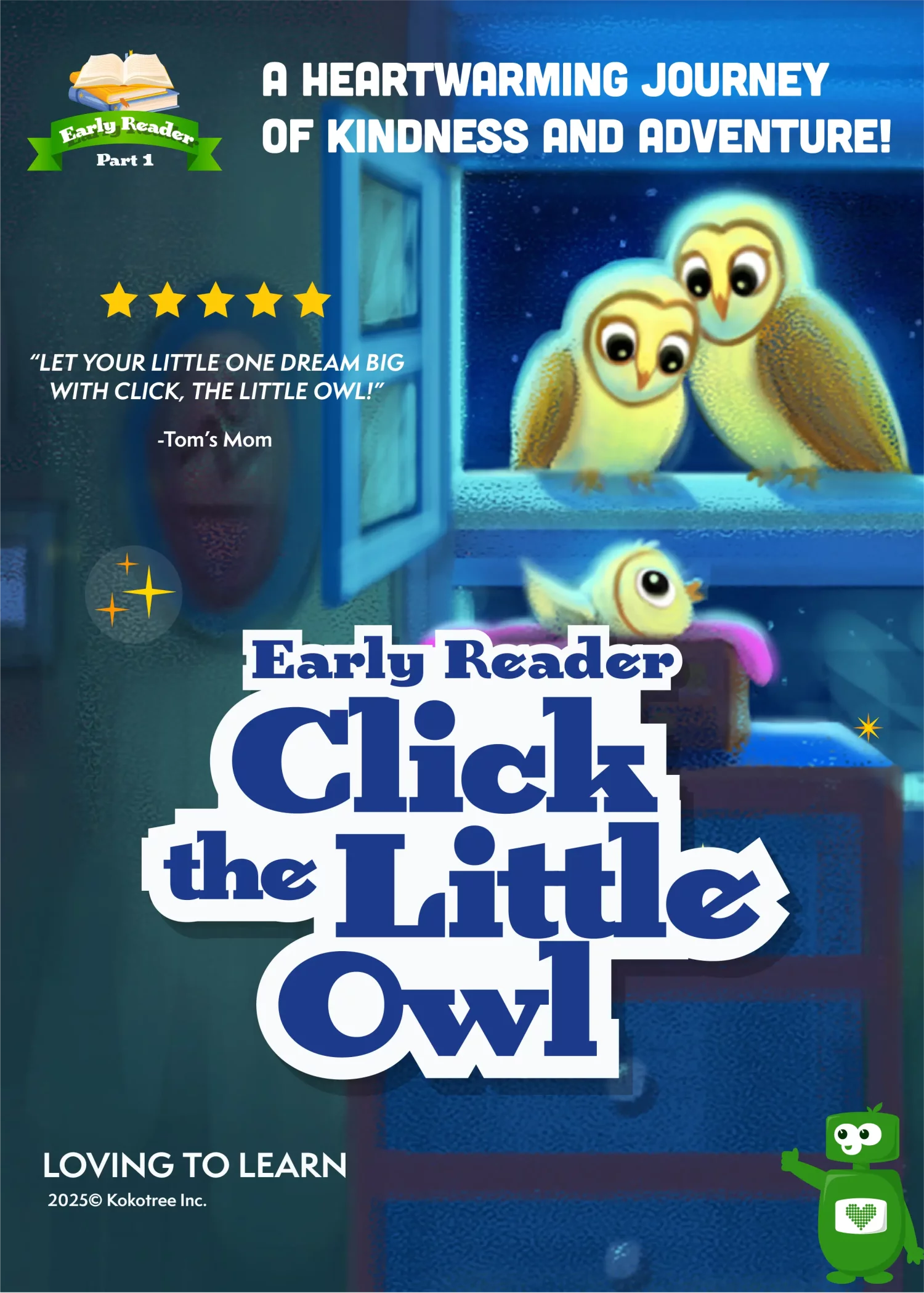
Join Lucy and Tom on a gentle forest adventure where they discover a baby owl named Click and help reunite him with his family! Your child will wind down peacefully while absorbing lessons about animal care, nature, and the importance of kindness.
15 minutes
Ages 2-5
Skill: Calming bedtime story with nature learning
Your kid listens to a soothing owl adventure story. You get 15 minutes to enjoy peaceful bedtime wind-down.
This calming audio story follows two friends who find a fluffy baby owl on a forest path. With slow, hypnotic narration designed for sleep, children hear how Lucy and Tom gently care for the owl until his parents return under the moonlight.
What your child learns:
Through this gentle narrative, children absorb important lessons about wildlife, empathy, and natural cycles. The story models kind behavior toward animals while introducing owl characteristics in an age-appropriate way.
- Owl identification (big round eyes, beak, clicking sounds, nocturnal habits)
- Gentle animal handling and wildlife respect
- Problem-solving when finding animals that need help
- Understanding that wild animals belong with their families
- Calming breathing and relaxation through story listening
They'll use these skills when:
- Spotting birds outside and describing what they see
- Learning to be gentle with pets or animals they encounter
- Understanding why wild animals at parks shouldn't be touched
- Practicing calm, quiet behavior at bedtime
The Story (what keeps them watching)
Lucy and her friend Tom head into the woods searching for berries when they discover something fluffy on the path—a baby owl! They name him Click because of the sounds he makes with his beak. Lucy's mom helps them care for Click, feeding him insects and keeping him safe. But each night, giant owls fly past Lucy's window. On a magical moonlit evening, Click's parents return, and the brave little owl flaps his wings and flies home to his family. Lucy waves goodbye, happy her forest friend found where he belongs.
How We Teach It (the clever part)
- First 3 minutes: Sets a calm, dreamy tone as Lucy ventures into the woods, establishing the peaceful forest setting and introducing the element of discovery
- Minutes 3-10: Children learn owl characteristics naturally as Lucy and Tom find Click, observe his big eyes and beak, hear his clicking sounds, and discover what baby owls eat
- Final 5 minutes: Reinforces that wild animals belong with their families as Click reunites with his parents, ending with a gentle transition to sleep
Teaching trick: The story uses interactive pauses, asking children "What do you think the surprise could be?" This keeps sleepy minds gently engaged while the slow, meditation-style narration guides them toward rest.
After Watching: Quick Wins to Reinforce Learning
- Nature walk activity: "Let's look up in the trees—can you spot any birds? What sounds do they make?" (Practices observation skills and animal identification)
- Quiet time activity: "Can you blink your big eyes like an owl? Now make a soft clicking sound!" (Reinforces owl characteristics through playful mimicry)
- Bedtime activity: "Just like Click snuggled with his mommy and daddy owl, let's get cozy and close our eyes." (Connects story to sleep routine)
- Anytime activity: "If we found a baby bird outside, what should we do?" (Reinforces the lesson about helping wildlife safely)
When Kids Get Stuck. And How to Help.
"My child keeps asking questions instead of falling asleep" - That's wonderful curiosity! Whisper that you'll talk about owls tomorrow, and remind them Click is sleeping now too. The questions show the story sparked their interest.
"They want to keep a wild animal like Lucy did" - Use the story's ending: "Remember how Click was happiest with his owl family? Animals have special homes in nature." This reinforces the gentle lesson without disappointment.
"The story seems too simple for my child" - Bedtime stories work best when they're calming rather than stimulating. The simplicity is intentional—it helps busy minds settle. For daytime, try our more interactive animal videos!
What Your Child Will Learn
Prerequisites and Building Blocks
This bedtime story works beautifully for children with basic listening comprehension and familiarity with simple narratives. No prior knowledge is required—it's designed as a standalone calming experience. Children who have watched other Kokotree nature videos about forest animals or birds will recognize familiar concepts. This story builds foundational knowledge about owls that connects to future lessons about nocturnal animals, bird characteristics, and wildlife habitats.
Cognitive Development and Teaching Methodology
The slow, meditation-style narration aligns perfectly with how young brains transition to sleep. By reducing cognitive load through gentle pacing and repetitive, soothing language, children can absorb information without overstimulation. The story incorporates brief interactive pauses that engage auditory learners while the vivid descriptions support children who think in pictures. This multi-sensory approach respects different learning styles while prioritizing the calming bedtime goal.
Alignment with Educational Standards
This story supports early learning standards for science and social-emotional development. Children practice listening comprehension skills essential for kindergarten readiness. The content aligns with life science standards about animal characteristics and habitats. Social-emotional benchmarks are addressed through modeling empathy, gentle behavior, and understanding that living things have needs. These foundational concepts prepare children for more structured learning environments.
Extended Learning Opportunities
Pair this story with Kokotree's daytime owl videos for active learning about nocturnal animals. Print owl coloring pages featuring big round eyes and beaks for quiet art time. Create a simple "owl nest" with blankets during pretend play. Visit a local nature center to see owl pictures or attend a bird program. The Kokotree app includes interactive games about forest animals that extend these concepts through play-based learning.
Transcript Highlights
- "Suddenly, two big round eyes opened and stared straight at Tom and Lucy. The eyes blinked, and to their surprise, the children saw a beak! The little creature was a baby owl!"
- "Click, click, went the baby owl." (Teaching owl sounds through onomatopoeia)
- "Wild animals do best in their own homes." (Key lesson delivered simply)
- "Click snuggled between Momma and Daddy owl in their cozy nest. The baby owl began to yawn as night fell, overcome with deep sleepiness." (Modeling sleep behavior)
Character Development and Story Arc
Lucy and Tom model exemplary behavior throughout—approaching the owl gently, seeking adult help, and ultimately accepting that Click belongs with his family. This demonstrates problem-solving (searching for the nest), empathy (recognizing Click's hunger and needs), and emotional maturity (feeling both sad and happy when Click leaves). The owls model family bonds and natural animal behavior, showing children that parent animals care for their babies just as their own caregivers do.
Understanding Nocturnal Animals and Wildlife Care
Owls captivate young children with their distinctive features—enormous eyes adapted for night vision, rotating heads, and soft feathers for silent flight. This story introduces owl characteristics naturally: their big round eyes, clicking beaks, diet of insects, and nocturnal activity patterns. Children learn that baby owls (called owlets) cannot fly immediately and depend on parents for food and protection.
The story thoughtfully addresses what to do when finding wildlife. Rather than promoting keeping wild animals, it models the appropriate response: seeking adult help, providing temporary care, and understanding that wild animals thrive best in their natural habitats with their families. This aligns with wildlife education principles taught by nature organizations.
For toddlers and preschoolers, this introduction to owl biology plants seeds for future STEAM learning about animal adaptations, ecosystems, and the food chain. The emotional arc—caring for Click, then releasing him—teaches children that loving something sometimes means letting it go where it belongs. This gentle life lesson, wrapped in a cozy bedtime narrative, helps children process the concept of change while feeling safe and secure in their own beds, ready to drift into peaceful sleep just like Click in his forest nest.