
What's Everyday Materials About?
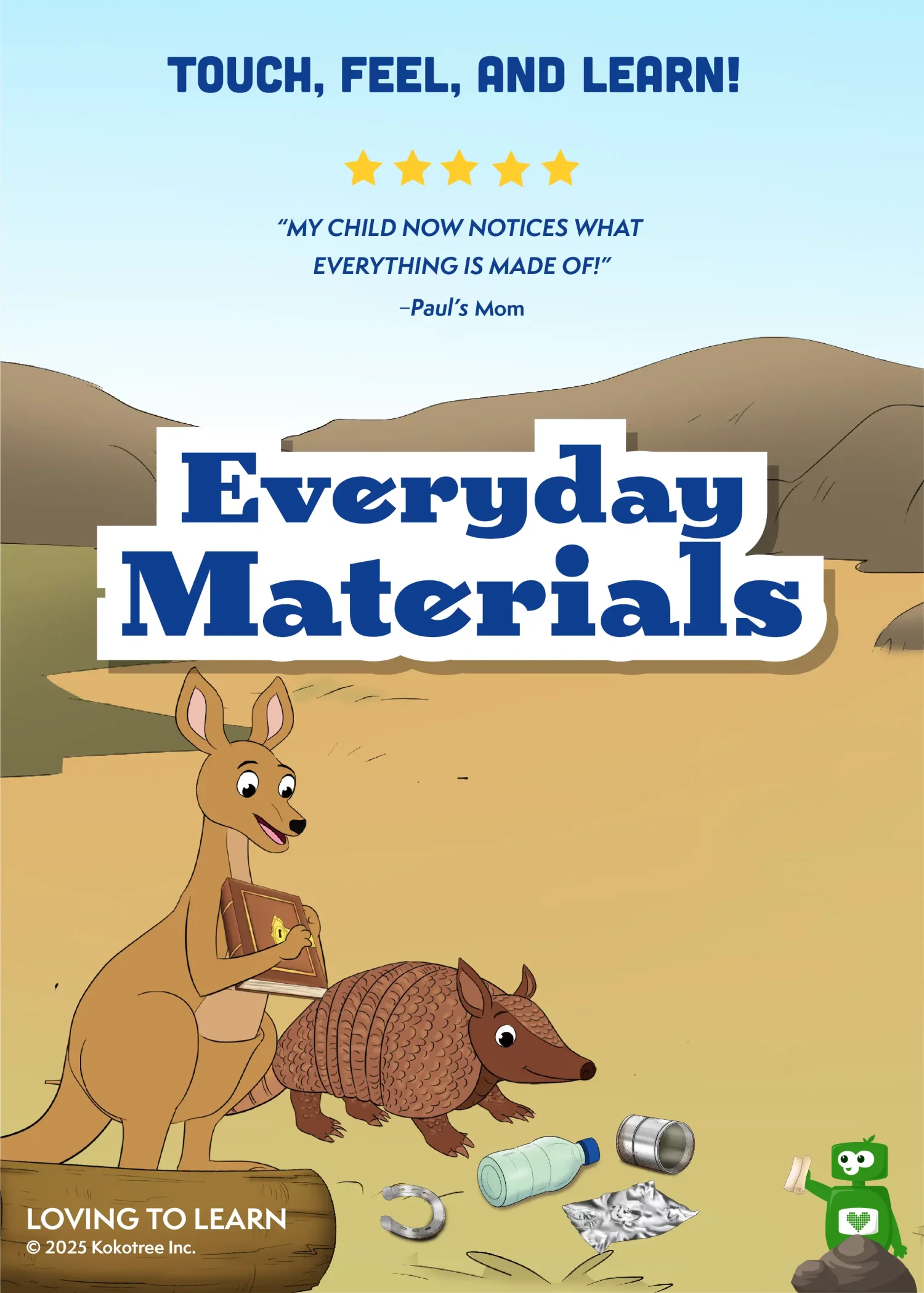
Your little explorer joins animal friends on a quest to collect everyday materials and unlock a magical book! They'll learn to identify glass, wood, paper, plastic, metal, tin, foil, and cloth—and understand how each one helps us every day.
7 minutes
Ages 3-6
Skill: Identifying common materials and their properties
Your kid watches animal friends hunt for materials in nature. You get 7 minutes to finish that cup of coffee.
Kongo the energetic explorer and Dally the curious roller travel through plains, rivers, and forests collecting materials for a magical book. Each time they find something—a glass jar by the river, a paper map in the wind, a wooden log in the forest—the book glows brighter. Bright colors, playful animations, and gentle humor keep little eyes glued to the screen.
What your child learns:
This adventure introduces eight everyday materials through hands-on discovery. Your child learns that glass is smooth and see-through, cloth is soft and warm, and wood is strong enough to build houses.
- Identifies 8 common materials: glass, cloth, paper, metal, tin, plastic, foil, and wood
- Describes material properties (smooth, shiny, soft, strong, bendy)
- Understands that different materials serve different purposes
- Recognizes materials in everyday objects around them
- Builds observation skills by noticing what things are made of
They'll use these skills when:
- Setting the table and noticing the glass cups vs. plastic plates
- Getting dressed and feeling the soft cloth of their shirt
- Playing at the park and touching wooden benches or metal slides
- Helping with recycling by sorting plastic bottles from paper
The Story (what keeps them watching)
Miss Meera sends the classroom on a storybook adventure where Kongo and Dally discover a mysterious Magic Book of Materials. The catch? It only glows when they collect real everyday materials! With guidance from wise Hank the hawk, they splash through rivers to find glass jars, chase paper maps across windy plains, and discover shiny metal horseshoes in rocky areas. Each material they find makes the book glow brighter until—success! The book bursts with light, proving they've become true material detectives.
How We Teach It (the clever part)
- First 2 minutes: Miss Meera introduces the concept of "everyday materials" and names all eight types, building anticipation for the adventure ahead.
- Minutes 2-6: Each material gets its own mini-discovery moment. Kids see the material, hear its name, and learn one key property (glass is "smooth and see-through," plastic is "bendy").
- Final minute: The classroom reviews all materials together, reinforcing that these items are "everywhere" and encouraging kids to keep exploring.
Teaching trick: Each material discovery follows a pattern—riddle from Hank, visual hunt, hands-on interaction, then placement in the magic book. This repetition helps little brains anticipate and remember each material.
After Watching: Quick Wins to Reinforce Learning
Mealtime material hunt: "What's your cup made of? What about your plate?" Walk through each item on the table and identify if it's glass, plastic, metal, or paper. Great for building observation vocabulary!
Car window game: "I spy something made of... metal!" Take turns spotting materials outside the car—metal signs, glass windows, wooden fences. Practices quick recognition skills.
Bedtime texture talk: Before sleep, feel three things together: the cloth blanket, the wooden bed frame, the plastic light switch. Ask "Which one is softest? Which is hardest?" Builds property comparison skills.
Kitchen helper sort: When unloading groceries, let your child sort items by material—plastic containers here, tin cans there, paper boxes in this pile. Real-world classification practice!
When Kids Get Stuck. And How to Help.
"My child keeps mixing up metal and tin" - That's actually really observant! Tin is a type of metal, so they're not wrong. Help them notice tin is usually thinner and makes a different sound when tapped. Try tapping a tin can versus a metal spoon together.
"She can name materials but doesn't understand WHY we use different ones" - This comes with time and experience. Point out simple reasons: "We use glass for windows so we can see through them" or "Cloth is soft so it feels nice on our skin." Keep it concrete and sensory.
"He only remembers 3 or 4 materials, not all 8" - Eight is a lot! Focus on the four most common first (wood, paper, plastic, glass) and add others gradually. Each rewatch will reinforce more. No rush—material recognition builds over months, not minutes.
What Your Child Will Learn
Prerequisites and Building Blocks
Children benefit most from this video if they can already name basic objects (cup, book, shirt) and understand simple descriptive words (hard, soft, shiny). This video builds on foundational vocabulary and observation skills developed in earlier Kokotree content about shapes and colors. It serves as an introduction to basic science concepts, preparing children for future lessons on states of matter, recycling, and how things are made.
Cognitive Development and Teaching Methodology
The treasure-hunt narrative leverages preschoolers' natural curiosity and love of collection. Visual learners benefit from seeing each material up close with distinct animations. Auditory learners hear material names repeated multiple times with descriptive words. Kinesthetic principles are modeled as characters touch, squeeze, and interact with each material. The repetitive discover-name-collect pattern supports working memory development typical of ages 3-6.
Alignment with Educational Standards
This video addresses Next Generation Science Standards for K-2, specifically "Planning and Carrying Out Investigations" by observing and describing materials. It supports kindergarten readiness indicators for scientific thinking and vocabulary development. Teachers expect entering kindergarteners to describe objects by observable properties—this video builds exactly that skill through engaging, age-appropriate content.
Extended Learning Opportunities
Pair this video with a "Material Scavenger Hunt" printable worksheet where children circle items made of each material. The Kokotree app includes sorting games that reinforce material identification. Extend learning by creating a "material collection box" at home where children add safe samples of each type. Follow up with videos about recycling or how things are made.
Transcript Highlights
- "Glass jar—smooth and see-through!" (Kongo models descriptive vocabulary)
- "Paper—we can draw, write, or even fold it into shapes!" (Dally connects material to function)
- "Plastic—smooth, bendy, and everywhere!" (Multiple properties in one description)
- "Wood—trees, sticks, even houses!" (Connecting material to real-world applications)
Character Development and Story Arc
Kongo demonstrates enthusiasm and initiative, always first to grab new materials and try things. Dally models careful observation, often noticing details others miss ("You have sharp eyes!"). Hank the hawk serves as the wise guide, offering riddles that encourage thinking before acting. Together, they show that exploration works best with different strengths combined—energy, observation, and wisdom. The characters celebrate each discovery, modeling positive learning attitudes.
Materials Science for Early Learners: A Deep Dive
Understanding materials is foundational to scientific literacy. This video introduces children to materials science—the study of what things are made of and why those materials are chosen for specific purposes.
At ages 3-6, children are naturally curious about their physical world. They touch everything, notice textures, and ask "what's this made of?" This video channels that curiosity into structured learning by introducing eight common materials with their key properties.
The teaching approach uses sensory vocabulary that preschoolers can verify through their own experience. When Kongo says glass is "smooth and see-through," children can test this themselves with any glass object. When Dally describes cloth as "soft and warm," children connect this to their own clothing and blankets. This concrete, verifiable learning builds scientific thinking habits.
The video also introduces the concept that materials have different purposes based on their properties. Glass lets us see through windows. Cloth keeps us warm. Wood builds strong structures. This cause-and-effect thinking is crucial for later STEAM learning.
Importantly, the video presents materials as valuable resources to "use wisely," as Eddie notes in the classroom conclusion. This plants early seeds for understanding resource conservation without heavy-handed messaging.
The progression from natural materials (wood) to manufactured ones (plastic, foil) also subtly introduces the idea that humans transform materials for different uses—a concept children will explore more deeply in later grades when studying manufacturing, recycling, and environmental science.