
What's Farm Animal Sounds About?
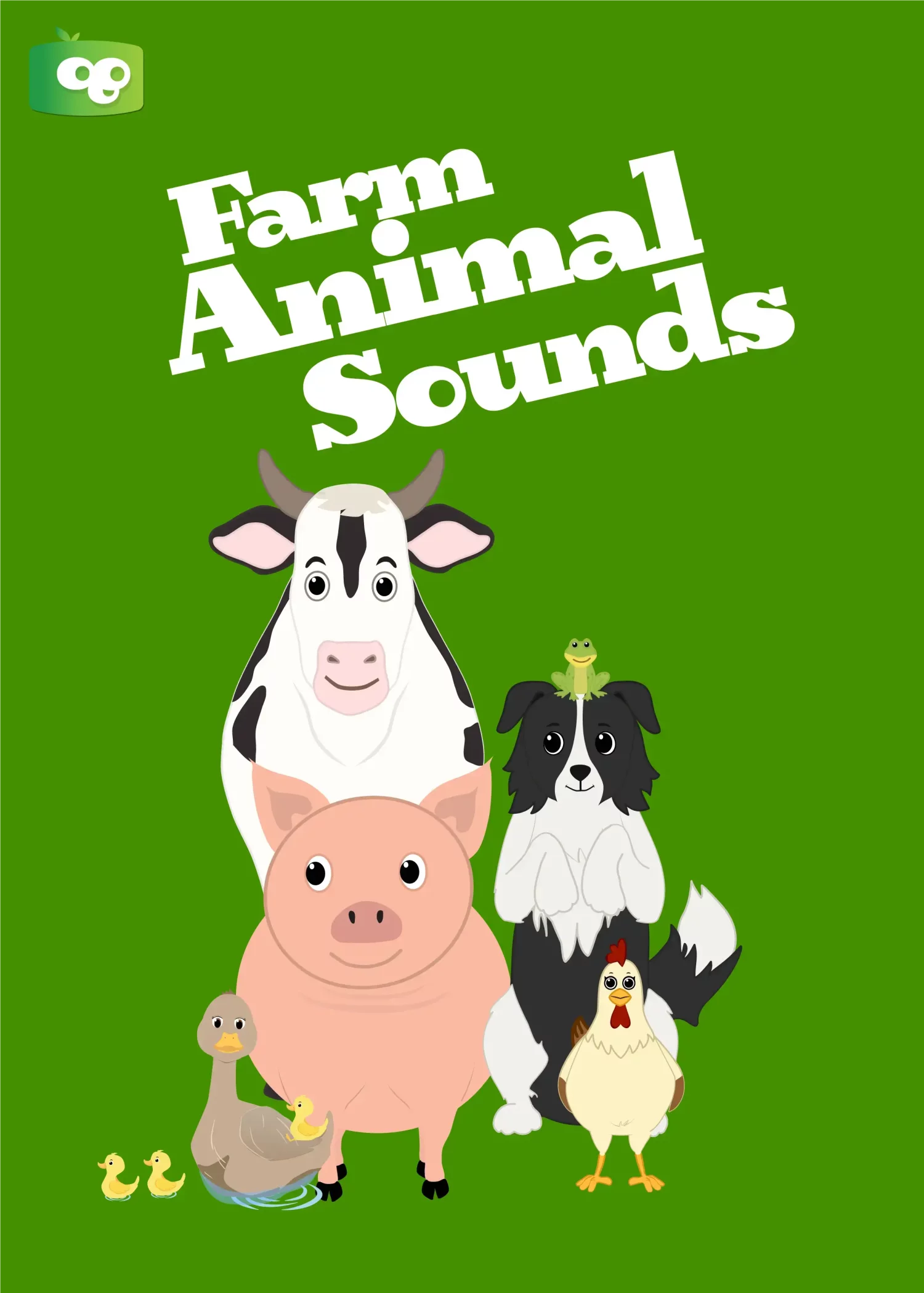
Your little one becomes a farm detective, guessing which animal makes which sound through a playful elimination game! They'll confidently identify animal sounds and connect them to the creatures who make them.
4 minutes
Ages 1-6
Skill: Animal sound recognition and vocabulary building
Your kid watches farm animals reveal their unique sounds one by one. You get 4 minutes to finish that cup of coffee.
Colorful farm animals appear on screen as a catchy song plays. Each animal demonstrates their sound while your child guesses along. The mystery builds as we search for the dog's special sound, with wrong guesses teaching new animal sounds along the way.
What your child learns:
This video turns passive watching into active participation. Your child practices listening carefully, making predictions, and connecting animals to their sounds—skills that build early language and cognitive development.
- Identifies 12+ farm animal sounds (dog, cat, horse, pig, duck, sheep, cow, hen, rooster, mouse, frog, bee)
- Matches animals to their environments (ducks by the lake, cows in the fields)
- Practices prediction and elimination thinking
- Builds vocabulary through repetition and rhyme
- Develops auditory discrimination skills
They'll use these skills when:
- Visiting a petting zoo or farm and naming animals by their sounds
- Reading picture books about animals and making the sounds
- Playing pretend farm with toys and stuffed animals
- Hearing birds, dogs, or cats in the neighborhood and identifying them
The Story (what keeps them watching)
The farm is full of animals, and we're on a mission to find out what sound the farm dog makes! But first, we have to rule out all the other animals. Is it meow? Nope, that's the cat! Is it oink? That's the pig! Through a series of fun wrong guesses, kids learn what cats, horses, pigs, ducks, sheep, cows, hens, roosters, mice, frogs, and bees sound like. The suspense builds with each guess until finally—ruff, ruff, ruff! The dog reveals his sound, and everyone celebrates by singing and dancing together.
How We Teach It (the clever part)
- First 1 minute: Sets up the mystery—what sound does the farm dog make? Introduces the guessing game format and rules out the first few animals (cat, horse).
- Minutes 1-3: Systematically works through farm animals, each wrong guess teaching a new sound. Kids hear pig, duck, sheep, cow, hen, rooster, mouse, frog, and bee sounds while building anticipation.
- Final minute: The big reveal! The dog says 'ruff ruff ruff,' and the song celebrates learning all the sounds together.
Teaching trick: The video uses deliberate wrong answers as teaching moments. By asking "Is it meow?" before revealing that's the cat's sound, children learn two things at once: what the dog doesn't sound like AND what the cat does sound like. This elimination approach keeps kids engaged while tripling the learning.
After Watching: Quick Wins to Reinforce Learning
- Mealtime activity: "What animal says 'oink oink'?" Play a quick guessing game while preparing food. Your child practices recall and gets excited to show off what they learned.
- Car/travel activity: "I hear a dog! What sound does a dog make?" When you spot animals outside or hear them, ask your child to make the sound. Connects video learning to real life.
- Bedtime activity: "Let's say goodnight to all the farm animals. Goodnight cow—moo! Goodnight sheep—baa!" Go through the animals together, making each sound as a calming wind-down routine.
- Anytime activity: "Can you walk like a duck and say quack quack?" Combine animal sounds with animal movements for full-body learning that burns energy and reinforces vocabulary.
When Kids Get Stuck. And How to Help.
- "My child mixes up similar sounds like baa and moo." Totally normal! These sounds use different mouth shapes. Practice in front of a mirror together—"baa" is more open, "moo" is rounded lips. Make it silly and exaggerated.
- "They only remember the dog sound, not the others." The dog is the star, so that's expected! Watch again and pause at each animal. Repetition is how little brains lock in learning—it often takes 10+ exposures.
- "My toddler just makes random sounds instead of the right ones." That's actually fantastic! They're experimenting with their voice and participating. Gently model the correct sound back: "You said 'buh buh!' The cow says 'moo!' Moo!" Keep it playful.
What Your Child Will Learn
Prerequisites and Building Blocks
This video works beautifully as an introduction to animal vocabulary—no prior knowledge needed! Children who have basic exposure to animals through books or real life will connect faster, but the repetitive structure teaches from scratch. This builds toward more complex categorization (farm vs. wild animals) and supports future phonics work by training ears to distinguish similar sounds.
Cognitive Development and Teaching Methodology
The question-and-answer format activates working memory and prediction skills perfect for ages 1-6. Repetition with variation (same question structure, different animals) builds pattern recognition while maintaining engagement. The video addresses auditory learners through distinct sounds, visual learners through animal imagery, and kinesthetic learners through the invitation to make sounds and dance along.
Alignment with Educational Standards
This video supports early learning standards for vocabulary development and phonological awareness. It aligns with kindergarten readiness indicators for identifying common animals and their characteristics. The categorization of farm animals and their sounds maps to science standards for living things, while the listening and responding format supports language arts benchmarks for following oral directions.
Extended Learning Opportunities
Pair this video with animal sorting activities—print farm animal pictures and have children group them by sound type (animals that "moo" vs. animals that "quack"). Explore the Kokotree app's animal-themed games for interactive reinforcement. Create a simple farm scene with paper and crayons, asking your child to draw animals and tell you their sounds.
Transcript Highlights
- "Meow is the sound of the cute white cat. Neigh is the horse as a matter of fact." — Teaching through comparison and rhyme
- "Quack is the call of the ducks by the lake." — Connecting sounds to habitats
- "Tweet-tweet is the sound of the owl at night. Squeak is the mouse hidden out of sight." — Adding environmental context to deepen understanding
- "Now we know all the animal sounds. Let's sing together and dance around." — Celebrating learning through movement
Character Development and Story Arc
The farm animals model patience and helpfulness throughout the video. Each animal willingly demonstrates their sound to help solve the mystery, showing cooperative behavior. The dog waits until the very end, building anticipation and modeling patience. The collective celebration at the end demonstrates how learning together is more fun than learning alone—a gentle introduction to collaborative discovery.
The Science of Animal Sound Recognition: Building Blocks for Language Development
Animal sound recognition is far more than a cute party trick—it's foundational auditory processing work that directly supports language acquisition. When children learn to distinguish between "moo" and "baa," they're training their brains to detect subtle phonetic differences, the exact skill needed for later phonics success.
This video introduces onomatopoeia naturally, showing children that words can represent sounds. The sounds span different phonetic categories: "moo" uses back vowels, "quack" has a hard consonant ending, "buzz" introduces the voiced fricative. This variety exercises the full range of sounds children will encounter in language.
The farm setting provides ideal learning scaffolding because farm animals are universally recognizable and their sounds are distinct and memorable. Research shows children retain vocabulary better when it's connected to concrete images and sounds rather than abstract concepts.
The elimination game format does something clever: it creates "desirable difficulty." By presenting wrong answers first, the video forces active processing. Children must hold the question in mind, evaluate each option, and update their thinking—executive function skills that predict academic success.
The repetitive song structure ("Now we know the sounds they say, but what kind of sound does the farm dog make?") creates a predictable pattern that reduces cognitive load while building anticipation. This allows children to focus mental energy on the new information (each animal's sound) rather than the format.
For youngest viewers (ages 1-2), simply hearing the sounds builds passive vocabulary. For older children (ages 4-6), the guessing game activates retrieval practice, strengthening memory pathways each time they correctly anticipate an answer.