
What's The Numbers Song About?
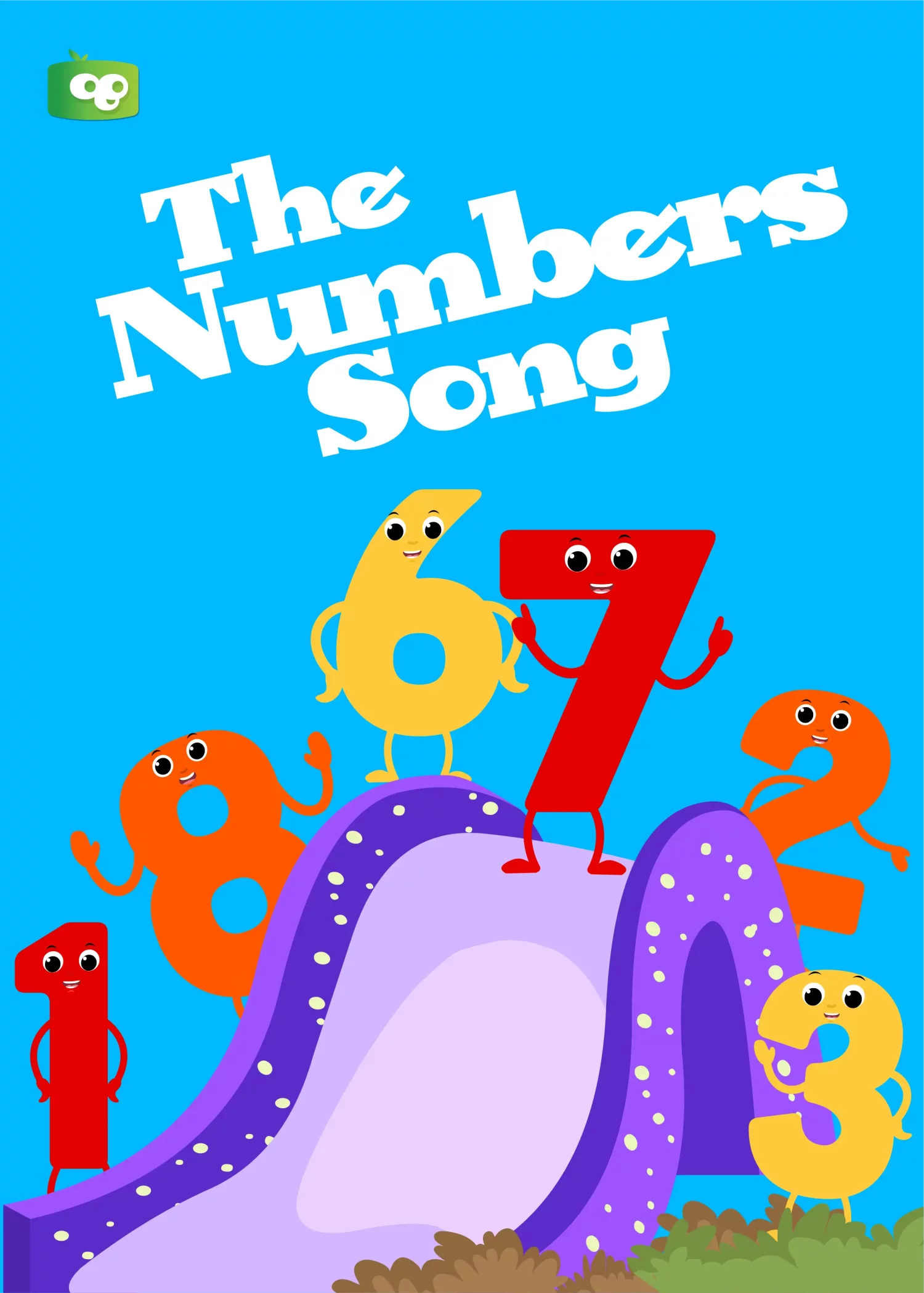
Your child joins a fun musical journey counting from 1 to 10 with an irresistibly catchy tune! They'll be singing numbers confidently and recognizing the counting sequence in no time.
3 minutes
Ages 1-6
Skill: Number recognition and counting sequence
Your kid watches friendly characters sing numbers 1 to 10. You get 3 minutes to finish that coffee.
Colorful, friendly animal characters guide your little one through each number with cheerful music and repetition. The song builds excitement as it counts higher, with encouraging phrases like "Come on everybody, let's go!" keeping kids engaged and singing along.
What your child learns:
This song teaches the foundational counting sequence that unlocks all future math skills. Through musical repetition and celebration, children internalize number order naturally.
- Recognizes and recites numbers 1 through 10 in order
- Understands that each number comes after another in a sequence
- Builds number fluency through rhythmic repetition
- Develops memory skills by learning song patterns
- Gains confidence celebrating learning milestones
They'll use these skills when:
- Counting snacks at the table ("How many crackers do you have?")
- Climbing stairs and counting each step out loud
- Playing hide-and-seek and counting during the countdown
- Sharing toys with friends ("Let's count how many blocks we each get!")
The Story (what keeps them watching)
This energetic counting song takes kids on a musical adventure from 1 to 10! The journey starts with excitement ("Hey everybody, let's begin!") and builds momentum as each new number is introduced with its own special moment. Kids learn that 3 is "my favorite part," 7 is "really great," and 9 is "mighty fine"—giving personality to each number. The song celebrates progress ("We only have 6 more numbers to go!") and ends with a triumphant "Hooray!" that makes counting feel like a real achievement.
How We Teach It (the clever part)
- First minute: Numbers 1-4 are introduced with triple repetition ("1, 1, 1") so kids hear each number multiple times before moving on
- Minutes 1-2: Numbers 5-10 continue the pattern while building anticipation ("What comes after 7? It's 8!")
- Final minute: Full sequence practice with two complete 1-10 countdowns, reinforcing the entire sequence
Teaching trick: Each number is repeated three times in a row before the song moves on. This "triple repetition" technique helps young brains lock in each number before adding the next one—like building with blocks, one solid piece at a time.
After Watching: Quick Wins to Reinforce Learning
- Mealtime activity: "Can you count your peas like we counted in the song?" (Practices one-to-one correspondence—touching each item while counting)
- Car/travel activity: "Let's count to 10 together! What comes after 7?" (Reinforces sequence memory with the same question from the video)
- Bedtime activity: "Count your stuffed animals on the bed—how many friends are sleeping with you tonight?" (Applies counting to beloved objects)
- Anytime activity: "Show me 5 fingers! Now show me 3!" (Connects number words to quantities they can see and feel)
When Kids Get Stuck. And How to Help.
- "My child always skips 7 when counting." - Totally normal! 7 is tricky for little ones. Try clapping on 7 or making it silly ("7 is SEVEN!") to help it stick.
- "They can sing the song but can't count objects." - Singing numbers and counting objects are actually different skills! Practice by touching each item slowly while counting together.
- "My 2-year-old only gets to 3." - Perfect! Counting to 3 at age 2 is right on track. The song plants seeds for higher numbers they'll harvest later.
What Your Child Will Learn
Prerequisites and Building Blocks
This video works beautifully as a first introduction to numbers—no prerequisites needed! Children benefit from basic attention span for music (about 2-3 minutes) and exposure to verbal language. This song builds the foundation for future counting activities, number recognition videos, and eventually quantity matching. It's an ideal starting point in the "Little Seeds" program's math sequence, preparing children for concepts like "how many" and basic addition.
Cognitive Development and Teaching Methodology
The teaching approach leverages several developmental principles perfect for ages 1-6. Musical learning activates multiple brain regions simultaneously, making information "stickier." The triple repetition of each number ("1, 1, 1") provides the redundancy young brains need. Visual learners see numbers represented, auditory learners hear the catchy tune, and kinesthetic learners can clap or move along. The celebratory tone triggers dopamine release, associating counting with positive emotions.
Alignment with Educational Standards
This video addresses early math standards found in kindergarten readiness frameworks worldwide. It specifically targets "rote counting to 10" and "understanding number sequence"—both foundational benchmarks. Teachers expect incoming kindergarteners to count to at least 10 verbally. This song also supports oral language development standards through clear enunciation and vocabulary building. The content aligns with early numeracy indicators used in developmental screenings.
Extended Learning Opportunities
Pair this video with number tracing activities or counting manipulatives like blocks or buttons. The Kokotree app offers complementary number recognition games and quantity matching activities. Extend learning with a "number hunt" around your home—find the number 5 on a clock, 3 on a remote. Create a simple counting book together with stickers. Revisit the song before grocery shopping and count items into the cart.
Transcript Highlights
- "1, 1, 1 is how we start" — Establishes beginning point and uses repetition for memory
- "What comes after 7? It's 8!" — Models questioning technique and sequence thinking
- "We only have 6 more numbers to go" — Teaches countdown concept and builds anticipation
- "That's all the numbers we will learn today" — Sets clear learning boundaries and celebrates completion
Character Development and Story Arc
The song's narrator models enthusiastic learning behavior throughout. Phrases like "It's so much fun learning numbers" demonstrate a growth mindset and joy in education. The encouragement "Come on everybody, let's go!" shows inclusive, supportive learning. The narrator expresses genuine excitement ("I'm impressed!" "really great!" "mighty fine!") modeling how to celebrate progress. The final "Great job everybody! Hooray!" reinforces that effort deserves recognition.
Mathematical Foundations: Why Counting Sequence Matters
Counting from 1 to 10 might seem simple, but it's actually one of the most important mathematical concepts your child will ever learn. This skill, called "stable order counting," means understanding that numbers always come in the same sequence—and it's the gateway to all future math success.
When children learn the counting sequence, they're building what mathematicians call "number sense." This includes understanding that each number represents a specific quantity, that numbers increase by one each time, and that the sequence is predictable and reliable. These concepts form the foundation for addition, subtraction, and eventually more complex operations.
The song cleverly uses several research-backed techniques. First, the triple repetition ("5, 5, 5") gives children multiple exposures to each number before moving forward. Second, the rhythmic structure helps children predict what comes next—a key mathematical thinking skill. Third, the question "What comes after 7?" introduces the concept of number relationships and sequence prediction.
Interestingly, children typically learn to recite numbers before they understand what those numbers mean. This "rote counting" phase is completely normal and necessary—it's like learning the alphabet before reading. The song supports this developmental stage while planting seeds for deeper understanding.
Research shows that children who enter kindergarten with strong counting skills demonstrate better math achievement throughout elementary school. By making counting joyful and musical, this video helps children practice the sequence repeatedly without it feeling like work—building the neural pathways that support mathematical thinking for years to come.