
What's Finger Family About?
Sing along with this beloved nursery rhyme as friendly animal characters introduce each finger by name! Your child will learn finger identification, practice call-and-response patterns, and build early vocabulary—all while wiggling their hands and giggling along.
1.5 minutes
Ages 1-4
Skill: Finger identification and vocabulary building
Your kid watches adorable animals sing about each finger one by one. You get 1.5 minutes to sip your coffee while it's still warm.
Colorful animal characters from the Kokotree universe pop up on screen, each representing a different finger. The catchy tune asks "Where are you?" and each finger cheerfully responds "Here I am!" with a friendly wave. The repetitive pattern helps little ones anticipate what comes next.
What your child learns:
This classic song teaches finger names (thumb through pinky) while building listening skills and encouraging physical participation. The question-and-answer format introduces early conversational patterns that support language development.
- Identifies and names all five fingers
- Practices call-and-response communication
- Develops hand-eye coordination through finger movements
- Builds vocabulary through repetition
- Strengthens listening and anticipation skills
They'll use these skills when:
- Counting on their fingers during everyday math moments
- Following instructions like "point with your pointer finger"
- Playing finger games and hand-clapping songs with friends
- Learning to wave hello and goodbye with specific gestures
The Story (what keeps them watching)
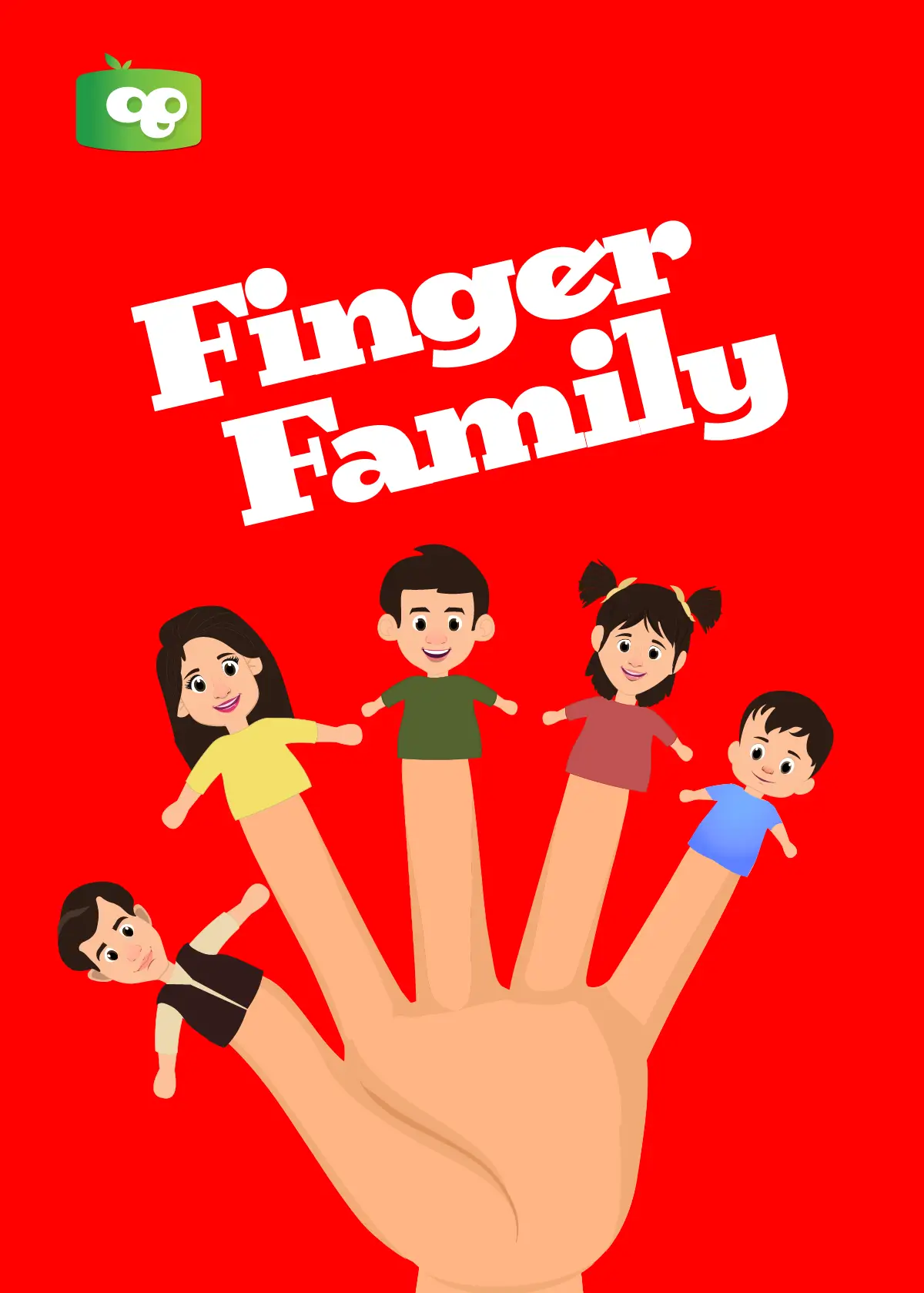
It's roll call time for the finger family! One by one, each finger gets their moment to shine. Daddy finger starts things off, popping up when called and giving a cheerful greeting. Then Mommy finger, Brother finger, Sister finger, and finally tiny Baby finger each take their turn. The simple "Where are you? Here I am!" pattern creates a delightful game of hide-and-seek that toddlers absolutely love. Every finger gets celebrated, and by the end, your little one will be wiggling all five fingers and singing along!
How We Teach It (the clever part)
- First 30 seconds: The song introduces the pattern with Daddy finger, establishing the call-and-response format so children understand the game
- Middle 40 seconds: Each new finger reinforces the same pattern, building confidence through predictable repetition while introducing new vocabulary
- Final 20 seconds: Baby finger wraps things up, and the familiar ending gives children a sense of completion and mastery
Teaching trick: The identical question-answer structure for each finger lets toddlers predict what's coming next—and there's nothing a toddler loves more than being right! This predictability builds confidence and encourages participation.
After Watching: Quick Wins to Reinforce Learning
- Mealtime activity: "Can you pick up that cheerio with your pointer finger and thumb?" (Practices finger isolation and names while building fine motor control)
- Car/travel activity: "Let's play Finger Family! Which finger should we call first?" (Reinforces finger names and lets your child lead the song)
- Bedtime activity: "Time to say goodnight to each finger! Wave night-night, thumb. Wave night-night, pointer..." (Calming repetition while practicing finger identification)
- Anytime activity: "How many fingers am I holding up? Can you match me?" (Combines finger recognition with early counting skills)
When Kids Get Stuck. And How to Help.
- "My child just watches but won't move their fingers along." - Totally normal! Young toddlers often need to watch several times before participating. Try holding their hand gently and wiggling each finger together—they'll join in when ready.
- "They mix up the finger names constantly." - Finger names are tricky! Focus on just thumb and pinky first (the most distinct), then gradually add the middle three. Repetition over days and weeks is the secret.
- "This seems too simple for my child." - Perfect! Use it as a springboard—try singing faster, slower, or in silly voices. Ask "What sound does Daddy finger make?" to extend the learning creatively.
What Your Child Will Learn
Prerequisites and Building Blocks
This video works beautifully as an entry point for children just beginning their Kokotree journey. No prior skills are required—even pre-verbal toddlers benefit from the visual and musical elements. It builds foundational body awareness that supports future counting videos, fine motor skill activities, and more complex songs. This content naturally leads into number recognition (counting fingers 1-5) and prepares children for hand-based learning activities throughout the curriculum.
Cognitive Development and Teaching Methodology
The call-and-response format leverages what developmental psychologists call "serve and return" interactions—a cornerstone of early brain development. Repetitive song structures support memory consolidation in toddlers whose hippocampi are still developing. The video addresses multiple learning styles: visual learners see each finger highlighted, auditory learners absorb the melodic pattern, and kinesthetic learners are naturally prompted to move their own fingers along with the song.
Alignment with Educational Standards
This video supports several kindergarten readiness indicators including body part identification (Head Start Early Learning Outcomes Framework), following simple verbal patterns (NAEYC language standards), and fine motor awareness (early childhood physical development benchmarks). Teachers expect incoming kindergarteners to identify basic body parts and follow call-and-response patterns—skills directly practiced here. The content aligns with pre-K music and movement standards across multiple curricula.
Extended Learning Opportunities
Pair this video with finger painting activities to reinforce finger awareness through tactile experience. The Kokotree app includes related counting songs and hand-movement games that build on these skills. Try tracing each finger on paper and labeling them, or create simple finger puppets from paper scraps. For extended screen-free play, introduce classic games like "Where is Thumbkin?" or "Itsy Bitsy Spider" that use similar finger isolation skills.
Transcript Highlights
- "Daddy finger, daddy finger, where are you?" — Introduces the call portion of the pattern, teaching question formation
- "Here I am, here I am, how do you do?" — Models polite greeting responses and social language
- "Baby finger, baby finger, where are you?" — Uses size vocabulary (baby = small) naturally within context
- The consistent repetition of "How do you do?" introduces formal greeting language in a playful, memorable way
Character Development and Story Arc
The animal characters in this video model enthusiastic participation and joyful responses. Each character demonstrates the positive behavior of answering when called—an early social skill toddlers are actively developing. The characters show eagerness rather than reluctance, modeling the growth mindset attitude of "I'm here and ready!" This teaches children that being present and participating is fun and rewarding, setting the stage for classroom readiness behaviors.
Body Awareness and Fine Motor Development Deep Dive
Finger identification might seem simple, but it's a crucial developmental milestone with far-reaching implications. The ability to isolate and name individual fingers—called "finger gnosis" in developmental literature—is strongly correlated with later mathematical ability. Research shows that children who can identify their fingers without looking perform better on number tasks years later.
This connection exists because finger representation and number representation share neural real estate in the brain's parietal lobe. When toddlers learn to distinguish their pointer from their middle finger, they're literally building the brain architecture that will later support counting, addition, and number sense.
The song's structure also supports proprioceptive development—the body's ability to sense where its parts are in space. Each time a child wiggles their "daddy finger" on cue, they're strengthening the neural pathways between their brain and that specific digit. This proprioceptive awareness is foundational for later skills like holding a pencil correctly, buttoning buttons, and using scissors.
The repetitive musical format isn't just catchy—it's scientifically optimal for toddler learning. Songs activate both hemispheres of the brain simultaneously, creating stronger memory traces than spoken words alone. The predictable pattern reduces cognitive load, allowing children to focus their mental energy on the new vocabulary rather than trying to figure out what comes next. This is why nursery rhymes have endured across centuries and cultures—they're perfectly engineered for the developing brain.