
What's If You Are Happy And You Know It About?
Your child will sing, move, and learn to express happiness through seven different actions—from clapping hands to jumping for joy! They'll build the connection between feelings and physical expression while getting a fun movement break.
2.5 minutes
Ages 1-6
Skill: Emotional expression through movement
Your kid watches friendly animals demonstrate fun actions on command. You get 2.5 minutes to [finish that cup of coffee while it's still warm].
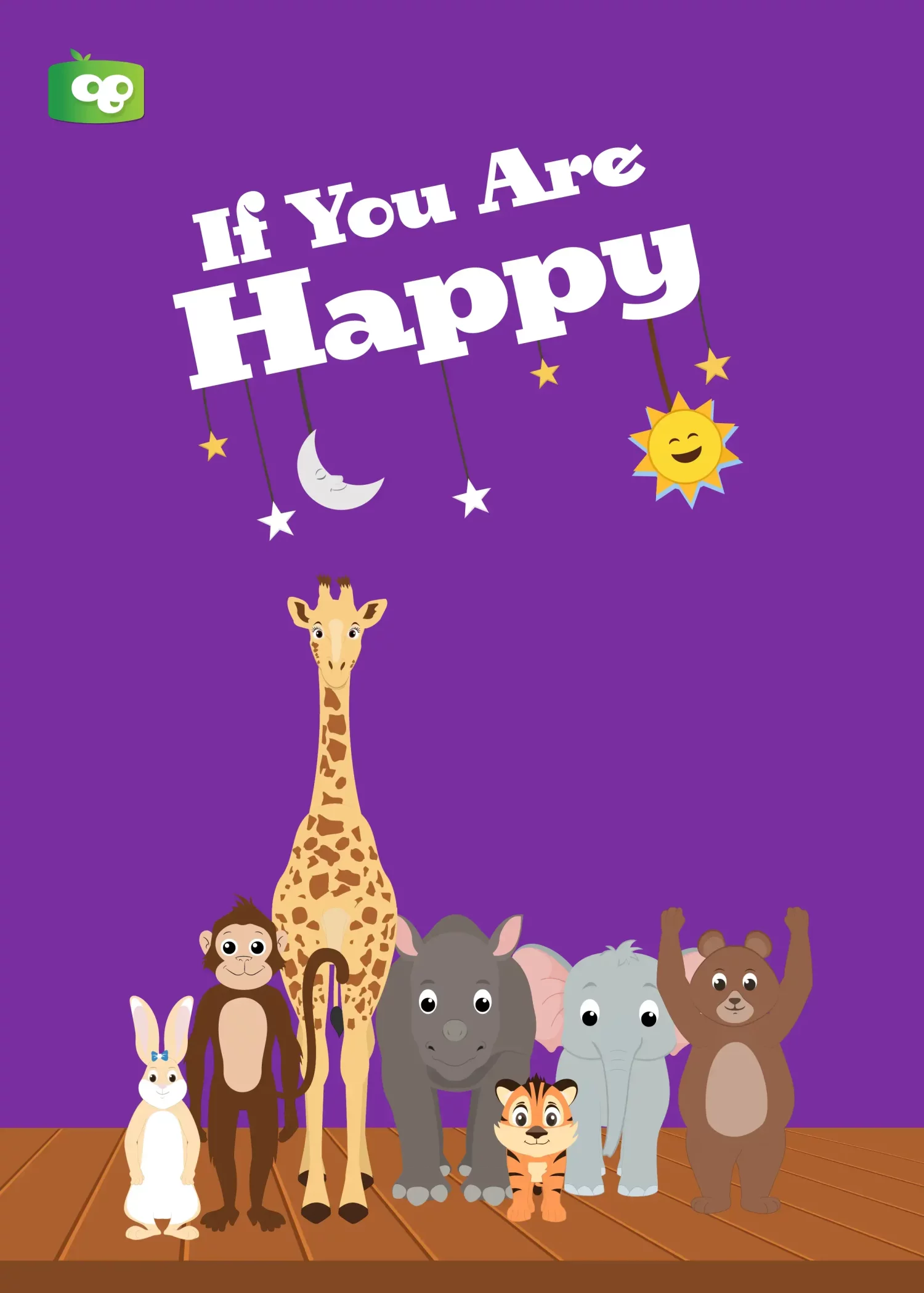
Colorful animal friends from the Kokotree universe sing and demonstrate each action clearly—clapping, stomping, shouting hooray, winking, laughing, jumping, and shaking their heads. The repetitive structure gives kids multiple chances to follow along and master each movement before moving to the next one.
What your child learns:
This classic action song teaches children to identify the emotion of happiness and express it through purposeful body movements. The call-and-response format builds listening skills while the variety of actions develops coordination and body awareness.
- Connecting emotions to facial expressions ("your face will surely show it")
- Following multi-step verbal instructions
- Gross motor coordination (stomping, jumping, clapping)
- Fine motor control (winking, controlled clapping)
- Turn-taking and anticipation skills
They'll use these skills when:
- Following directions at preschool ("clap when you hear your name")
- Expressing feelings appropriately instead of acting out
- Participating in group games and circle time activities
- Learning new dances or movement activities at birthday parties
The Story (what keeps them watching)
The Kokotree animal friends invite your child to join a celebration of happiness! Starting with the familiar clap-clap, they guide little ones through increasingly fun challenges—can you stomp your feet? What about winking? Each verse builds excitement as kids master new movements. The song circles back to clapping at the end, giving children a satisfying "I know this one!" moment. It's simple, joyful, and impossible not to move along!
How We Teach It (the clever part)
- First 45 seconds: Introduces the concept with the most familiar action—clapping. Kids hear the pattern three times, building confidence before any new challenge.
- Minutes 1-2: Cycles through five new actions (stomping, shouting, winking, laughing, jumping), each repeated enough times for kids to catch on and join in.
- Final 30 seconds: Returns to clapping, reinforcing mastery and ending on a high note of "I did it!"
Teaching trick: Each action gets a distinct sound effect ("clap clap," "stomp stomp," "wink wink") that serves as both instruction and confirmation. Kids learn to anticipate these cues, building the listening-then-doing pattern that's essential for classroom success.
After Watching: Quick Wins to Reinforce Learning
- Mealtime activity: "Show me your happy face! Now show me how you look when you're surprised!" (Practices connecting emotions to facial expressions—the core concept of the song)
- Car/travel activity: "Let's play the action game—when I say 'stomp,' tap your feet! When I say 'clap,' clap your hands!" (Reinforces listening and responding to verbal cues)
- Bedtime activity: "What made you happy today? Can you show me with your face?" (Extends emotional vocabulary and expression beyond the song)
- Anytime activity: Make up new verses together! "If you're happy and you know it, touch your nose!" (Builds creativity while practicing the pattern)
When Kids Get Stuck. And How to Help.
- "My child just watches and won't do the actions." - Totally normal, especially for younger toddlers! They're learning by watching first. Try doing the actions yourself enthusiastically nearby—they'll join when ready, often surprising you days later.
- "She can't wink—she just blinks both eyes!" - Winking is actually a complex motor skill that develops between ages 3-5. Celebrate the attempt! You can substitute "blink your eyes" or gently hold one eye closed to help her feel the movement.
- "He gets frustrated when a new action comes before he's mastered the last one." - Replay the video and pause between verses, or focus on just 2-3 actions at first. Mastery feels great—let him build confidence before adding complexity.
What Your Child Will Learn
Prerequisites and Building Blocks
This video works beautifully as an entry point—no prerequisites needed! Children benefit from basic understanding of body parts (hands, feet, head, eyes) but will learn these through context. This song builds foundational skills for more complex movement songs and prepares children for classroom instruction-following. It connects naturally to emotion-identification content and serves as a bridge to more advanced gross motor activities in the Kokotree curriculum.
Cognitive Development and Teaching Methodology
The call-and-response format leverages procedural memory—children learn patterns through repetition before conscious understanding kicks in. This video addresses all three learning styles: visual (watching demonstrations), auditory (hearing instructions and music), and kinesthetic (performing movements). The predictable structure reduces cognitive load, allowing children to focus on motor execution rather than figuring out what comes next.
Alignment with Educational Standards
This video supports multiple kindergarten readiness indicators: following two-step directions (listen, then act), demonstrating body awareness and control, and identifying basic emotions. It aligns with early childhood physical development standards for gross and fine motor coordination. Teachers expect incoming kindergarteners to participate in group movement activities and follow verbal instructions—this video directly practices both skills.
Extended Learning Opportunities
Pair this video with emotion flashcards to extend feeling vocabulary beyond "happy." The Kokotree app includes related movement songs that build on these skills with increasingly complex action sequences. Create a simple feelings chart where children can point to how they feel, then show it with their face and body. Drawing "happy faces" reinforces the face-emotion connection introduced in the lyrics.
Transcript Highlights
- "If you're happy and you know it then your face will surely show it" — Key teaching moment connecting internal feelings to external expression
- "Clap, clap!" / "Stomp, stomp!" — Clear, rhythmic cues that model the expected response timing
- The progression from hands → feet → voice → eyes → whole body demonstrates intentional scaffolding from gross to fine motor skills
Character Development and Story Arc
The Kokotree animal characters model enthusiastic participation and joyful learning throughout the video. They demonstrate each action clearly and with obvious delight, showing children that movement and expression are fun rather than tasks to complete. The characters' consistent energy models persistence—they keep going through all seven actions with the same enthusiasm, teaching children that participation itself is rewarding.
Movement, Emotion, and Early Childhood Development: A Deep Dive
The connection between physical movement and emotional expression is fundamental to early childhood development. When children clap, stomp, or jump "for joy," they're not just exercising—they're building crucial neural pathways between their emotional centers and motor control systems.
This song introduces a concept developmental psychologists call "embodied cognition"—the idea that our bodies and movements are integral to how we understand and process emotions. For young children who are still developing emotional vocabulary, physical expression often comes more naturally than words. A child who can't yet say "I'm so excited!" can absolutely jump up and down to show it.
The seven actions in this video strategically progress in complexity. Clapping and stomping are bilateral movements (both sides of the body doing the same thing), which are developmentally easier. Winking requires inhibiting one side while activating the other—a more advanced skill that typically emerges around age 4. By including both, the video meets children where they are while offering stretch goals.
The repetitive structure serves a neurological purpose: each action is performed at least six times within its verse. Research suggests young children need 6-8 repetitions to move new motor patterns from conscious effort to automatic execution. The song's structure naturally provides this practice.
Perhaps most importantly, this video teaches children that emotions are meant to be expressed, not suppressed. The central message—"if you're happy and you know it, then your face will surely show it"—validates emotional expression as natural and good. This builds the foundation for healthy emotional development and gives children socially appropriate ways to share their feelings with the world around them.