
What's Johnny Johnny Yes Papa About?
Sing along to this classic nursery rhyme and watch your child master the art of call-and-response! They'll practice listening carefully, responding on cue, and building the conversational patterns that form the foundation of early communication.
1.5 minutes
Ages 1-4
Skill: Language Rhythm & Communication Patterns
Your kid watches adorable animals sing a playful question-answer song. You get 1.5 minutes to [grab that coffee/check one email/take a breath].
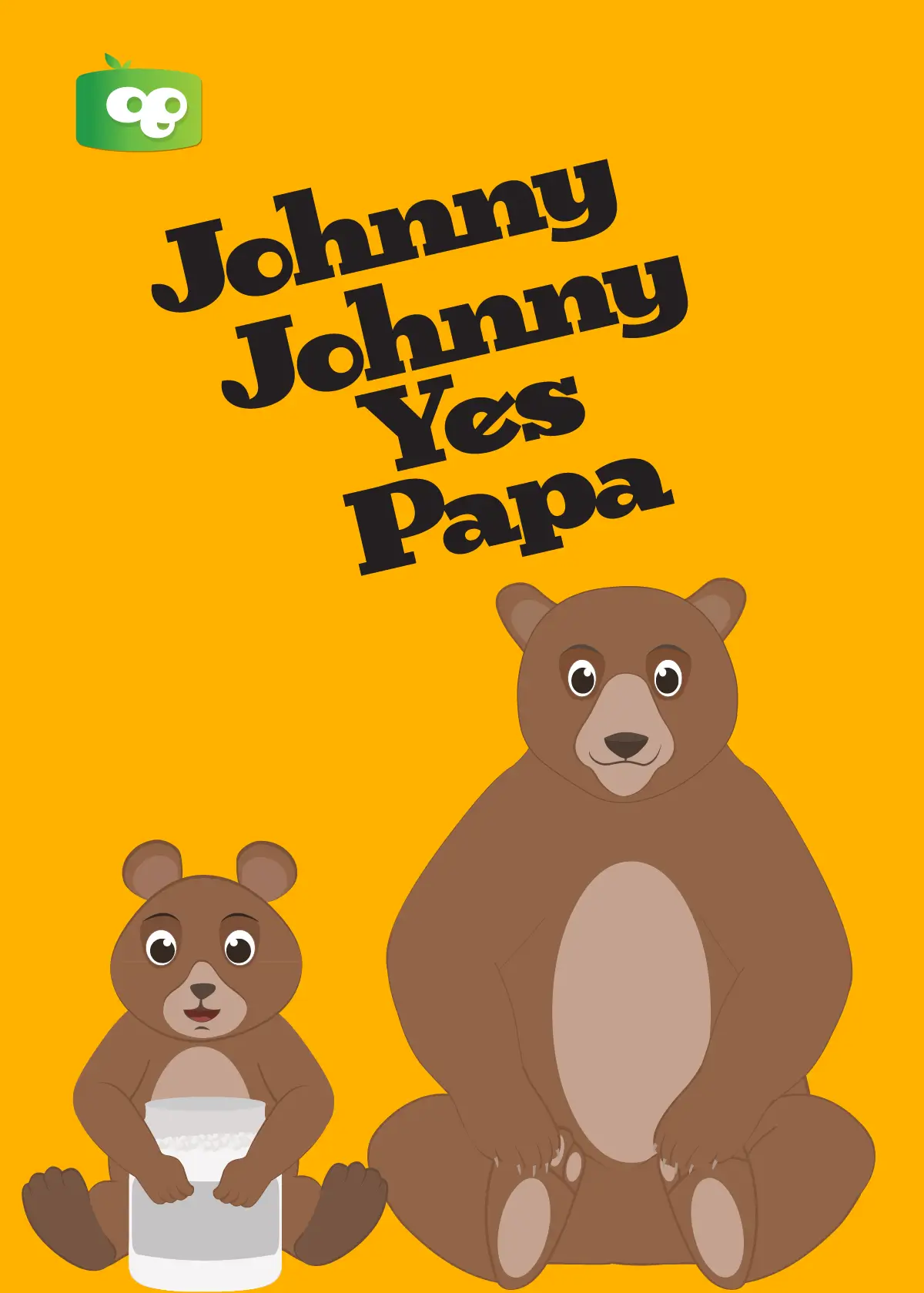
Friendly Kokotree animal characters act out this beloved nursery rhyme with bright, engaging animation. The simple back-and-forth dialogue repeats three times, giving little ones multiple chances to anticipate what comes next and join in with the "Ha-ha-ha!" ending.
What your child learns:
This timeless rhyme teaches the fundamental building blocks of conversation—listening for a question and giving a response. The repetitive structure helps young minds predict patterns and builds confidence in verbal participation.
- Call-and-response communication patterns
- Question recognition and answering skills
- Memory through musical repetition
- Anticipation and prediction abilities
- Joyful participation in group singing
They'll use these skills when:
- Answering questions from caregivers ("Did you wash your hands?" "Yes!")
- Participating in circle time songs at preschool
- Playing interactive games with siblings or friends
- Following simple conversational turn-taking with adults
The Story (what keeps them watching)
The Kokotree animal friends bring this classic nursery rhyme to life! A little one named Johny gets caught in a playful exchange—Papa asks questions, Johny responds, and the whole thing ends with a big "Ha-ha-ha!" that kids can't resist joining. The song repeats three times with cheerful animation, giving children the chance to learn the pattern, anticipate what's coming, and sing along by the final round. It's simple, silly, and perfectly designed for the youngest learners who love knowing what comes next!
How We Teach It (the clever part)
- First 30 seconds: The catchy intro melody hooks attention while the first verse introduces the question-answer pattern slowly and clearly.
- Seconds 30-60: The second repetition reinforces the pattern—children start recognizing what comes next and may begin mouthing along.
- Final 30 seconds: By the third round, kids are ready to participate! The familiar pattern invites them to answer "No, Papa!" and laugh along with the ending.
Teaching trick: The three-repetition structure isn't random—it follows the "I do, we do, you do" teaching model. First kids listen, then they recognize, then they participate. By the third verse, they're the experts!
After Watching: Quick Wins to Reinforce Learning
- Mealtime activity: "Are you eating your carrots? Yes, Mama/Papa!" Play the question-answer game at the table using the same rhythm. (Practices call-and-response in real conversation)
- Car/travel activity: Take turns being the question-asker: "Are we driving? Yes, we are!" "Do you see trees? Yes, I do!" (Builds pattern recognition and turn-taking)
- Bedtime activity: Create a sleepy version: "Are you tired? Yes, Papa. Closing eyes? Yes, Papa. Time for sleep? Ha-ha-ha!" (Reinforces the rhythm in a calming context)
- Anytime activity: Play "Yes/No" with stuffed animals—ask your child's toy questions and have your child answer for them. (Extends imaginative play while practicing the communication pattern)
When Kids Get Stuck. And How to Help.
- "My child just watches and doesn't sing along" - Totally normal for ages 1-3! They're absorbing the pattern even when quiet. After several viewings, try pausing before "Yes, Papa" and see if they fill in the blank. Silent learning counts!
- "They only want to watch this one on repeat" - Repetition is exactly how toddler brains cement new patterns. Let them master this one—the confidence they build transfers to learning new songs later.
- "Is this teaching anything beyond a silly song?" - Absolutely! Call-and-response is a foundational communication skill. Speech therapists actually use this exact pattern to help children learn conversational turn-taking. You're building real language skills!
What Your Child Will Learn
Prerequisites and Building Blocks
This video is perfect for children just beginning their language journey—no prerequisites needed! It builds on natural infant communication patterns (cooing back and forth with caregivers) and prepares children for more complex conversational skills. Within the Little Seeds program, this video connects to other music and rhythm content, laying groundwork for phonemic awareness activities that come later in the learning progression.
Cognitive Development and Teaching Methodology
The repetitive structure aligns perfectly with how toddler brains learn—through pattern recognition and predictability. This video employs scaffolded repetition, allowing children to move from passive listening to active participation within 90 seconds. The musical format engages auditory learners while the animated visuals support visual processors. Kinesthetic learners can clap along or act out the movements.
Alignment with Educational Standards
This content supports early learning standards for language development, specifically "responds appropriately to questions" and "participates in songs and fingerplays." It addresses kindergarten readiness indicators around following verbal patterns and demonstrates the call-and-response format used extensively in early literacy instruction. Teachers expect incoming students to participate in group songs—this builds that exact skill.
Extended Learning Opportunities
Extend learning with the Kokotree "Sing Along" activity cards featuring pause-and-respond exercises. Pair with other nursery rhyme videos in the app to build a repertoire of participatory songs. Create a "question jar" at home where children practice answering silly yes/no questions. The Kokotree parent guide includes printable rhythm cards that match this video's beat pattern.
Transcript Highlights
- "Johny, Johny. Yes, Papa?" — Models the question-response pattern with clear, simple language
- "Eating sugar? No, Papa." — Demonstrates answering a yes/no question with a complete response
- "Open your mouth! Ha-ha-ha!" — Shows playful resolution and invites joyful participation
- The three-time repetition structure — Provides multiple exposure for pattern mastery
Character Development and Story Arc
The Kokotree animal characters model playful communication between a young character and caring adult figure. Johny demonstrates appropriate responding—listening to questions and giving clear answers. The gentle humor of the "Ha-ha-ha!" ending shows that communication can be fun and joyful. This models positive interaction patterns and shows children that back-and-forth conversation is an enjoyable, connecting experience worth participating in.
Language Development Deep Dive: The Science of Call-and-Response Learning
Call-and-response isn't just a catchy song format—it's one of the most powerful tools in early language development. This pattern, found in cultures worldwide, mirrors the "serve and return" interactions that neuroscientists identify as critical for brain development in the first years of life.
When a child hears "Johny, Johny" and learns to respond "Yes, Papa," they're practicing several complex skills simultaneously. First, they must attend to auditory input—recognizing that a question has been asked. Then they must process that this question requires a response. Finally, they must produce appropriate language at the right moment. This sequence forms the foundation of all human conversation.
The musical element adds another layer of learning. Research shows that rhythm helps children segment speech into manageable chunks, making language patterns easier to remember and reproduce. The predictable melody creates what linguists call a "phonological loop"—a memory system that helps children hold and practice verbal information.
Repetition is intentional and essential. Young brains require multiple exposures to cement new neural pathways. By hearing the same exchange three times within 90 seconds, children move through the stages of language acquisition: comprehension (understanding the pattern), recognition (anticipating what comes next), and finally production (joining in themselves).
This nursery rhyme also introduces pragmatic language skills—the social rules of conversation. Children learn that questions deserve answers, that we take turns speaking, and that communication can be playful and connecting. These "soft skills" predict later success in classroom participation and peer relationships.