
What's Ring Around The Rosie About?
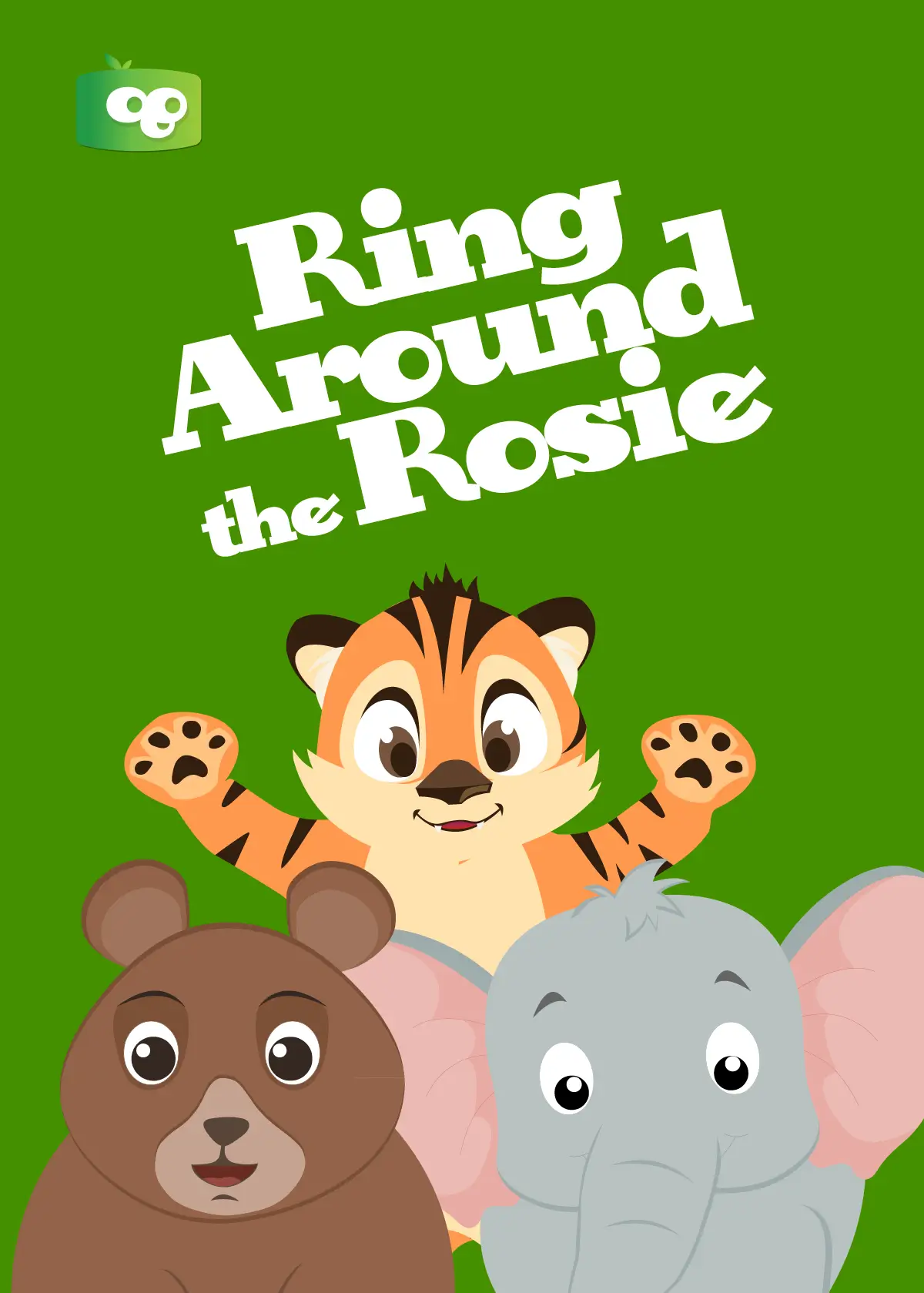
Watch your child light up as adorable animal friends hold hands and dance in joyful circles to this timeless nursery rhyme! They'll practice moving their bodies to music and discover the fun of predictable patterns.
2 minutes
Ages 1-4
Skill: Movement, rhythm, and pattern recognition
Your kid watches animal friends dance and fall down giggling. You get 2 minutes to [finish that coffee or fold some laundry].
Colorful animal characters from the Kokotree universe join hands and move in a circle while singing the beloved nursery rhyme. Each verse builds anticipation until everyone tumbles down together in a playful heap. The repetition helps little ones predict what comes next.
What your child learns:
This classic song teaches more than just a catchy tune. The repetitive structure helps young minds understand patterns and sequences, while the physical movements build body awareness and coordination.
- Circular movement and spatial awareness
- Anticipating patterns and sequences
- Rhythm recognition and keeping time with music
- Gross motor coordination (spinning, bending, falling safely)
- Following multi-step directions through song
They'll use these skills when:
- Playing circle games at the playground with other children
- Following directions that involve movement sequences
- Dancing at family gatherings or music time
- Participating in group activities at preschool or playgroups
The Story (what keeps them watching)
The Kokotree animal friends gather together for a classic game of Ring Around The Rosie! They hold hands, forming a happy circle, and begin to sing the familiar tune. Round and round they go, voices rising with excitement. When "ashes, ashes" arrives, everyone knows what's coming—the big tumble down! Each repetition builds joyful anticipation as little viewers wait for their favorite part. The animals pop back up, ready to go again, modeling the pure delight of repetitive play that young children naturally crave.
How We Teach It (the clever part)
- First 30 seconds: The song begins, establishing the circular movement pattern and introducing the melody that children will quickly recognize and remember.
- Seconds 30-60: Repetition reinforces the pattern. Children start anticipating the "fall down" moment, building prediction skills and engagement.
- Final 40 seconds: Multiple repetitions cement the sequence in memory, allowing children to sing along and move with confidence.
Teaching trick: The song repeats five times—not by accident! Young brains need 5-7 exposures to internalize a pattern. By the third round, your child is already predicting the "fall down" moment, building those crucial sequencing skills.
After Watching: Quick Wins to Reinforce Learning
- Living room activity: "Let's play Ring Around The Rosie together!" Hold hands with your child and act out the song. (Practices gross motor skills and following movement sequences)
- Anytime activity: "Can you show me how the animals fell down?" Ask your child to demonstrate the falling motion safely. (Reinforces body control and safe movement)
- Music time activity: "What comes after 'ashes, ashes'?" Pause before the ending and let them shout "we all fall down!" (Builds pattern completion and memory)
- Outdoor activity: "Let's walk in a circle like the animals did!" Practice circular movement around a tree or playground object. (Extends spatial awareness to new environments)
When Kids Get Stuck. And How to Help.
- "My child just watches and won't move along." - Totally normal! Many toddlers observe several times before joining in. Keep playing the video and modeling the movements yourself—they're learning even when still.
- "They only want to watch the falling down part." - That's the best part! Use their interest by counting "1, 2, 3... fall down!" This turns their favorite moment into counting practice.
- "My child gets dizzy spinning in circles." - Keep circles slow and small for little ones. You can also walk in a circle instead of spinning—same learning, less wobbling!
What Your Child Will Learn
Prerequisites and Building Blocks
This video is ideal for children who can stand independently and are beginning to enjoy music. It builds on basic listening skills and early exposure to nursery rhymes. Ring Around The Rosie serves as a foundation for more complex movement songs and circle games. Children who master this pattern recognition will be ready for songs with multiple movements and longer sequences in the Kokotree learning progression.
Cognitive Development and Teaching Methodology
Repetitive songs align perfectly with how toddler brains learn—through consistent, predictable patterns. The anticipation-reward cycle (singing then falling) releases dopamine, making learning feel like play. This video addresses kinesthetic learners through movement, auditory learners through melody and rhythm, and visual learners through watching the animated characters demonstrate each action in sequence.
Alignment with Educational Standards
This video supports early childhood movement standards and kindergarten readiness indicators for gross motor development. It aligns with music education standards for rhythm recognition and pattern awareness. Teachers expect incoming kindergarteners to follow two-step directions and participate in group movement activities—skills directly practiced here through the song's predictable structure.
Extended Learning Opportunities
Pair this video with other Kokotree movement songs to build a "dance party" routine. Create a simple printable with circles for children to trace, connecting the circular dance to shape recognition. Use stuffed animals to act out the song, extending imaginative play. Practice the song outdoors where falling down is extra fun on soft grass!
Transcript Highlights
- "Ring around the rosy" - Introduces circular movement vocabulary
- "A pocket full of posies" - Adds rhythmic complexity and new words
- "Ashes, ashes" - Builds anticipation through repetition
- "We all fall down" - Delivers the satisfying pattern completion children crave
Character Development and Story Arc
The Kokotree animal characters model joyful participation and cooperative play throughout this video. They demonstrate how to join hands with friends, move together as a group, and share in the excitement of the "fall down" moment. By showing characters who eagerly get back up to play again, the video reinforces persistence and the joy of repetition—key attitudes for early learners.
Movement and Music Development Deep Dive
Circle games like Ring Around The Rosie represent some of humanity's oldest forms of communal play, and there's developmental science behind their enduring appeal. For children ages 1-4, circular movement activities build vestibular awareness—the sense that helps us understand where our body is in space. This foundational skill supports everything from learning to write (knowing where your hand is relative to the paper) to playing sports.
The predictable structure of nursery rhymes serves crucial cognitive functions. When children hear "ashes, ashes," their brains are already preparing for "we all fall down." This prediction-confirmation cycle strengthens neural pathways associated with pattern recognition—the same pathways that will later help them recognize letter patterns in reading and number patterns in math.
The physical act of falling down (safely!) teaches body control and spatial awareness. Children learn to bend their knees, lower their center of gravity, and control their descent. These gross motor skills form the foundation for fine motor development. Research consistently shows that children who have strong gross motor skills in early childhood develop better handwriting and tool manipulation later.
Musically, this song introduces 6/8 time signature in an accessible way. The lilting rhythm naturally encourages swaying and circular movement. Children internalize musical timing through their bodies before they can intellectually understand concepts like beats and measures. This embodied learning creates lasting neural connections between movement and music that support future musical education.
The social element cannot be overlooked. Circle games require cooperation, turn-awareness, and shared timing. Children must coordinate their movements with others—an early exercise in social synchrony that builds empathy and connection.