
What's London Bridge Is Falling Down About?
Your little one will sing, bounce, and learn about building materials through this beloved nursery rhyme! They'll discover why bridges need strong materials and start thinking like a tiny engineer.
3 minutes
Ages 1-6
Skill: Materials & Basic Engineering Concepts
Your kid watches friendly animals rebuild a falling bridge. You get 3 minutes to finish your coffee.
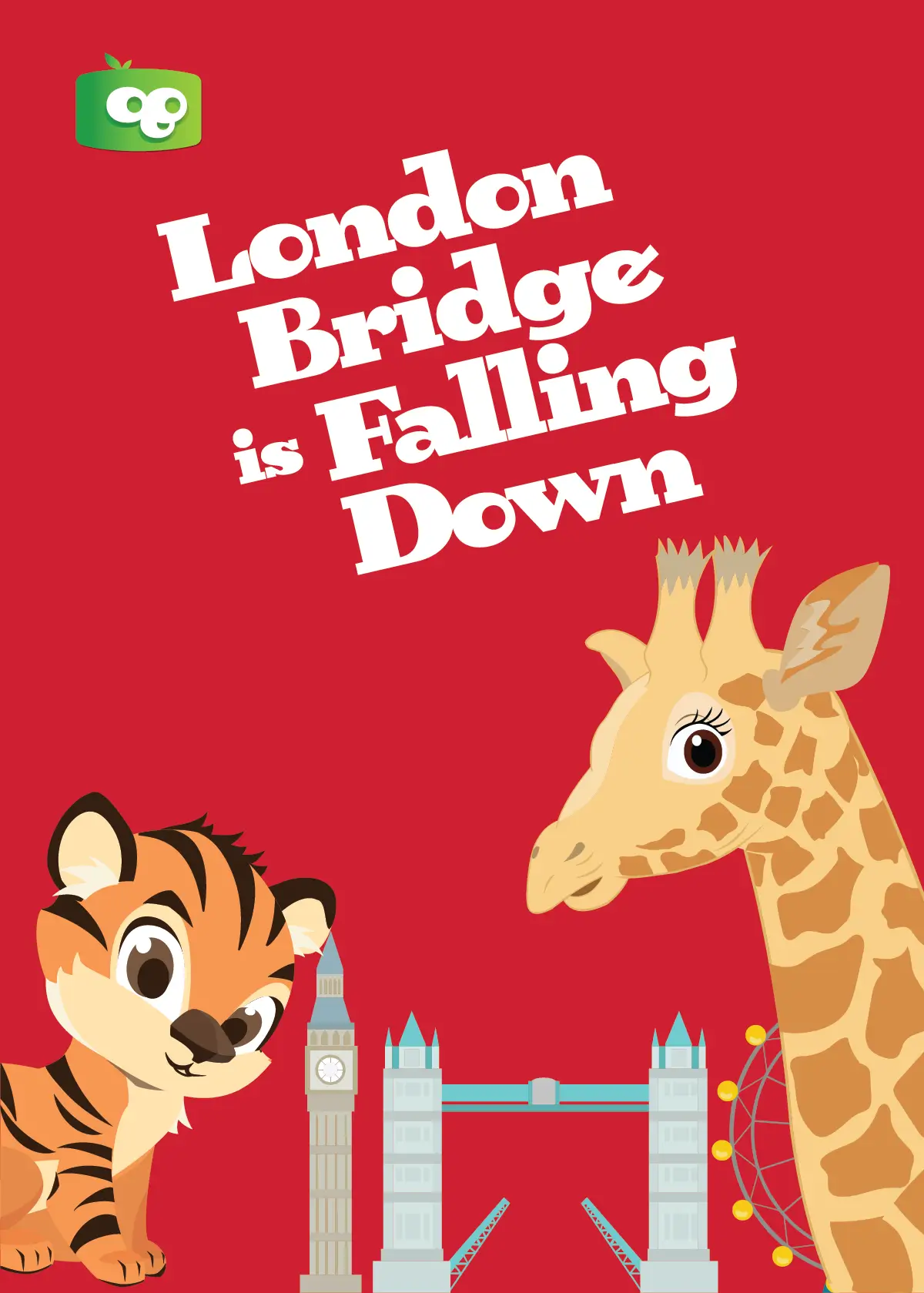
Colorful animal friends from the Kokotree universe sing this classic tune while showing different building materials—wood, clay, bricks, mortar, iron, and steel. Each verse introduces a new material and explains why it might or might not hold up a bridge. The repetitive melody and simple words make it perfect for little voices to join in.
What your child learns:
This isn't just a catchy tune—it's a sneaky introduction to materials science! Your child will start noticing what things are made of and asking "why" questions about the world around them.
- Identifies different building materials (wood, clay, bricks, steel)
- Understands that some materials are stronger than others
- Develops vocabulary for describing properties (wash away, bend, bow)
- Practices repetition and pattern recognition through the song structure
- Builds memory skills through predictable verse patterns
They'll use these skills when:
- Stacking blocks and noticing which towers stay up longest
- Walking past construction sites and naming materials they see
- Building sandcastles and understanding why they fall down
- Playing with friends and explaining why their LEGO bridge is "super strong"
The Story (what keeps them watching)
Oh no—London Bridge keeps falling down! Our Kokotree animal friends try rebuilding it with different materials, but nothing seems to work at first. They start with wood and clay, but it washes away. Bricks and mortar? Still not strong enough. Iron and steel? Those bend and bow! Through each attempt, kids learn that building something strong takes the right materials. The catchy "falling down, falling down" chorus keeps little ones engaged while the problem-solving journey teaches persistence and critical thinking.
How We Teach It (the clever part)
- First minute: The problem is introduced—the bridge is falling! Wood and clay are tried first, and kids learn these materials can wash away with water.
- Minutes 1-2: New materials are tested. Bricks and mortar, then iron and steel. Each verse explains why these materials have limitations too.
- Final minute: The song circles back to the beginning, reinforcing the pattern and letting kids anticipate what comes next. Repetition cements the vocabulary.
Teaching trick: Each material gets its own verse with a specific reason for failing ("wash away," "will not stay," "bend and bow"). This cause-and-effect structure helps toddlers understand that different materials have different properties—not just "strong" or "weak."
After Watching: Quick Wins to Reinforce Learning
Mealtime activity: "What's your spoon made of? What about your plate?" Point to different items and have your child guess if they're made of wood, metal, or something else. (Practices material identification in everyday objects)
Car/travel activity: "I spy something made of... metal!" Look out the window and take turns finding things made of different materials—metal signs, wooden fences, brick buildings. (Extends material vocabulary to the real world)
Bedtime activity: "Let's build a pillow bridge! Will it stay up or fall down?" Stack pillows and stuffed animals, then gently test if the "bridge" holds. Talk about why soft things aren't great for building. (Connects song concepts to hands-on play)
Anytime activity: "Can you build me the strongest block tower?" After it falls, ask: "What could we use to make it even stronger?" Let them experiment with different toys as building materials. (Encourages engineering thinking and experimentation)
When Kids Get Stuck. And How to Help.
"My child just wants to sing 'falling down' over and over." - That's actually perfect! Repetition is how toddlers learn, and they're absorbing the rhythm and vocabulary even when it seems like just silly fun. After a few listens, casually ask "What made the bridge fall?" to check comprehension.
"They don't understand why wood washes away but steel bends." - These are abstract concepts for little minds! Make it concrete: show them a wooden spoon and a metal spoon, then gently bend a piece of paper versus trying to bend a book. Physical examples click faster than explanations.
"This seems too simple for my older preschooler." - Challenge them! Ask: "If you were building a bridge, what would YOU use?" or "What's the strongest thing in our house?" Older kids can handle deeper "why" questions and love showing off their reasoning skills.
What Your Child Will Learn
Prerequisites and Building Blocks
This video works beautifully for children just beginning to notice the physical world around them. No prior knowledge is needed—the song format makes it accessible even to one-year-olds who simply enjoy the melody. For older toddlers, it builds on basic vocabulary skills and any previous exposure to building toys like blocks. This video connects naturally to other Kokotree content about shapes, counting, and nature, laying groundwork for future STEAM exploration.
Cognitive Development and Teaching Methodology
The repetitive song structure aligns perfectly with how young brains learn—through patterns and predictability. Each verse follows the same format, allowing children to anticipate what comes next, which builds confidence and engagement. Visual learners see the materials on screen, auditory learners absorb the melody and words, and kinesthetic learners can clap, bounce, or pretend to build along. The cause-and-effect reasoning (material → failure reason) introduces logical thinking at a developmentally appropriate level.
Alignment with Educational Standards
This video supports early learning standards for science inquiry and physical properties of materials—concepts typically introduced in kindergarten readiness curricula. It aligns with NGSS foundations for understanding that different materials have different properties. The vocabulary development (wood, clay, bricks, mortar, iron, steel) supports language standards, while the pattern recognition in the song structure connects to early math concepts. Teachers expect entering kindergarteners to describe objects by observable properties.
Extended Learning Opportunities
Pair this video with block-building activities or the Kokotree shapes curriculum for reinforced learning. Create a simple sorting game with household items—plastic, wood, metal, fabric—and have children group them. Draw pictures of bridges using different materials. Explore related Kokotree videos about building, shapes, or nature. For screen-free extension, visit a playground and identify what the equipment is made of, discussing why metal slides are slippery and wooden benches are sturdy.
Transcript Highlights
- "Build it up with wood and clay" / "Wood and clay will wash away" — Introduces first material pair and its limitation
- "Build it up with bricks and mortar" / "Bricks and mortar will not stay" — Shows progression to stronger materials
- "Build it up with iron and steel" / "Iron and steel will bend and bow" — Demonstrates that even strong materials have weaknesses
- "London Bridge is falling down" — The repeated refrain reinforces the central problem and keeps children engaged
Character Development and Story Arc
While this video focuses on the classic nursery rhyme, the Kokotree animal characters model persistence and problem-solving throughout. They don't give up when the first material fails—they try again with something new. This demonstrates a growth mindset: when one solution doesn't work, we learn from it and try another approach. The cheerful tone throughout shows that making mistakes (a falling bridge!) is part of learning, not something to fear.
Introduction to Materials Science and Early Engineering Thinking
This beloved nursery rhyme is secretly a child's first materials science lesson! At its core, the song explores a fundamental engineering question: what makes a good building material?
Young children are natural engineers—they stack blocks, build sandcastles, and construct blanket forts. This video gives them vocabulary and concepts to think more deeply about what they're already doing. When the song mentions that wood and clay "wash away," it introduces the concept of water resistance. When iron and steel "bend and bow," children learn that even hard materials can change shape under pressure.
The progression from weaker to stronger materials (wood → bricks → metal) mirrors how real engineers think about material selection. Each material has properties—characteristics that make it useful for some things but not others. A wooden spoon is great for stirring soup but wouldn't make a good hammer. A metal bridge is strong but might rust over time.
For toddlers, this translates into noticing that their plastic cup doesn't break when dropped, but a glass one might. For preschoolers, it sparks questions like "Why are houses made of bricks?" or "Could we build a bridge out of paper?"
The repetitive structure also teaches the scientific method in miniature: try something, observe what happens, try something different. This hypothesis-testing approach is the foundation of all scientific thinking—and it starts with a silly song about a falling bridge!