
What's Row Row Row Your Boat About?
Your little one will rock, sway, and sing along to this beloved nursery rhyme while building rhythm awareness and language skills! After watching, they'll be humming the tune and pretending to row their own imaginary boat.
2 minutes
Ages 1-6
Skill: Rhythm, repetition, and early language development
Your kid watches friendly animals rowing and singing together. You get 2 minutes to sip your coffee in peace.
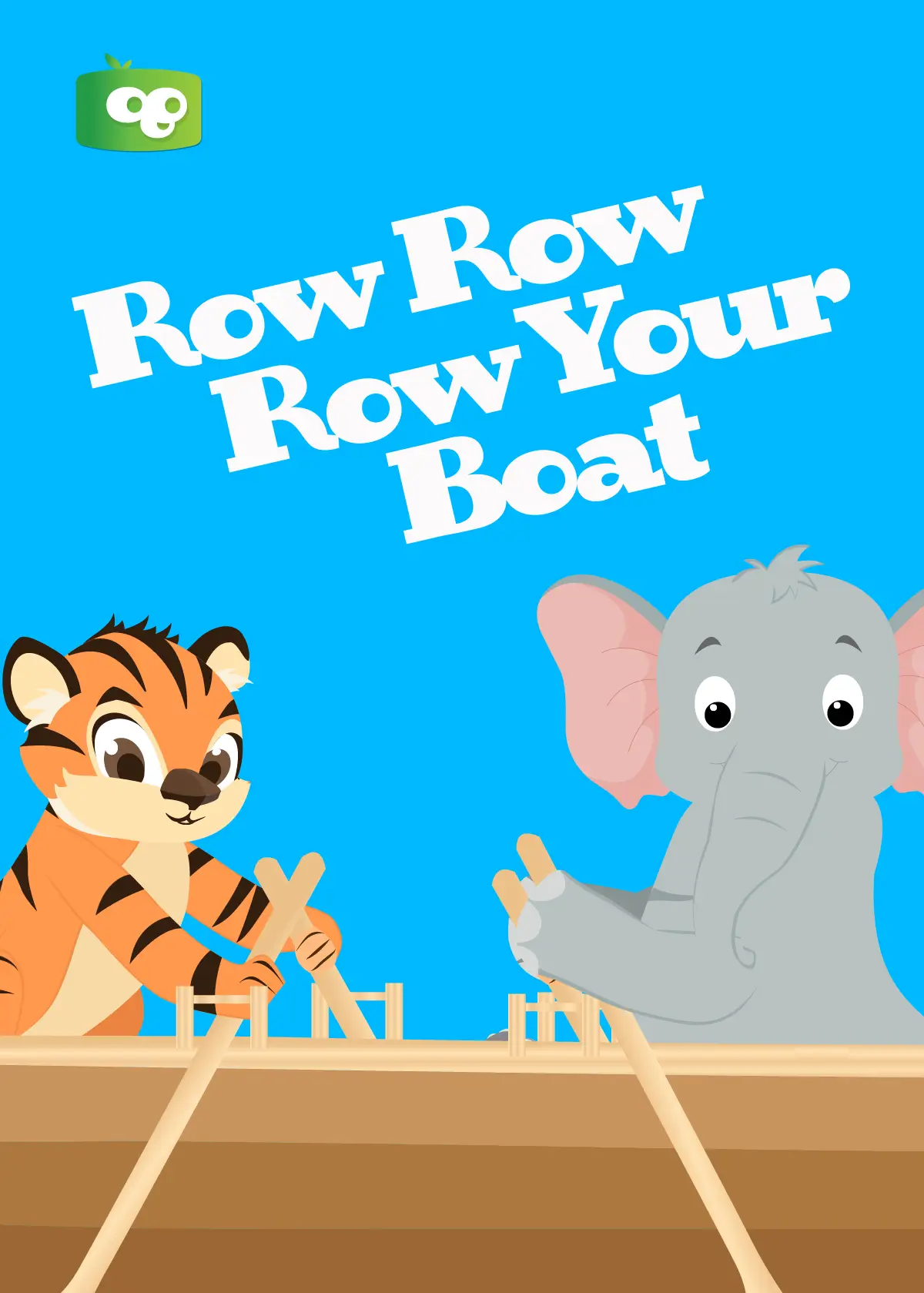
Watch adorable Kokotree animal friends gently rowing a boat down a peaceful, sparkling stream. The characters sway to the rhythm while singing the classic melody, with colorful nature scenes flowing by. Soft, calming visuals pair perfectly with the repetitive, easy-to-follow lyrics.
What your child learns:
This gentle nursery rhyme is a powerhouse for early development. The repetitive structure helps little brains predict what comes next, building memory and confidence. The steady rowing motion introduces rhythm concepts that form the foundation for music and even math skills later on.
- Keeping a steady beat through movement and clapping
- Learning new vocabulary (stream, merrily, gently)
- Building memory through song repetition
- Developing listening skills and auditory processing
- Practicing breath control and vocal expression
They'll use these skills when:
- Clapping along to music at a birthday party or playground
- Following instructions that have a rhythmic pattern
- Remembering sequences like brushing teeth steps
- Singing songs at preschool circle time
The Story (what keeps them watching)
Join the Kokotree animal friends on a peaceful boat ride down a gentle stream! The friendly characters row together in perfect harmony, their little boat gliding through beautiful nature scenes. As they sing the familiar melody over and over, your child gets drawn into the calming, repetitive rhythm. Each verse invites kids to join in, building confidence as they learn the simple words. By the end, everyone's rowing and singing together—pure, joyful simplicity that little ones want to experience again and again.
How We Teach It (the clever part)
- First 30 seconds: The melody and rowing motion are introduced gently, letting children absorb the tune and see the rowing action modeled by the animal characters.
- Seconds 30-90: The song repeats multiple times, giving children opportunities to join in, predict the lyrics, and practice the rhythm through repetition.
- Final 40 seconds: The familiar pattern continues, reinforcing memory and allowing confident participation as children sing along with ease.
Teaching trick: The song repeats the same verse multiple times intentionally—this isn't lazy, it's brilliant! Young brains need 4-6 repetitions to move information into memory. By the third round, your child is already anticipating the words.
After Watching: Quick Wins to Reinforce Learning
- Bathtime activity: "Let's row our boats!" Have your child use their hands to make rowing motions in the tub while singing together. (Practices rhythm, coordination, and memory recall)
- Car/travel activity: "Can you sing it slow, then fast?" Try singing the song at different speeds during your drive. (Explores tempo and builds vocal control)
- Bedtime activity: "Rock like a boat" Gently rock your child side to side while softly singing the song as a calming wind-down routine. (Reinforces rhythm and creates positive sleep associations)
- Anytime activity: "Find the stream!" When you see water—a puddle, sink, or bathtub—ask "Could a boat float here?" (Connects song vocabulary to real-world concepts)
When Kids Get Stuck. And How to Help.
- "My child just watches and won't sing along." Totally normal! Children absorb for weeks before producing. Keep singing yourself—they're learning even when silent. One day they'll surprise you with the whole song.
- "They can't keep the beat or clap in rhythm." Rhythm develops gradually between ages 2-5. Hold their hands and clap together, or tap the beat on their legs. Physical guidance helps their brain connect the dots.
- "They only want to watch this one video repeatedly!" Repetition is exactly how toddler brains work—it's a sign of healthy learning, not a problem. Each replay strengthens neural pathways and builds mastery.
What Your Child Will Learn
Prerequisites and Building Blocks
This video works beautifully as an entry point for musical learning—no prerequisites needed! Children benefit from basic attention span (30+ seconds) and exposure to any music or singing. "Row Row Row Your Boat" builds foundational skills that prepare children for more complex songs with multiple verses, action songs requiring coordination, and eventually round-singing. It connects naturally to other Kokotree nursery rhymes and water/nature content.
Cognitive Development and Teaching Methodology
Repetitive songs align perfectly with how young brains learn. At ages 1-6, children are in what educators call the "sensitive period" for language and music acquisition. This video uses spaced repetition—the same verse appears multiple times, allowing neural pathways to strengthen. Visual learners see the rowing motion, auditory learners hear the melody, and kinesthetic learners can move along. The predictable structure reduces cognitive load, letting children focus on participation.
Alignment with Educational Standards
This content supports Head Start Early Learning Outcomes in Language and Literacy (attending to language, engaging in songs) and Perceptual, Motor, and Physical Development (rhythm and movement). It aligns with kindergarten readiness indicators for phonological awareness—hearing rhymes, syllables, and sound patterns. Music educators recognize steady beat competence as a precursor to reading readiness, making this simple song surprisingly powerful.
Extended Learning Opportunities
Pair this video with boat-themed coloring pages featuring the Kokotree characters. Explore other water and nature songs in the app to build thematic connections. Create a simple paper boat for water play, reinforcing vocabulary. Use rhythm sticks or homemade shakers to practice the beat. The Kokotree app offers related content on water, animals, and more nursery rhymes that extend this gentle introduction to music.
Transcript Highlights
- "Row, row, row your boat" — Simple action verb repetition builds vocabulary and verb recognition
- "Gently down the stream" — Introduces descriptive adverb and nature vocabulary
- "Merrily, merrily, merrily, merrily" — Four-fold repetition emphasizes rhythm patterns and introduces emotion vocabulary
- "Life is but a dream" — Poetic language exposure, even for youngest listeners
Character Development and Story Arc
The Kokotree animal characters model joyful participation and cooperation throughout this video. They row together in synchronized motion, demonstrating teamwork without words. Their expressions show contentment and peaceful enjoyment—modeling positive emotional states. Young viewers see that singing and moving together is fun, not a task. The characters don't struggle or face challenges here; instead, they model the simple joy of musical participation, encouraging children to join in without fear of "getting it wrong."
Music and Rhythm Development Deep Dive
Nursery rhymes like "Row Row Row Your Boat" are foundational to early childhood music education for scientifically-backed reasons. The song operates in 6/8 time, creating a natural rocking or swaying motion that children instinctively feel. This "compound meter" mimics the rhythm of walking, rocking, and even heartbeats—making it deeply comforting and easy to internalize.
Steady beat competence—the ability to feel and maintain a consistent pulse—is one of the strongest predictors of early reading success. Research shows that children who can keep a beat demonstrate stronger phonological awareness, the ability to hear and manipulate sounds in words. The connection isn't coincidental: both skills require precise timing and auditory processing in the brain.
The melodic range of "Row Row Row Your Boat" spans just five notes, making it ideal for developing voices. Young children's vocal cords are still developing, and songs with limited range allow them to match pitch successfully, building confidence. The descending melody on "merrily, merrily, merrily, merrily" naturally encourages children to experiment with pitch changes.
Repetition serves multiple developmental purposes. Each time the verse repeats, children can: first listen, then anticipate, then mouth words, then sing along, and finally perform independently. This scaffolded progression happens naturally without adult intervention. The brain's pattern-recognition systems light up with each repetition, strengthening memory pathways.
This song also introduces children to the concept of "rounds"—though not demonstrated in this video, "Row Row Row Your Boat" is often the first song children learn to sing in parts, typically around ages 5-6. Early exposure to the melody prepares them for this more complex musical experience later.