
What's The Wheels On The Bus About?
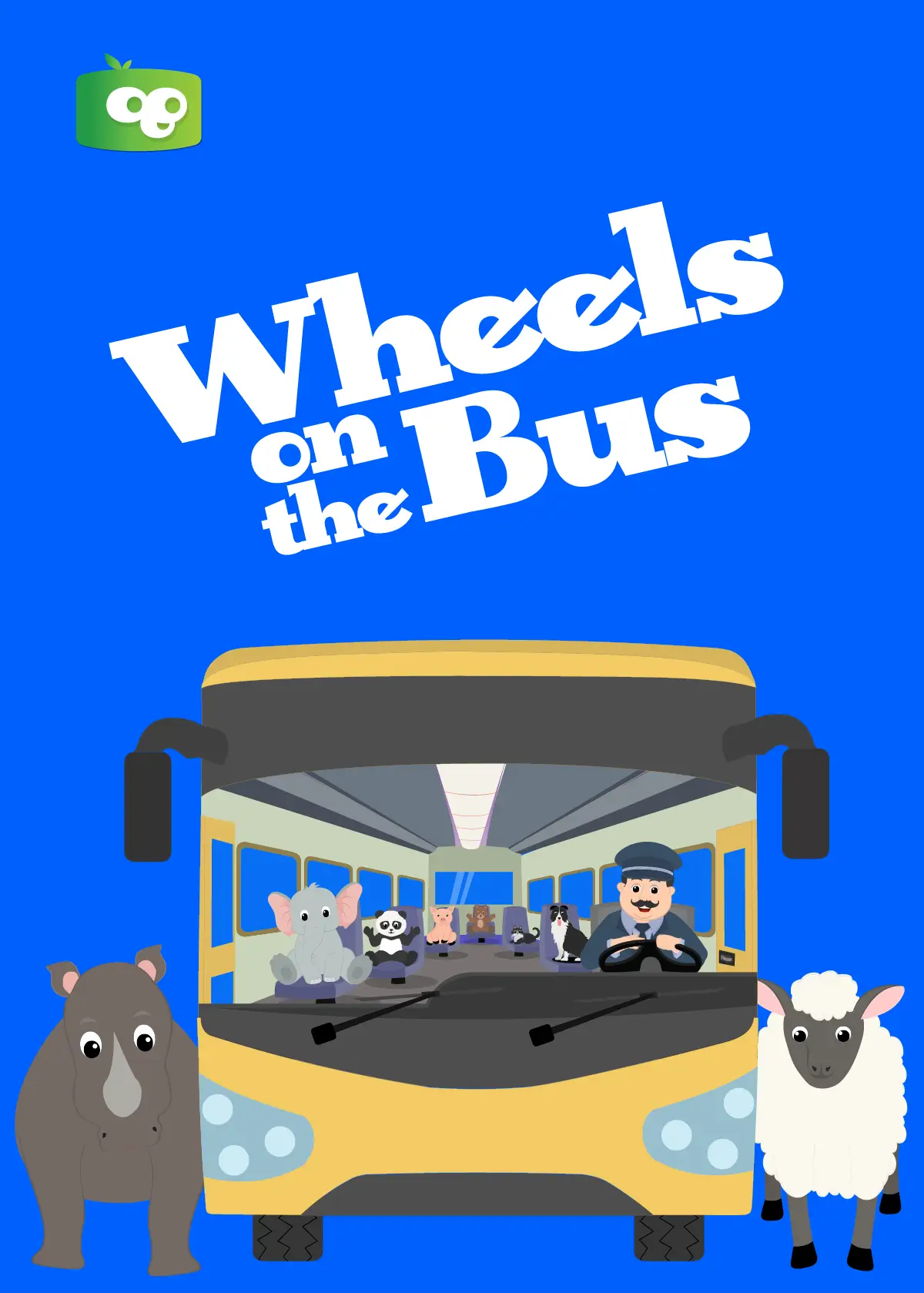
Sing, move, and learn with this beloved classic brought to life by adorable Kokotree animal characters! Your child will master action words, practice following directions, and develop rhythm skills—all while having a bus-load of fun.
2.5 minutes
Ages 1-6
Skill: Movement vocabulary and rhythm patterns
Your kid watches friendly animals sing and move on a colorful bus. You get 2.5 minutes to finish that cup of coffee.
Watch as cheerful animal friends ride through town on a bright, bouncy bus. Each verse introduces a new bus part—doors that open and shut, wipers that swish, wheels that spin round and round. The characters demonstrate each movement with clear, repeatable actions that invite your little one to join in.
What your child learns:
This isn't just a catchy tune—it's a full-body learning experience. Your child practices directional words, sound patterns, and coordinated movements while building the repetition skills that help little brains retain information.
- Movement vocabulary: open/shut, round and round, swish, beep
- Rhythm and pattern recognition: repeating sound sequences (swish swish swish)
- Listening comprehension: following verbal cues to perform actions
- Body coordination: matching movements to words and music
- Social phrases: "How are you?" and polite interactions
They'll use these skills when:
- Opening and closing doors, drawers, or containers at home
- Noticing circles and spinning objects like wheels, clocks, and fans
- Following multi-step instructions from caregivers
- Greeting friends and responding to "How are you?"
The Story (what keeps them watching)
All aboard the Kokotree bus! Our friendly animal passengers take a musical journey through town, and every part of the bus gets its moment to shine. The doors swing open to welcome riders, the wipers battle the rain with their swishy dance, and the horn honks a cheerful hello. A little baby character adds some silly "wah wah wah" moments, while a gentle "shh shh shh" teaches quiet voices. By the end, everyone's making friends and the wheels keep rolling—round and round, just like the song that'll be stuck in your head (you're welcome!).
How We Teach It (the clever part)
- First 1 minute: Introduces mechanical movements (doors opening/shutting, wipers swishing) with clear visual demonstrations and repetitive lyrics that lock in vocabulary.
- Minutes 1-2: Expands to sounds and social interactions (horn beeping, driver giving directions, baby crying, gentle shushing) building auditory discrimination and emotional awareness.
- Final 30 seconds: Reinforces friendship concepts with "How are you?" and circles back to the iconic wheels, cementing the round-and-round motion through joyful repetition.
Teaching trick: Each verse uses a three-part repetition pattern ("swish swish swish, swish swish swish, swish swish swish") which mirrors how toddler brains best absorb new information—through predictable, musical repetition that feels like play.
After Watching: Quick Wins to Reinforce Learning
- Mealtime activity: "Can you open and shut your mouth like the bus doors?" (Practices the open/shut concept while making eating fun and reinforcing vocabulary.)
- Car/travel activity: "Let's find all the wheels! How many round things can you spot?" (Builds shape recognition and observation skills while connecting the song to real life.)
- Bedtime activity: "Let's do quiet shh shh shh like on the bus. Can you whisper goodnight?" (Reinforces volume control and creates a calming transition using familiar song elements.)
- Anytime activity: "Show me how the wipers go! Now the wheels! Now the horn!" (Full-body movement practice that burns energy while reinforcing action vocabulary.)
When Kids Get Stuck. And How to Help.
- "My child just watches and doesn't do the movements." - Totally normal! Many children need to watch several times before joining in. They're absorbing everything. Try doing the movements yourself nearby—monkey see, monkey do works wonders.
- "They only want to do the wheel spinning part." - That's their brain saying "I've got this one!" Celebrate their mastery, then gently introduce one new movement at a time. "You're so good at wheels! Can you show me the doors too?"
- "The song is too fast for my toddler to follow." - Slow it down! Pause the video and practice each movement together. Or sing the song yourself at half-speed during playtime until they build confidence.
What Your Child Will Learn
Prerequisites and Building Blocks
This video works beautifully as an entry point—no prior skills required! Children benefit from basic exposure to music and simple cause-and-effect understanding. "The Wheels On The Bus" builds foundational skills that connect to future learning about transportation, community helpers, and mechanical concepts. It pairs wonderfully with shape recognition videos (especially circles) and other action songs in the Kokotree library that reinforce movement vocabulary and following directions.
Cognitive Development and Teaching Methodology
The repetitive song structure aligns perfectly with how young brains form neural pathways—through consistent, joyful repetition. This video engages visual learners through animated demonstrations, auditory learners through melodic patterns and onomatopoeia (swish, beep, wah), and kinesthetic learners through movement invitations. The predictable verse structure reduces cognitive load, allowing children to anticipate what comes next and build confidence.
Alignment with Educational Standards
This video supports multiple kindergarten readiness indicators including gross motor coordination, following multi-step directions, and vocabulary development. It aligns with early learning standards for physical development (coordinated movements), language arts (action verbs, onomatopoeia), and social-emotional learning (greetings, appropriate volume). Teachers expect incoming students to follow simple movement instructions and recognize basic action words—skills this video directly builds.
Extended Learning Opportunities
Extend learning with circle-tracing worksheets, bus-themed counting activities, or the Kokotree transportation matching game. Create a cardboard box "bus" for dramatic play, letting your child practice being the driver who says "move on back." Draw and label bus parts together. Explore other Kokotree movement songs to build a robust action-word vocabulary, or pair with shape videos to deepen circle recognition.
Transcript Highlights
- "The doors on the bus go open and shut" — Clear action vocabulary with opposite pairs
- "The wipers on the bus go swish swish swish" — Onomatopoeia teaching sound-word connections
- "Friends on the bus say how are you" — Social phrase modeling and greeting practice
- "The wheels on the bus go round and round" — Directional vocabulary and circular motion concept
Character Development and Story Arc
The Kokotree animal characters model joyful participation and social cooperation throughout the bus ride. The baby character normalizes big feelings (crying is okay!), while the gentle "shh" response demonstrates appropriate soothing without shaming. The friends greeting each other with "How are you?" shows positive social initiation. Each character takes turns being featured, modeling patience and shared attention—key skills for group settings.
Music, Movement, and Language Development Deep Dive
Action songs like "The Wheels On The Bus" are powerhouse learning tools because they activate multiple brain regions simultaneously. When children sing "swish swish swish" while moving their arms, they're creating motor-language connections that strengthen word retention by up to 40% compared to passive listening alone.
The onomatopoeia throughout this song (swish, beep, wah, shh) serves a crucial phonological purpose. These sound-words help children understand that spoken language represents real-world sounds—a foundational concept for later reading development. When your child says "beep beep beep," they're practicing phoneme production and auditory discrimination.
The repetitive three-part structure ("swish swish swish, swish swish swish, swish swish swish") isn't just catchy—it's scientifically optimal for toddler memory formation. Young children need 6-8 exposures to new vocabulary before it sticks, and this song delivers that repetition within a single verse.
Movement vocabulary like "open and shut" and "round and round" builds spatial reasoning skills. Understanding opposites (open/shut) and directional concepts (round) forms the cognitive foundation for later mathematical thinking about operations and geometry. When your child spins their hands "round and round," they're building intuitive understanding of circular motion that will later connect to concepts like rotation, cycles, and even telling time on analog clocks.
The social elements woven throughout—the driver giving directions, friends greeting each other, the gentle shushing—provide natural modeling of community interaction and appropriate communication in shared spaces.