
What's Capital Craze About?
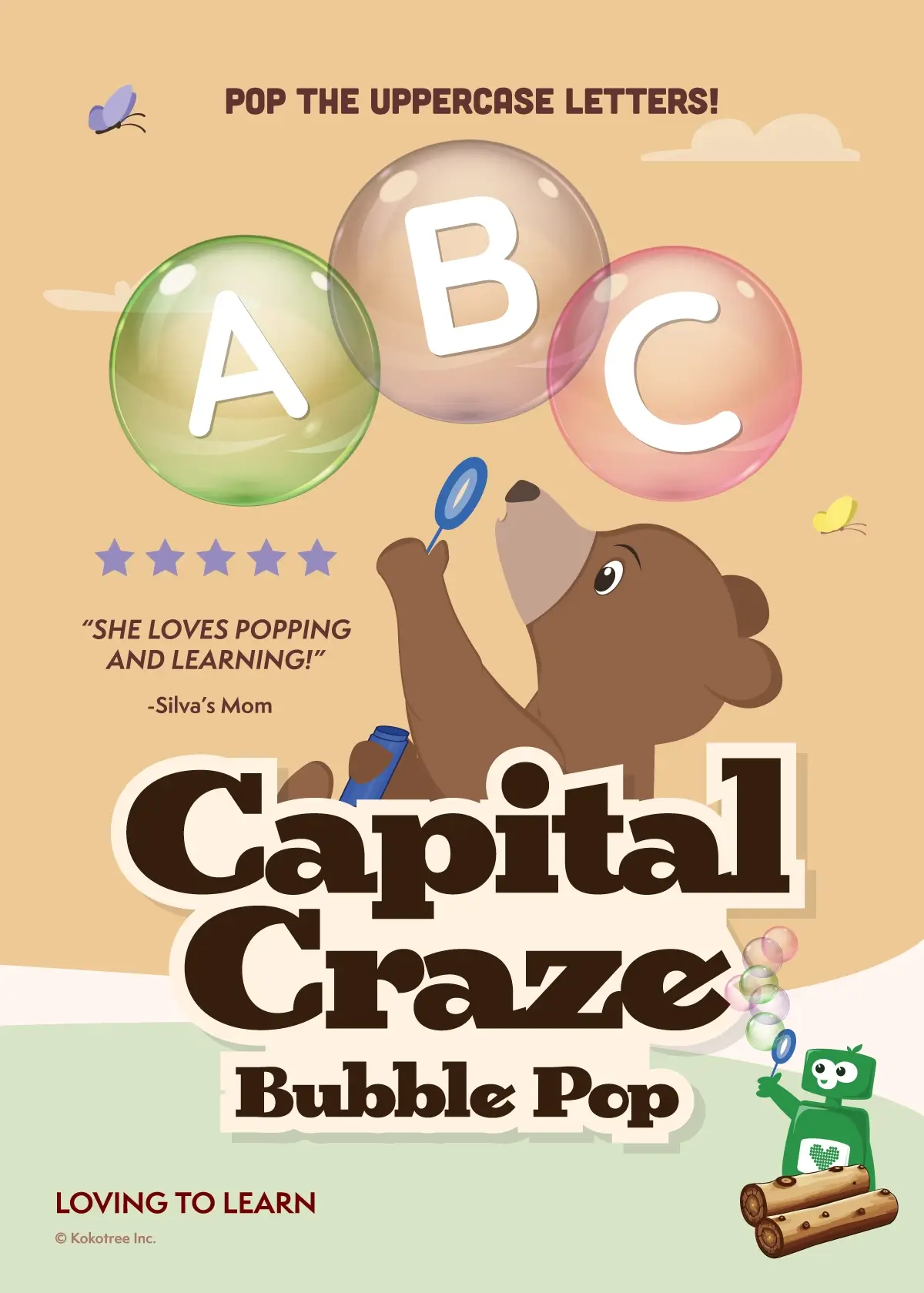
Kids listen for a letter name, then scan floating bubbles to find and pop the matching uppercase letter. It's a playful way to strengthen letter recognition and sharpen listening skills—two building blocks for reading readiness.
Interactive Game
Ages 3-5
Skill: Uppercase Letter Recognition
Your kid pops bubbles to match letters they hear. You get guilt-free screen time knowing they're learning.
Friendly bubbles float across the screen, each displaying a different uppercase letter. A cheerful voice calls out a letter name, and your child taps the correct bubble to pop it. The visual search combined with audio cues creates an engaging multisensory experience.
What your child practices:
This game actively develops the connection between hearing a letter's name and recognizing its written form—a crucial pre-reading skill. Children also practice visual scanning, selective attention, and quick decision-making in a low-pressure, playful environment.
- Identifying all 26 uppercase letters by name
- Connecting spoken letter names to written symbols
- Visual scanning and tracking moving objects
- Listening comprehension and auditory processing
- Hand-eye coordination through targeted tapping
They'll use these skills when:
- Spotting familiar letters on signs, books, and packaging during errands
- Recognizing their own name and friends' names in writing
- Following along when someone points to letters while reading aloud
- Starting kindergarten ready to connect letters to sounds
The Gameplay (what keeps them engaged)
Bubbles drift playfully across the screen while a friendly voice calls out letter names. Kids tap the matching bubble and—POP!—satisfying feedback rewards their correct choice. Wrong taps get gentle encouragement to try again, keeping frustration low. The floating movement adds just enough challenge to feel like a game, not a quiz. As children succeed, new bubbles appear with different letters, maintaining variety. The combination of movement, sound, and tactile popping creates a sensory-rich experience that feels like play while building genuine letter knowledge.
How It Teaches (the clever part)
- Immediate feedback: Correct pops trigger a satisfying pop animation and cheerful sound. Incorrect taps receive gentle guidance without penalty, encouraging another try.
- Progression: The game adjusts letter variety and bubble speed based on performance, keeping the challenge in the sweet spot between too easy and frustrating.
- Repetition: Letters cycle back naturally throughout play, ensuring multiple exposures to each one without repetitive drills.
Learning trick: By requiring children to HEAR the letter name before finding it visually, the game strengthens the audio-visual connection that's essential for phonics—kids aren't just memorizing shapes, they're linking sounds to symbols.
Beyond the App: Reinforce the Learning
- Mealtime activity: "Letter Hunt on the Box" — Point to cereal boxes or food packaging and ask, "Can you find the letter B?" Your child practices visual scanning for letters in real-world contexts.
- Car/travel activity: "I Spy a Letter" — Say "I spy the letter M!" and have your child spot it on signs or license plates. This builds the same listen-then-find skill from the game.
- Outdoor activity: "Chalk Letter Pop" — Draw large uppercase letters on the sidewalk with chalk. Call out a letter and have your child jump on it or "pop" it with their foot. Adds movement to letter recognition.
- Anytime activity: "Bubble Wrap Letters" — Write letters on bubble wrap with a marker. Call out a letter and let your child pop that bubble. The tactile satisfaction mirrors the game experience perfectly.
Common Questions Parents Ask
- "Is popping bubbles really teaching anything?" — Absolutely! Each pop requires your child to process audio information, visually scan options, and make a decision—that's active learning, not passive watching. Research shows multisensory approaches like this strengthen memory pathways.
- "How long until my child knows all the letters?" — Most children recognize all uppercase letters between ages 4-5 with regular exposure. Consistent short sessions (5-10 minutes) work better than occasional long ones—think daily snacks, not weekly feasts.
- "What if my child gets frustrated when they tap the wrong bubble?" — The game is designed with gentle feedback that encourages trying again rather than penalizing mistakes. If frustration builds, take a break—learning happens best when kids feel relaxed and playful.
What Your Child Will Learn
Prerequisites and Building Blocks
Children benefit most from Capital Craze when they have basic tablet interaction skills (tapping accurately) and some familiarity with a few letter names. This game builds on foundational exposure to the alphabet through songs or books and prepares children for more advanced activities like letter-sound matching and phonics games. It sits early in the literacy progression, bridging casual letter exposure with systematic recognition practice.
Cognitive Development and Game Design
The bubble-popping mechanic leverages young children's natural attraction to cause-and-effect interactions. Moving targets engage developing visual tracking abilities while the audio-first prompt strengthens auditory processing—a skill that develops rapidly between ages 3-5. The tap interaction requires minimal fine motor precision, making it accessible for developing coordination. The multisensory approach (hear, see, tap) aligns with how young brains form strongest memories.
Alignment with Educational Standards
Capital Craze supports Common Core Foundational Skills standard RF.K.1d (recognize and name all upper- and lowercase letters) and Head Start Early Learning Outcomes in Literacy Knowledge. Kindergarten teachers expect incoming students to recognize most uppercase letters by name. This game directly builds that benchmark skill through engaging, repeated practice that feels like play rather than assessment.
Extended Learning Opportunities
Pair Capital Craze with Kokotree's alphabet songs and letter tracing activities for comprehensive letter learning. After mastering uppercase recognition, children can progress to lowercase matching games and early phonics activities. Offline, create letter scavenger hunts around your home or practice forming letters with playdough to add tactile learning dimensions.
Game Mechanics Summary
- Child hears a letter name spoken by a friendly voice
- Multiple bubbles float across screen, each showing a different uppercase letter
- Child taps the bubble matching the spoken letter to pop it
- Correct pops trigger celebration animations; incorrect taps prompt gentle retry encouragement
Skill Development Progression
Initially, children may need extra time scanning bubbles and might tap randomly. With practice, you'll notice faster recognition, confident tapping, and your child saying letter names aloud before popping. Mastery looks like quick, accurate identification of any uppercase letter with minimal hesitation. Watch for your child spontaneously identifying letters outside the app—that's the skill transferring to real life.
Letter Recognition Development: Why It Matters
Uppercase letter recognition is one of the strongest predictors of later reading success. Research consistently shows that children who enter kindergarten knowing their letter names learn to read more easily than those who don't. But why?
Letter knowledge isn't just memorization—it's building a mental filing system. When children can quickly retrieve a letter's name upon seeing it, they free up cognitive resources for the harder work of connecting letters to sounds (phonics) and blending those sounds into words.
The audio-visual matching in Capital Craze specifically strengthens what researchers call "cross-modal transfer"—the brain's ability to connect information from different senses. This same skill underlies phonics instruction, where children must connect visual letters to spoken sounds.
For ages 3-4, recognizing 10-15 uppercase letters is developmentally appropriate. By age 5, most children can identify all 26. The key isn't rushing but ensuring confident, automatic recognition. When letter identification becomes effortless, children can focus their mental energy on comprehension rather than decoding.
Uppercase letters are taught first because they're visually distinct from each other (compare B, D, P in uppercase versus b, d, p in lowercase). This reduces confusion during the critical early learning period. Capital Craze builds this foundation systematically, preparing your child for the lowercase letters and phonics work ahead.