
What's Health & Hygiene About?
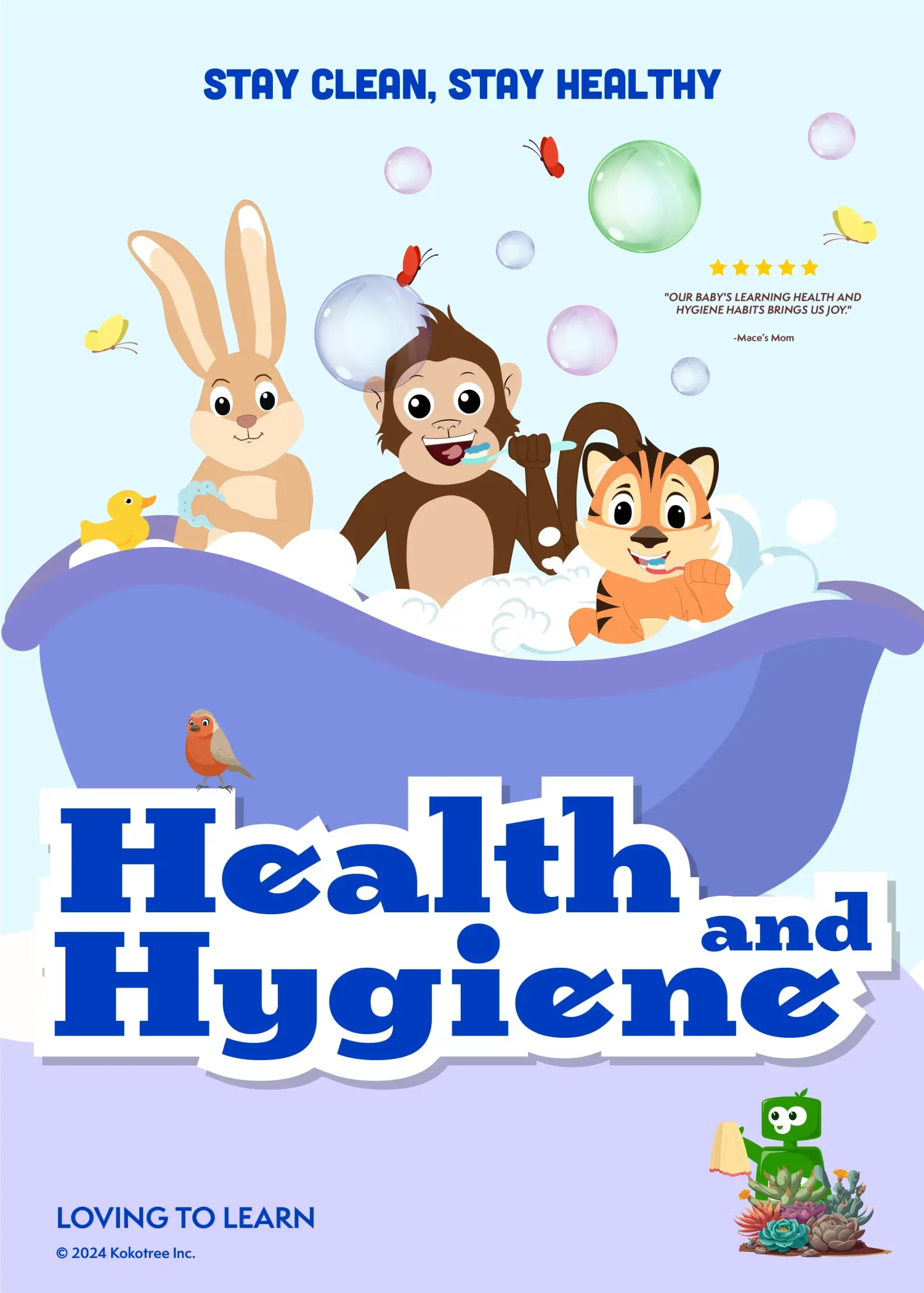
Your little one joins Miss Elizabeth and the Kokotree animal friends to discover why staying clean keeps us healthy—all through catchy songs and a curious bird! They'll learn the daily routines that protect their bodies from germs.
10 minutes
Ages 2-6
Skill: Daily hygiene habits and understanding why we stay clean
Your kid watches animal friends sing about brushing, washing, and staying healthy. You get 10 minutes to [drink your coffee while it's still warm].
The Kokotree class spots a bird cleaning its feathers and wonders what it's doing. Miss Elizabeth teaches them through an interactive song about morning routines—brushing teeth, washing bodies, combing hair, eating fruit, and playing. The kids connect the bird's "preening" to their own hygiene habits and learn why each routine matters.
What your child learns:
This video transforms "because I said so" into "because germs can make us sick!" Your child discovers the WHY behind daily hygiene routines, making them more likely to cooperate at bath time and the bathroom sink.
- Understands why we brush teeth twice daily (morning and bedtime)
- Knows that soap removes germs when washing hands
- Connects bathing to removing dirt and staying healthy
- Learns that trimming nails prevents germ hiding spots
- Recognizes that animals clean themselves too (preening)
They'll use these skills when:
- Washing hands before meals without being reminded
- Brushing teeth willingly because they understand it keeps teeth strong
- Taking baths with less resistance (bubbles help!)
- Noticing when their nails need trimming
The Story (what keeps them watching)
The Kokotree class discovers a bird doing something strange with its beak—is it eating its feathers?! Miss Elizabeth uses their curiosity to launch into a fun, action-packed song about morning routines. Bobby Bear admits he sometimes skips showers (and gets smelly!), Ruby Rabbit shows off sparkly teeth from brushing, and Maddy Monkey gets a surprise when his sharp nails poke him. The best part? When lunchtime comes, Maddy races to wash his hands first—he actually WANTS to! Gina tosses him soap like a football, and everyone joins in for bubbly hand-washing fun.
How We Teach It (the clever part)
- First 3 minutes: Curiosity hook! The bird preening its feathers creates a mystery that Miss Elizabeth solves through an interactive song about daily hygiene routines.
- Minutes 3-7: Each hygiene habit gets explained with real reasons kids understand—Ruby's teeth chomp carrots, Bobby admits skipping showers makes him smelly, Maddy's long nails hurt him.
- Final 3 minutes: Learning becomes action! Maddy runs to wash hands before lunch, demonstrating the lesson. A catchy hand-washing song reinforces proper technique.
Teaching trick: The video uses peer modeling—when Bobby Bear admits he sometimes forgets to shower and smells bad, kids learn consequences without being lectured. It's not a grown-up telling them what to do; it's a friend sharing what happens!
After Watching: Quick Wins to Reinforce Learning
- Mealtime activity: "Can you show me how Maddy washed his hands before lunch?" Have your child demonstrate the rubbing motions from the song while you sing "rub the left and rub the right" together.
- Car/travel activity: "Let's spot animals cleaning themselves!" Look for birds preening, cats grooming, or dogs scratching. Ask, "What's that animal doing to stay clean?"
- Bedtime activity: "Ruby brushes twice—morning AND night! Should we brush our teeth like Ruby so they sparkle?" Let your child check for sparkles in the mirror after.
- Anytime activity: "Where do germs like to hide?" Point to fingernails, between fingers, and behind ears. Make it a silly hide-and-seek game where soap is the seeker!
When Kids Get Stuck. And How to Help.
- "My child still resists hand-washing." Focus on the bubbles! Gina and Bobby loved making bubbles with soap. Let your child blow bubbles off their hands or count how many they can make. The fun distracts from the task.
- "They don't understand why germs are bad." Keep it simple: "Germs are tiny things that can give you a tummy ache." Miss Elizabeth explained germs make us sick—you don't need to go deeper than that at this age.
- "Brushing twice a day feels like too much." Start with consistency over perfection. If bedtime brushing is new, sing the "brush our teeth" song together. Bobby said he'd sing in the shower—music makes routines fun!
What Your Child Will Learn
Prerequisites and Building Blocks
This video works best for children who have basic familiarity with daily routines, even if they don't yet do them independently. It builds on body awareness concepts and pairs well with videos about body parts and following instructions. Children should understand simple cause-and-effect relationships ("if you don't wash, germs stay on your hands"). This lesson establishes foundational health literacy that supports later learning about nutrition, exercise, and body systems.
Cognitive Development and Teaching Methodology
The video employs observational learning through animal behavior (bird preening) to introduce abstract concepts like germs and hygiene. Action songs engage kinesthetic learners while visual demonstrations support visual processors. The call-and-response singing pattern strengthens auditory processing and memory retention. Peer modeling—where characters admit mistakes like Bobby forgetting showers—reduces shame and normalizes learning. The concrete-to-abstract progression (seeing bird clean → understanding why WE clean) aligns with preoperational cognitive development.
Alignment with Educational Standards
This content addresses Head Start Early Learning Outcomes in Physical Development and Health, specifically "Health Knowledge and Practice." It aligns with CDC developmental milestones for self-care awareness in 3-5 year olds. The video supports kindergarten readiness indicators for personal hygiene independence and understanding health concepts. NAEYC guidelines emphasize teaching children to "take responsibility for their own well-being"—this video provides the reasoning children need to internalize these habits.
Extended Learning Opportunities
Pair this video with printable hand-washing step charts showing the "rub left, rub right, rub fingers" sequence. Create a morning routine checklist with pictures matching the song (toothbrush, soap, comb, fruit, play). The Kokotree app's interactive games reinforce sequencing daily activities. Extend learning with a "germ experiment"—put glitter on hands, then wash to see how soap removes "germs." Read books about staying healthy and revisit the video before doctor visits.
Transcript Highlights
- "If you don't wash your hands before you eat, you may accidentally get some germs in your mouth with your dirty hands! So wash your hands before and after eating."
- "Taking a bath or shower helps wash out all the germs and dirt that get on our body during the day. If you don't take a bath daily you may get sick too!"
- "Not only because they may be too long and sharp but also because it's a place where germs and dirt can hide." (about fingernails)
- "Rub the left and rub the right, rub the fingers and palms tight, that's the way we finish the fight and set the germs straight and right!"
Character Development and Story Arc
Bobby Bear models honest self-reflection by admitting he sometimes forgets to shower and smells bad—demonstrating that mistakes are learning opportunities, not failures. Maddy Monkey shows growth mindset transformation: he discovers his sharp nails are a problem, then immediately applies his learning by racing to wash hands before lunch. Ruby Rabbit demonstrates pride in healthy habits (sparkly teeth!), modeling intrinsic motivation. Miss Elizabeth guides without shaming, asking questions that let children discover answers themselves.
Health Literacy and Habit Formation Deep Dive
Early childhood is the critical window for establishing hygiene habits that last a lifetime. Research shows that children who understand WHY they perform health behaviors—not just following rules—demonstrate better long-term compliance. This video leverages that principle by explaining consequences in age-appropriate terms: teeth stay strong for chomping, hands without soap keep germs that cause sickness, unwashed bodies smell bad.
The germ concept is introduced at the perfect developmental level. Children ages 2-6 are in Piaget's preoperational stage—they can't see germs, but they CAN understand "tiny things that make you sick." The video wisely avoids microscopic explanations and instead focuses on observable outcomes (smelling bad, getting sick, dirty nails).
Habit stacking—connecting new behaviors to existing routines—is embedded throughout. "Brush after you wake up" and "wash before you eat" link hygiene to activities children already do daily. The morning routine song creates a memorable sequence that serves as an auditory checklist.
The social learning component is particularly powerful. When Bobby admits his hygiene failures without being criticized, children learn that imperfection is normal and improvement is always possible. This reduces anxiety around "getting it right" and encourages honest communication with caregivers about hygiene challenges. The video ends with Maddy enthusiastically choosing to wash hands—showing hygiene as something kids WANT to do, not just something adults make them do.