
What's Magic Words & Me, Myself, and I About?
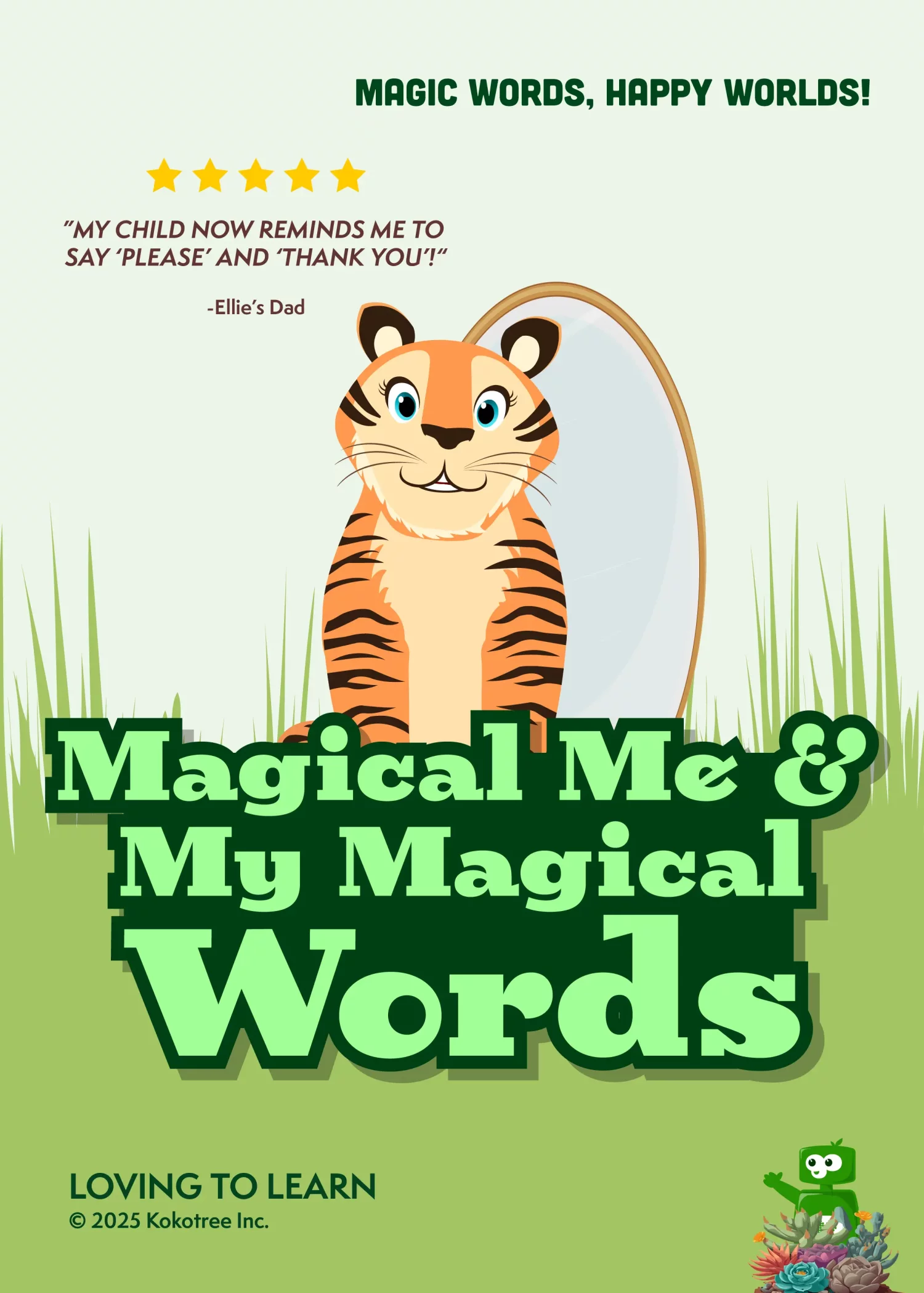
Your little one joins a birthday party where friendly animal characters discover the magic of self-introduction and polite words! They'll learn to say who they are with confidence and understand how 'sorry' and 'thank you' build stronger friendships.
9 minutes
Ages 1-6
Skill: Self-introduction and polite communication
Your kid watches animal friends practice introductions at a birthday party. You get 9 minutes to enjoy your coffee while it's still warm.
Maddy Monkey receives a mirror for his birthday, and all the animal friends take turns looking at themselves and noticing what makes them unique. Then they play an introduction game where each character says their name, what animal they are, and their age. Later, an accidental soccer ball incident teaches everyone about saying 'sorry' and 'thank you.'
What your child learns:
This video builds essential social communication skills that every child needs. Your little one will practice the exact phrases they'll use when meeting new friends at the playground or starting preschool.
- Introducing themselves with name, age, and one fact about themselves
- Understanding why 'sorry' helps repair friendships after accidents
- Using 'thank you' to show appreciation for kindness and gifts
- Recognizing their own unique physical features
- Building confidence in speaking about themselves
They'll use these skills when:
- Meeting a new friend at the park and saying "Hi, I'm [name]!"
- Accidentally bumping into someone and knowing to say sorry
- Receiving a gift and remembering to say thank you
- Starting at a new playgroup or preschool and introducing themselves
The Story (what keeps them watching)
It's Maddy Monkey's birthday, and all the Kokotree friends arrive with presents—including Bobby Bear who hilariously wrapped himself as a gift and got stuck! Maddy opens a special mirror, and Meera Tiger leads everyone in noticing their unique features. Then comes the introduction game where each animal proudly shares who they are. Later during soccer, Gina Giraffe accidentally kicks the ball and hits Ruby Rabbit. Meera Tiger gently guides Gina to say sorry, and Ruby responds with thank you—showing everyone how magic words make friendships stronger.
How We Teach It (the clever part)
- First 3 minutes: The birthday party setup hooks kids in, then the mirror activity introduces self-awareness as each character notices their unique features (stripes, spots, long necks).
- Minutes 3-6: The introduction game models the exact format kids can copy: "I am [name]. I am a [animal]. I am [age] years old." Repetition through multiple characters reinforces the pattern.
- Final 3 minutes: A relatable accident scenario (getting hit with a ball) demonstrates when and how to use 'sorry' and 'thank you' in real situations.
Teaching trick: The video uses a catchy song ("I am special, look at me") to build confidence before the introduction activity, making kids feel proud and ready to share about themselves.
After Watching: Quick Wins to Reinforce Learning
- Mealtime activity: "Can you introduce yourself to your [stuffed animal/toy] at the table?" Have them practice saying their name, age, and one thing about themselves—just like the characters did.
- Car/travel activity: "Let's play the introduction game! I'll go first: I am [your name], I am a grown-up, and I am [age] years old." Take turns and celebrate their introduction.
- Bedtime activity: "What's one thing that makes YOU special, just like Gina's long neck or Tiki's mane?" Help them identify one unique feature they noticed in the mirror today.
- Anytime activity: When accidents happen (spilled milk, bumped heads), gently prompt: "What magic word might help right now?" Let them practice 'sorry' and 'thank you' in real moments.
When Kids Get Stuck. And How to Help.
- "My child gets shy and won't introduce themselves to new people." - Totally normal at this age! Practice at home with stuffed animals first. The more they rehearse the phrase in safe settings, the more automatic it becomes in new situations.
- "They say sorry but don't seem to mean it." - Understanding empathy develops gradually. Focus on the habit first—the genuine feeling follows. Ask "How do you think Ruby felt?" to build that connection over time.
- "My child forgets to say thank you without reminders." - Keep modeling it yourself and give gentle prompts. At this age, they're building the habit through repetition. Celebrate every unprompted 'thank you' you hear!
What Your Child Will Learn
Prerequisites and Building Blocks
Children watching this video benefit from basic vocabulary recognition and the ability to follow simple narratives. This episode builds on foundational self-awareness concepts and connects to earlier Kokotree content about feelings and friendship. It serves as a stepping stone toward more complex social interactions, preparing children for group settings where introductions and polite language are expected daily.
Cognitive Development and Teaching Methodology
The video employs scaffolded learning—starting with self-observation (mirror activity), moving to structured practice (introduction game), and culminating in applied scenarios (the soccer accident). This progression respects the concrete operational thinking of young children. Visual modeling through multiple characters addresses visual learners, the catchy song engages auditory learners, and prompts for at-home practice support kinesthetic learning styles.
Alignment with Educational Standards
This content aligns with preschool social-emotional learning standards, specifically self-awareness and relationship skills domains. It addresses kindergarten readiness indicators for verbal communication, including speaking in complete sentences and using age-appropriate social conventions. Teachers expect entering kindergarteners to introduce themselves and use basic polite language—exactly what this video practices.
Extended Learning Opportunities
Pair this video with Kokotree's printable "All About Me" worksheet where children draw themselves and practice writing their name. The app's greeting games reinforce introduction skills through interactive play. Extend learning by creating a simple "magic words" chart at home, adding a sticker each time your child uses sorry, thank you, or please unprompted.
Transcript Highlights
- Teaching self-introduction format: "Hi...I am Tiki. I am a tiger. And I am three years old!"
- Explaining the power of apology: "If we feel bad for something and say we're sorry, it can make things a little better. It may not change whatever has happened, but it surely leaves a positive effect on the person who was hurt."
- Defining gratitude: "'Thank you' are the magic words we say to express our gratitude toward services or gifts we receive from others."
- Building self-awareness: "Did you see yourself in the mirror? Did you notice how unique you all are?"
Character Development and Story Arc
Meera Tiger models patient, encouraging teaching—never scolding Gina for the accident but guiding her toward the right response. Bobby Bear's comedic gift-wrapping mishap shows that mistakes happen and friends help each other. Gina Giraffe demonstrates accountability by admitting her accident and genuinely apologizing. Ruby Rabbit models gracious acceptance. Together, the characters show that friendships include accidents, apologies, and moving forward together.
Social Communication Development Deep Dive
Self-introduction skills represent a crucial milestone in early childhood social development. Between ages 2-4, children transition from parallel play to interactive play, making verbal introduction skills essential for forming friendships. Research in developmental psychology shows that children who can confidently state their name and basic information experience smoother transitions into group care settings.
The concept of "magic words" (please, thank you, sorry) falls under prosocial behavior development. At ages 3-5, children are in a prime window for learning social conventions, though genuine empathy behind these words develops gradually through age 7. The video wisely focuses on the behavioral habit first—saying the words—while planting seeds for deeper understanding through Meera's explanation about how sorry "leaves a positive effect."
The mirror activity taps into self-recognition development, which solidifies around age 2. By age 3-4, children can describe their physical attributes and understand basic categorical identity ("I am a bear," "I am three"). This video extends that awareness into verbal expression, giving children a script they can adapt and use independently.
The structured introduction format (name + category + age) provides what educators call a "language frame"—a predictable sentence structure children can fill in with their own information. This scaffolding reduces cognitive load, allowing children to focus on the social act of introducing themselves rather than constructing sentences from scratch. Repeated modeling through multiple characters reinforces the pattern without feeling repetitive to young viewers.