
What's Trace The ABCs About?
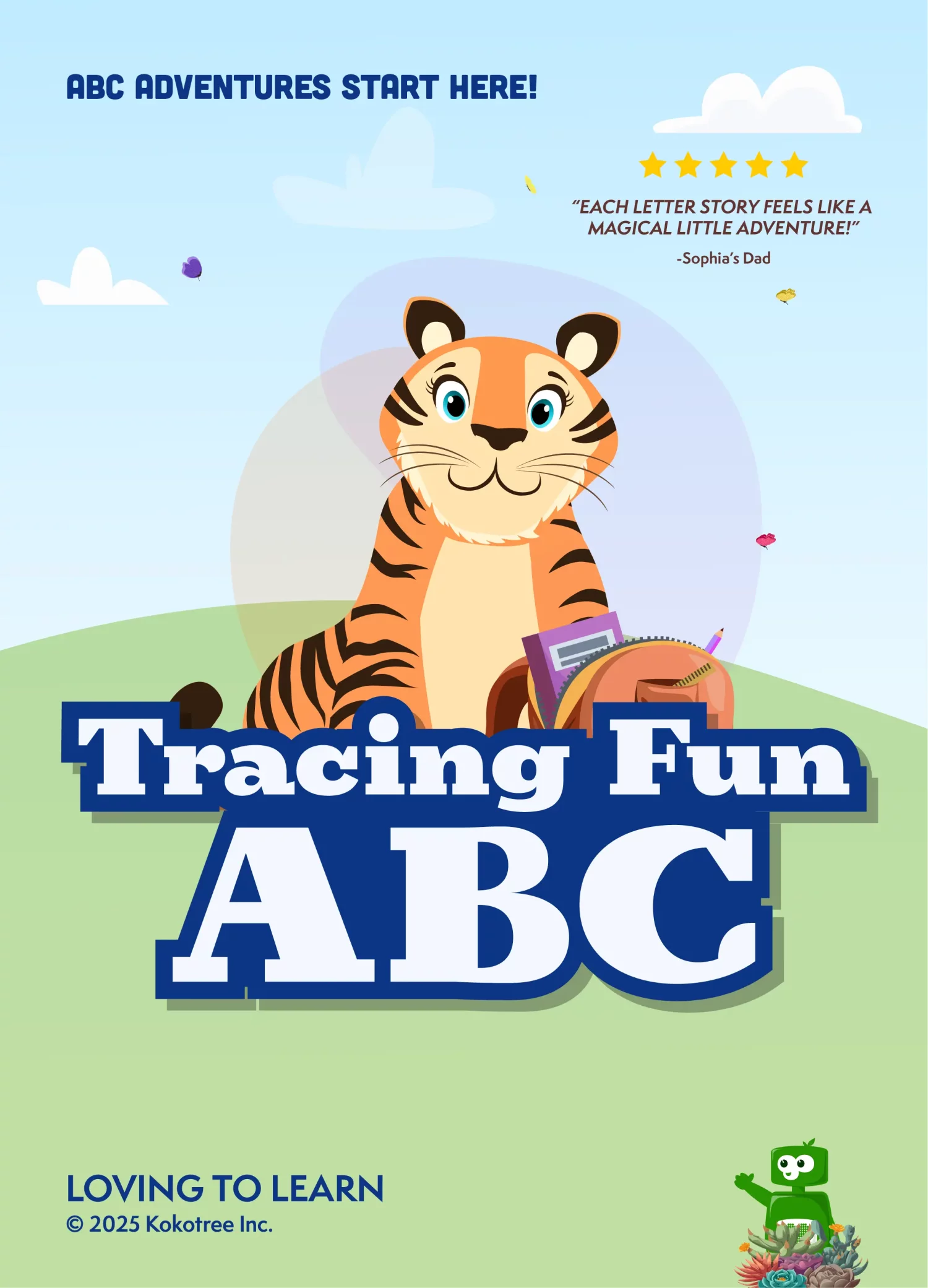
Your little one joins Miss Meera's classroom to learn exactly how to form the letters A, B, and C—both uppercase and lowercase. They'll trace along, practice air-writing, and discover fun ways to spot these letters in the world around them.
8 minutes
Ages 3-6
Skill: Letter Formation & Handwriting Readiness
Your kid watches Miss Meera demonstrate letter strokes step-by-step. You get 8 minutes to [finish your coffee/fold laundry/breathe].
Miss Meera guides her animal students through writing each letter with clear, repeatable instructions. Kids see exactly where to start each stroke, which direction to move, and where to stop. The friendly classroom setting keeps little ones engaged while they practice "air writing" and follow along with tracing.
What your child learns:
This video breaks down letter formation into simple, memorable steps. Your child learns the difference between uppercase and lowercase letters, proper stroke order, and how to recognize letters in everyday objects.
- Correct stroke order for uppercase A, B, and C
- Proper formation of lowercase a, b, and c
- Understanding of baseline, midline, and top line positioning
- Visual recognition of letter shapes in real objects
- Fine motor preparation for handwriting
They'll use these skills when:
- Writing their name on artwork or school papers
- Recognizing letters on signs, books, and food packaging
- Practicing handwriting worksheets at preschool
- Playing alphabet games with friends or siblings
The Story (what keeps them watching)
Miss Meera welcomes her animal students—including Gina Giraffe, Bobby Bear, Eddie Elephant, and Maddy Monkey—to an exciting handwriting lesson. Together, they tackle letters A, B, and C with enthusiasm and curiosity. The class discovers that uppercase A looks like a tent, B has a hidden butterfly, and a cat's curly tail looks just like the letter C! Each animal friend asks questions and makes observations, making learning feel like a group adventure rather than a solo task.
How We Teach It (the clever part)
- First 3 minutes: Miss Meera introduces uppercase and lowercase A, starting with big "air writing" to build confidence before moving to guided tracing with clear verbal cues ("slant left, slant right, bridge in the middle").
- Minutes 3-6: The class tackles letter B, discovering the butterfly hidden inside. Kids learn the standing line plus two bumps technique, then practice the simpler lowercase b.
- Final 2 minutes: Letter C gets the spotlight with its satisfying curved shape. Bobby Bear spots a cat whose tail looks like a C, reinforcing visual letter recognition in the real world.
Teaching trick: Miss Meera calls lowercase letters "baby" letters—a memorable way to help kids understand that lowercase versions are smaller relatives of their uppercase "momma" letters.
After Watching: Quick Wins to Reinforce Learning
- Mealtime activity: "Can you draw a letter A in the air before we eat?" Have your child show you the slant-left, slant-right, bridge motion. Bonus: spot the letter A on food packaging together.
- Car/travel activity: "Let's find things shaped like the letter C!" Look for curved shapes outside the window—wheels, the moon, bananas. Count how many C-shapes you spot.
- Bedtime activity: "Trace a B on my back and I'll guess what letter it is!" Take turns drawing letters on each other's backs or palms—builds letter memory through touch.
- Anytime activity: "Can you find the butterfly hiding in this B?" Write a big B on paper and let your child color in the two "wings." Then hunt for Bs in books or around the house.
When Kids Get Stuck. And How to Help.
- "My child keeps starting letters from the bottom instead of the top." This is super common! Gently remind them "we always start at the tippy-top" and put a small dot where they should begin. Muscle memory takes time—keep it playful.
- "They can do uppercase but lowercase confuses them." Lowercase letters are genuinely trickier because they use different formations. Stick with uppercase for now and celebrate that mastery. Lowercase will click when they're ready.
- "The letters look wobbly and messy." At this age, the goal is correct formation, not perfection. If they're making strokes in the right order and direction, they're doing great. Hand strength develops with practice—try playdough squeezing to build those muscles.
What Your Child Will Learn
Prerequisites and Building Blocks
Children benefit most from this video when they can already recognize letters A, B, and C by sight and hold a crayon or pencil with a basic grip. This lesson builds on letter recognition videos and prepares children for full alphabet writing. It fits into the early handwriting progression: first children learn letter names, then letter sounds, then letter formation. This video bridges recognition and writing skills.
Cognitive Development and Teaching Methodology
Miss Meera uses multi-sensory instruction ideal for ages 3-6. Children first engage kinesthetically through air-writing (gross motor), then visually observe demonstrations, and finally practice fine motor tracing. Verbal cues like "slant left, slant right" create memorable patterns. Repetition with slight variation (writing each letter twice) builds neural pathways without causing boredom. The "momma and baby" analogy leverages concrete thinking typical of preoperational development.
Alignment with Educational Standards
This video addresses kindergarten readiness benchmarks for print concepts and handwriting. It aligns with early literacy standards requiring children to "print upper and lowercase letters" and understand that letters represent sounds. The focus on proper stroke sequence and letter orientation supports fine motor development indicators. Teachers expect incoming kindergarteners to attempt letter formation—this video builds that foundational skill.
Extended Learning Opportunities
Pair this video with Kokotree's printable letter tracing worksheets for A, B, and C. Follow up with letter sound videos to connect formation with phonics. Try the app's letter-drawing games for interactive practice. Extend learning with sensory writing—trace letters in sand, shaving cream, or finger paint. Create an "ABC scavenger hunt" to find objects starting with each letter.
Transcript Highlights
- "A slant to the left and a slant to the right. And one sleeping line to bridge them together." — Clear, visual language for letter A formation
- "Can you spot the butterfly in the B?" — Engaging visual memory technique
- "His tail looks like a letter C too!" — Real-world letter recognition modeled by Bobby Bear
- "We start below the midline and go all the way around" — Precise directional instruction for lowercase a
Character Development and Story Arc
Miss Meera models patient, encouraging teaching throughout. When Eddie Elephant asks to try letter C "one more time," Miss Meera responds warmly with "Of course!"—demonstrating that asking for help is positive. Bobby Bear shows observational skills by noticing the cat's C-shaped tail, modeling how learners can connect classroom knowledge to the world. Gina Giraffe expresses genuine excitement ("Wow, I do see it!"), showing that discovery is joyful.
Letter Formation and Fine Motor Development Deep Dive
Learning to write letters involves complex coordination between visual perception, motor planning, and muscle control. For children ages 3-6, the small muscles in hands and fingers are still developing, which is why Miss Meera begins with large "air writing" before progressing to paper tracing.
Proper stroke sequence matters enormously for handwriting fluency. When children learn correct formation from the start, they build efficient muscle memory that supports faster, more legible writing later. Starting letters from the top (rather than bottom) and moving in consistent directions creates automaticity—eventually, children write without consciously thinking about each stroke.
The video teaches three strategically chosen letters. Letter A introduces diagonal strokes and the concept of connecting lines. Letter B builds on the standing line (vertical stroke) and adds curves—a new motor pattern. Letter C focuses purely on curved motion, the foundation for letters like O, G, and S.
Miss Meera's use of spatial vocabulary ("baseline," "midline," "top line") introduces the concept of letter positioning within writing lines. This awareness helps children write letters at consistent sizes and positions—critical for readable handwriting.
The "momma and baby" terminology for uppercase and lowercase letters provides a memorable mental framework. Rather than abstract terms, children grasp that lowercase letters are smaller versions of their uppercase counterparts. This analogy supports both letter recognition and size differentiation during writing practice.
Visual anchors like the butterfly in B and the cat's C-shaped tail leverage the brain's pattern-recognition strengths, making abstract letter shapes concrete and memorable.