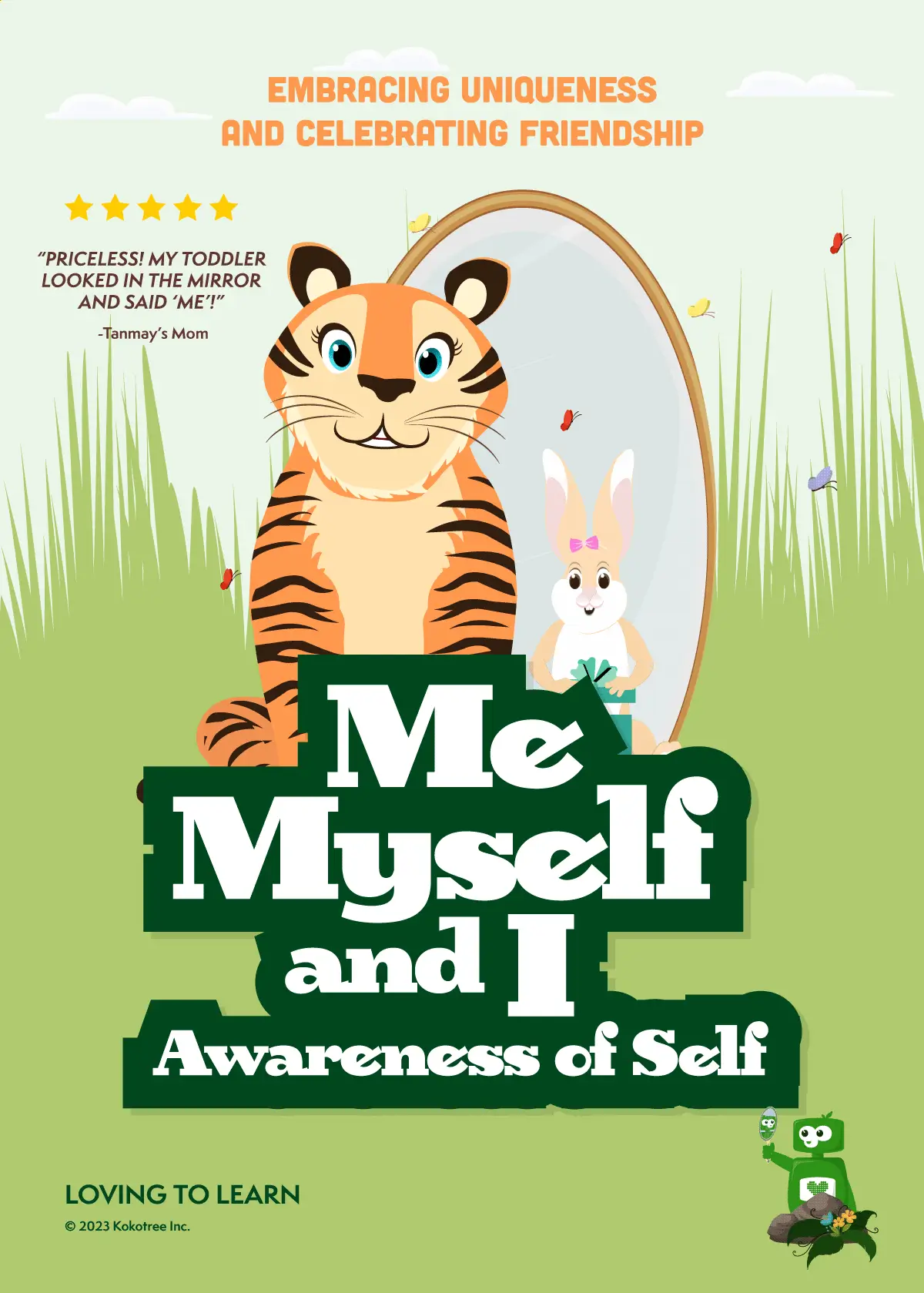
What's Me, Myself & I: Self Awareness About?
Your child joins a birthday celebration where friendly animal friends discover what makes each of them unique and special! They'll practice self-introduction skills and learn to recognize their own features—from head to toe.
11 minutes
Ages 2-5
Skill: Self-awareness and personal identity
Your kid watches animal friends play mirror games and introduce themselves. You get 11 minutes to enjoy your coffee while it's still warm.
Meera Tiger leads the Kokotree class to Maddy Monkey's birthday party, where they discover a full-length mirror. Each animal takes turns looking at their reflection, noticing their unique features like stripes, spots, and long necks. Then they play "Pass the Parcel" where each friend practices saying "I am..." to introduce themselves.
What your child learns:
This video builds foundational self-awareness skills that help children understand who they are and express themselves confidently. Through fun games and songs, kids practice the language patterns needed for introductions.
- Uses "I am" statements to introduce themselves by name, age, and type
- Recognizes their own physical features (head, toes, unique characteristics)
- Identifies "I can" statements about their special abilities
- Understands that shadows show different shapes based on body features
- Appreciates what makes themselves and their friends unique
They'll use these skills when:
- Meeting new friends at the playground or in a new classroom
- Looking in the mirror while getting dressed and naming body parts
- Playing pretend games where they describe their character
- Answering questions from adults like "What's your name? How old are you?"
The Story (what keeps them watching)
It's Maddy Monkey's birthday, and the whole Kokotree class is heading to the party with wrapped presents! Bobby Bear hilariously wraps himself up as a gift and needs help getting free. At Maddy's hut, everyone discovers a special birthday present—a full-length mirror! Meera Tiger leads the class in a sweet song about being special, then teaches them to play "Pass the Parcel." When thunder sends everyone inside, they continue learning about themselves with an "I can" game. The sun returns just in time for shadow tracing fun, and the celebration ends with all friends joining hands.
How We Teach It (the clever part)
- First 3 minutes: Physical self-awareness is introduced through mirror play—each animal looks at their reflection and identifies features from "head to toe"
- Minutes 4-7: Language skills are practiced through structured games using "I am" statements (name, species, age) with the Pass the Parcel game
- Final 4 minutes: Concepts deepen with "I can" ability statements and visual shadow tracing that reinforces body awareness
Teaching trick: The video uses a catchy, repetitive song ("I am special, look at me") that children naturally want to sing along with, embedding the key phrase "I am" into memory through musical repetition.
After Watching: Quick Wins to Reinforce Learning
Mirror moment: Stand with your child at a mirror and take turns saying "I can see my [feature]!" Start with obvious ones like "I can see my nose!" and let them copy you, then name their own.
Car introduction game: Practice the introduction pattern: "I am [name]. I am a [boy/girl]. I am [age] years old." Make it silly by pretending to introduce yourselves to imaginary friends outside the window.
Shadow hunt: On a sunny day, go outside and trace each other's shadows with a stick or just point out features. "I see your shadow's arms! Where are your shadow's legs?"
"I can" show: Ask your child "What can YOU do that's special?" Let them demonstrate—hopping, singing, building blocks—and celebrate each ability with "Wow, you CAN do that!"
When Kids Get Stuck. And How to Help.
"My child is too shy to say their name to new people." - Totally normal at this age! Practice at home first with stuffed animals as the "audience." The more they rehearse in safe spaces, the more confident they'll become in new situations.
"They can't think of anything for 'I can' statements." - Start super simple: "I can walk! I can clap! I can smile!" Once they get the pattern with easy ones, they'll start thinking of their own special abilities.
"My child doesn't seem interested in looking at themselves in the mirror." - Try making it playful! Make silly faces together, play "copy me" games, or use a hand mirror during bath time. Some kids need movement and fun before they engage with self-observation.
What Your Child Will Learn
Prerequisites and Building Blocks
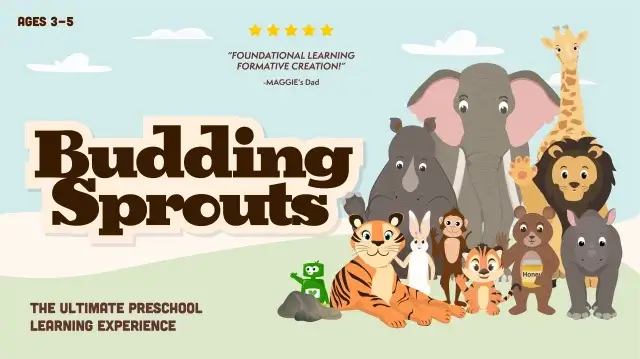
This video is ideal for children who can recognize their own reflection and understand basic body parts (head, hands, feet). It builds on foundational vocabulary skills and prepares children for more complex social interactions. No prior Kokotree videos are required, though it pairs beautifully with other social-emotional content in the Budding Sprouts program. This lesson establishes the self-awareness foundation needed for later lessons on friendship, cooperation, and expressing feelings.
Cognitive Development and Teaching Methodology
The video employs scaffolded learning, starting with concrete visual recognition (mirror reflection) before moving to abstract verbal expression ("I am" statements). This progression honors how 2-5 year olds process information—from tangible to conceptual. Multiple learning modalities are engaged: visual learners benefit from mirror and shadow activities, auditory learners from the song and verbal introductions, and kinesthetic learners from the movement-based games and physical demonstrations of abilities.
Alignment with Educational Standards
This content aligns with preschool social-emotional learning standards emphasizing self-identity and self-expression. It supports kindergarten readiness indicators including: stating full name and age, identifying personal characteristics, and using complete sentences for self-expression. The "I am" and "I can" sentence frames align with early language arts standards for oral communication and sentence structure development.
Extended Learning Opportunities
Extend learning with a simple "All About Me" drawing activity where children draw themselves and dictate "I am" and "I can" sentences for an adult to write. Create a classroom or family "introduction circle" ritual. Pair with outdoor shadow play during different times of day to observe how shadows change. The Kokotree app offers related activities on body parts, feelings, and friendship that complement this video's themes.
Transcript Highlights
- Teaching self-observation: "I'm looking at myself in the mirror! I can see myself from head to toe!" (Maddy Monkey demonstrates full-body awareness)
- Modeling introduction format: "I am Tiki. I am a tiger. And I am three years old!" (Clear sentence structure for children to copy)
- Introducing ability statements: "I want you to say 'I can.' I can see in the dark." (Meera models the pattern before children try)
- Explaining shadows: "The dark shape next to me is my shadow. Do you see my four legs? Do you see my tail?" (Concrete, visual teaching approach)
Character Development and Story Arc
Meera Tiger models excellent teaching behaviors—she asks questions, waits for responses, and celebrates each child's contribution warmly. The young animal characters demonstrate healthy self-expression without boasting, and humor (Bobby Bear wrapping himself as a present, Ronnie's joke about his horn's age) shows that learning can be playful. Each character proudly shares something unique about themselves, modeling confidence and self-acceptance for young viewers.
Self-Awareness Development in Early Childhood
Self-awareness is a cornerstone of healthy development, emerging significantly between ages 18 months and 5 years. The mirror recognition demonstrated in this video reflects a major developmental milestone—understanding that the reflection represents oneself. Research shows that children who can accurately describe themselves develop stronger self-regulation skills later.
The "I am" and "I can" language frames serve dual purposes: they build grammatical understanding of first-person pronouns while simultaneously strengthening self-concept. When children practice stating their name, age, and abilities, they're literally constructing their sense of identity through language.
Shadow play adds a fascinating dimension to body awareness. Shadows provide an external, slightly abstract representation of self that helps children understand their physical presence in space. Tracing shadows reinforces body part recognition while introducing early concepts about light and how objects block it—a gentle introduction to basic physics.
The social component—introducing oneself to others and appreciating friends' unique qualities—lays groundwork for empathy development. When children recognize "I am different, and so are my friends," they begin understanding that others have their own perspectives and characteristics. This foundational insight supports all future social learning and relationship building.