
What's Sage And The Mouse About?
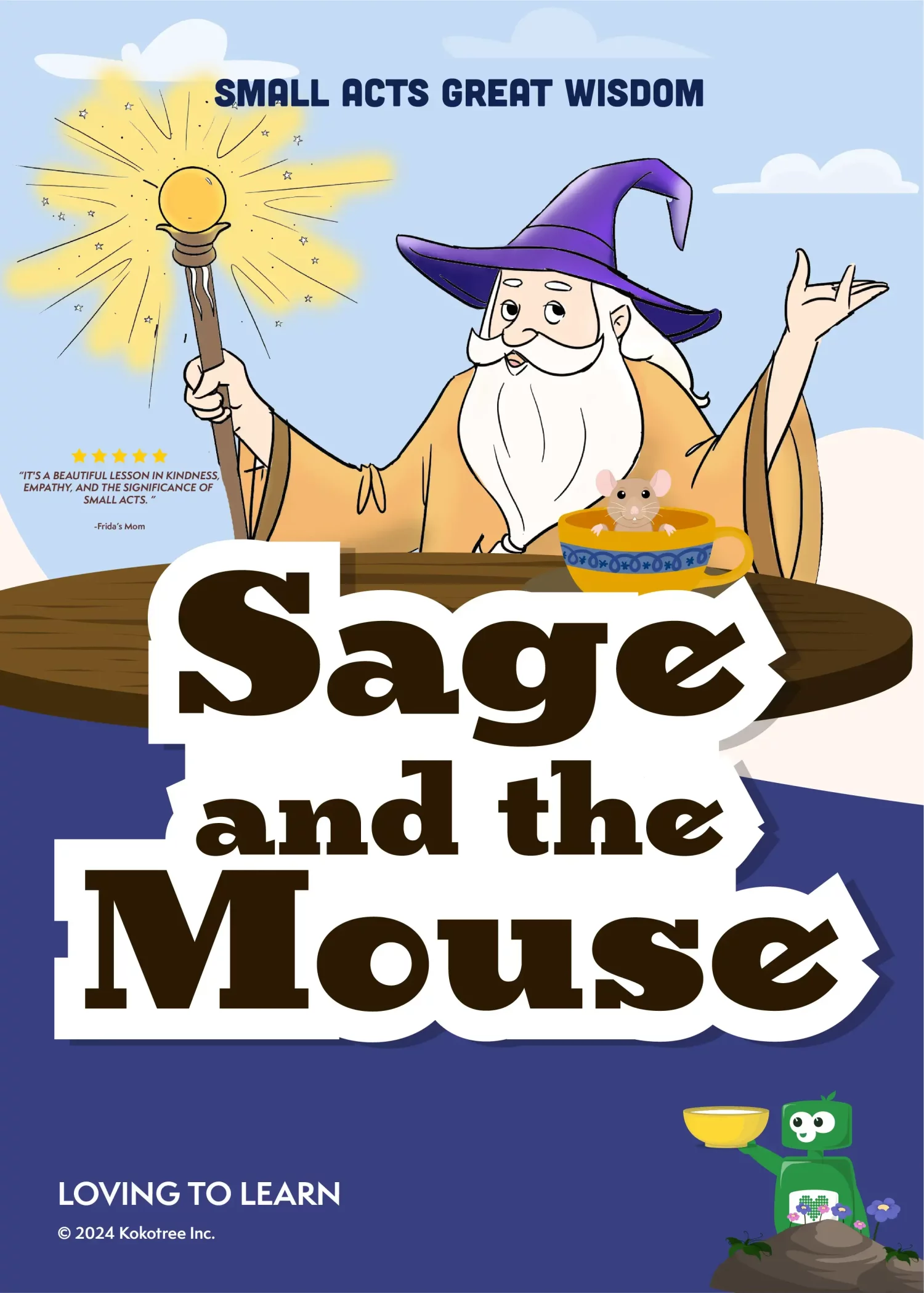
Your little one joins the Kokotree class for a magical storytelling session about friendship, gratitude, and staying humble. They'll watch animal transformations and discover why being thankful matters—no matter how big or small you are!
7 minutes
Ages 3-6
Skill: Understanding gratitude and humility
Your kid watches a magical story about friendship and transformation. You get 7 minutes to enjoy your coffee in peace.
Miss Meera gathers the Kokotree animal friends under the apple tree to share an enchanting tale. A kind wizard saves a tiny mouse and transforms him into different animals—from cat to dog to tiger—to keep him safe from danger. The colorful animal characters and magical moments keep little eyes glued to the screen.
What your child learns:
This story introduces foundational social-emotional concepts through engaging narrative. Children discover why gratitude matters and how staying humble helps us maintain friendships.
- Recognizing acts of kindness and helpfulness
- Understanding cause and effect in relationships
- Identifying emotions in characters (gratitude, anger, pride)
- Learning vocabulary: humble, grateful, pounce, transform
- Following a sequential story with multiple events
They'll use these skills when:
- Saying "thank you" when someone helps them at home
- Recognizing when a friend shares toys with them
- Understanding why bragging might hurt friendships
- Talking about feelings after reading books together
The Story (what keeps them watching)
The Kokotree class spots a mouse escaping from a cat and cheering erupts! Miss Meera uses this moment to share "The Sage and the Mouse." A wizard finds a tiny mouse, names him Manny, and they become best friends. When danger appears—a stray cat, a wild dog, a tiger—the wizard magically transforms Manny to keep him safe. But when Manny becomes a mighty tiger, he forgets who helped him and wants to prove he's powerful. The wise wizard reminds him that being humble matters most, and their friendship is restored over a bowl of rice.
How We Teach It (the clever part)
- First 2 minutes: The Kokotree class witnesses a real mouse-and-cat chase, creating an emotional hook that makes the upcoming story personally relevant to young viewers.
- Minutes 2-5: The story unfolds with repeated transformation sequences (mouse→cat→dog→tiger), reinforcing pattern recognition while building vocabulary around animal names and sizes.
- Final 2 minutes: Miss Meera facilitates reflection with the class, modeling how to think about stories and encouraging children to discuss with their parents.
Teaching trick: The wizard uses fun, memorable magic words ("Ala-kazaam!" "Abra-Cadabra!" "Bibbity-BAM!") that children can repeat, making abstract transformation concepts concrete and playful.
After Watching: Quick Wins to Reinforce Learning
- Mealtime activity: "Who helped make this food for us?" Talk about all the people and steps involved in getting dinner on the table. (Practices recognizing kindness from others)
- Car/travel activity: "Let's play the Thank You Game—name three things you're thankful for right now!" Take turns sharing. (Practices expressing gratitude verbally)
- Bedtime activity: "If you had a magic wand, what animal would you become? Would you still be you inside?" (Practices imaginative thinking and self-identity)
- Anytime activity: When your child receives help, pause and ask: "How do you think that made them feel when you said thank you?" (Practices perspective-taking)
When Kids Get Stuck. And How to Help.
- "My child doesn't understand why the mouse got angry" - This is actually sophisticated thinking! Explain simply: "Manny forgot to feel thankful. Sometimes when we feel big and strong, we forget who helped us get there."
- "The transformation concept seems confusing" - Focus on the feelings, not the magic. "Manny looked different on the outside, but inside he was still the same little mouse who loved rice and reading."
- "Is this story too complex for my 3-year-old?" - Younger children will grasp the basic friendship elements. Older children (5-6) will understand the deeper lesson about humility. Both benefit from the engaging narrative!
What Your Child Will Learn
Prerequisites and Building Blocks
Children benefit from basic story comprehension skills—following characters through beginning, middle, and end. Familiarity with common animals (mouse, cat, dog, tiger) helps with engagement. This video builds on earlier Kokotree storytelling episodes and prepares children for more complex narrative structures. It connects to social-emotional learning foundations established in friendship and kindness-themed content.
Cognitive Development and Teaching Methodology
At ages 3-6, children are developing theory of mind—understanding that others have different thoughts and feelings. This story uses concrete animal transformations to illustrate abstract emotional concepts. The repeated transformation pattern supports working memory development, while Miss Meera's reflective questions model metacognitive thinking. Visual storytelling addresses visual learners; dialogue and magic words engage auditory processors.
Alignment with Educational Standards
This content aligns with early learning standards for social-emotional development, specifically recognizing and responding to the feelings of others (CASEL competencies). It supports kindergarten readiness indicators for listening comprehension, story sequencing, and vocabulary acquisition. The reflective discussion models standards for expressing thoughts about stories and connecting narratives to personal experience.
Extended Learning Opportunities
Pair this video with Kokotree's animal identification activities to reinforce the mouse-cat-dog-tiger sequence. Drawing activities where children illustrate their favorite story moment extend creative engagement. Parents can create a simple "gratitude jar" where children add notes about helpful moments. The app's emotion-identification games complement the character feeling discussions.
Transcript Highlights
- "My dear friend. Whatever one is, big or small, you should still try and be humble." (Core lesson delivery)
- "The mouse got affected by other people's opinions about him, I guess. Think about this story before bed and ponder over it." (Modeling reflection)
- "Why did the mouse become angry? The Wizard always tried to help him and looked out for him!" (Character demonstrating critical thinking)
- "Would you like some rice?" (Showing forgiveness and restored friendship)
Character Development and Story Arc
Manny the mouse demonstrates a complete character arc—from vulnerable and grateful, to prideful and forgetful, to humble once again. The wizard models unconditional kindness and wise boundary-setting. The Kokotree class characters show engaged listening and thoughtful questioning, demonstrating for young viewers how to actively participate in storytelling. Tiki's question models curiosity and critical thinking about character motivations.
Social-Emotional Learning: Understanding Gratitude and Humility
Gratitude development in early childhood follows predictable patterns. Children ages 3-4 begin recognizing when others help them, while 5-6 year-olds start understanding the effort behind helpful actions. This story scaffolds gratitude learning by showing clear cause-and-effect: the wizard helps, Manny benefits, and forgetting this help leads to problems.
Humility is a sophisticated concept for young children, but this narrative makes it accessible through concrete examples. When Manny becomes a tiger, he gains external power but loses internal peace. The villagers' laughter represents social consequences of pride—something children this age are beginning to understand through playground dynamics.
Research in developmental psychology shows that stories are powerful tools for social-emotional learning because they allow children to experience consequences safely. Manny's journey lets children feel the discomfort of ingratitude without experiencing real relationship ruptures.
The resolution is particularly well-crafted for this age group. Rather than punishment, the wizard offers restoration—rice and reading together, just like before. This models unconditional positive regard and teaches that mistakes don't permanently damage relationships. Children learn that returning to humble gratitude repairs connections.
For parents, this story opens natural conversations about thankfulness. The concrete transformation imagery (small mouse to big tiger) gives children vocabulary for discussing feeling "big" or "small" in different situations—foundational emotional literacy that supports self-regulation development.