
What's Sight Words N to T About?
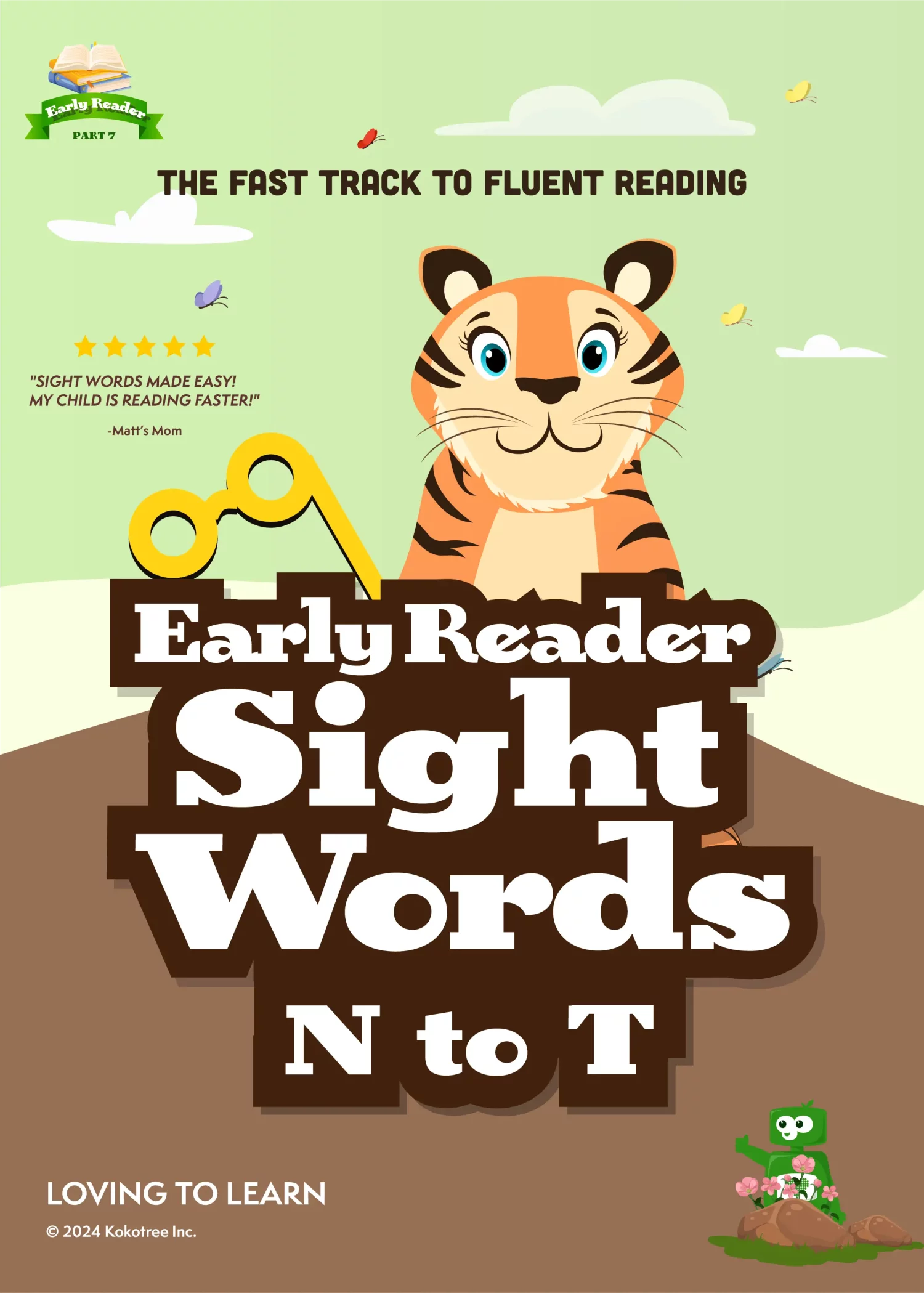
Your child will practice reading and repeating 25 high-frequency sight words while following along with Meera in a beautiful jungle setting. After watching, they'll recognize these common words instantly — a huge step toward reading fluency!
2.5 minutes
Ages 3-6
Skill: Reading Recognition & Word Memory
Your kid watches Meera teach essential sight words in the jungle. You get 2.5 minutes to finish that cup of coffee.
Meera, a friendly animal teacher, sits in a colorful jungle scene with birds chirping and butterflies floating by. She introduces each sight word clearly, organized by starting letter, and encourages your child to repeat after her. The peaceful nature setting keeps little ones focused while they practice.
What your child learns:
This video builds instant word recognition for 25 of the most common words in English. These "sight words" appear so frequently in books that recognizing them automatically helps children read faster and with more confidence.
- Recognizes sight words starting with N (not, no, now)
- Identifies common O words (or, one, of, out, other, over, only, on)
- Reads the word "people" starting with P
- Masters S words (said, she, some, so, see)
- Learns essential T words (the, to, they, this, there, them, then, these, two, time, than, that, their)
They'll use these skills when:
- Spotting familiar words while you read picture books together at bedtime
- Recognizing "the" and "to" on signs during car rides or walks
- Playing early reading games and feeling confident with common words
- Pointing out words they know in grocery stores, libraries, and anywhere text appears
The Story (what keeps them watching)
Meera welcomes your child back to the Early Reader Program from her peaceful jungle home, where caterpillars wiggle and birds sing. She's excited to continue the sight word journey, moving through letters N, O, P, S, and T with enthusiasm and patience. Each word gets its moment, with Meera encouraging repetition and celebrating progress. By the end, she reminds little learners that "practice makes perfect" and promises more adventures ahead. The gentle jungle atmosphere keeps kids calm and focused while they build their reading superpowers!
How We Teach It (the clever part)
- First 30 seconds: Meera greets returning learners warmly and sets expectations for the lesson, creating a comfortable learning environment in the jungle setting.
- Minutes 0:30-2:00: Systematic introduction of sight words organized by letter (N, O, P, S, T), with clear pronunciation and pauses for repetition practice.
- Final 30 seconds: Positive reinforcement celebrating their progress as "super readers" and encouraging continued practice.
Teaching trick: Meera organizes words by starting letter, which helps children see patterns and creates mental "filing cabinets" for new vocabulary. The repeat-after-me format ensures active participation rather than passive watching.
After Watching: Quick Wins to Reinforce Learning
Mealtime activity: "Can you find the word 'one' on this cereal box?" Point to words on food packaging and see how many sight words from the video your child can spot. They practice real-world word recognition!
Car/travel activity: "Let's look for the word 'the' on signs!" Challenge your child to spot sight words on street signs, storefronts, or billboards. This turns travel time into reading practice.
Bedtime activity: "Which words from Meera's lesson can you find on this page?" While reading together, pause and let your child identify any sight words they recognize. Builds confidence and connection to stories.
Anytime activity: "Can you say 'the, to, they, this' super fast?" Turn the T words into a fun tongue-twister speed challenge. Repetition through play reinforces memory!
When Kids Get Stuck. And How to Help.
"My child can't remember all 25 words after one viewing." - That's completely normal and expected! Sight words require repeated exposure over time. Watch the video several times throughout the week, and celebrate each word they do remember.
"They mix up similar words like 'then' and 'them.'" - These words look alike, so confusion is natural. Point to the ending letters and say them slowly together. With practice, their eyes will learn to notice those small differences.
"My child just repeats without understanding." - Repetition is the first step! Understanding deepens when they see these words in books. After the video, point to "the" or "one" in a picture book and watch recognition click into place.
What Your Child Will Learn
Prerequisites and Building Blocks
Children watching this video should have basic letter recognition (especially N, O, P, S, and T) and familiarity with the concept that letters form words. This lesson is Part 7 of the Early Reader Program, building on previous sight word videos covering letters A through M. Learners progress from individual letter sounds to whole-word recognition, a critical bridge in the reading journey. This video strengthens the foundation needed for simple sentence reading.
Cognitive Development and Teaching Methodology
The repeat-after-me format leverages auditory learning and active recall, proven techniques for vocabulary acquisition in early childhood. Organizing words by starting letter supports categorical thinking development in 3-6 year olds. The calm jungle environment reduces cognitive load, allowing working memory to focus entirely on word recognition. Visual, auditory, and verbal-kinesthetic pathways are engaged simultaneously when children see, hear, and speak each word.
Alignment with Educational Standards
This video addresses kindergarten readiness standards for reading foundational skills, specifically RF.K.3c (reading common high-frequency words by sight). The 25 words covered appear on Dolch and Fry sight word lists used in elementary classrooms worldwide. Mastering these words supports fluency benchmarks expected by first grade, where automatic recognition of 50-100 sight words is typical. Teachers expect incoming kindergarteners to recognize at least basic sight words.
Extended Learning Opportunities
Pair this video with printable sight word flashcards for N-T words, available in the Kokotree app resources. Play the Sight Word Bingo game featuring words from this lesson. Create a "Word Wall" at home where children add new sight words they've mastered. Practice writing each word in sand, shaving cream, or with finger paints to add tactile learning. Revisit earlier sight word videos (Parts 1-6) for comprehensive review.
Transcript Highlights
- "Let's learn more 'sight words.' Are ya ready? O-kay." — Meera creates anticipation and checks for engagement before beginning instruction.
- "Repeat after me! Not. No. Now." — Clear modeling with explicit instruction for active participation.
- "You are quickly becoming a super reader! Fantastic!" — Positive reinforcement builds confidence and motivation.
- "Remember, practice makes perfect!" — Growth mindset messaging encourages continued effort beyond the video.
Character Development and Story Arc
Meera models the role of an encouraging, patient teacher who celebrates every effort. Her warm greeting ("Oh, I remember you! Nice to see you again.") establishes continuity and relationship, showing children that learning is a journey with familiar guides. She demonstrates enthusiasm for reading without frustration, modeling positive attitudes toward challenging material. Her closing reminder about practice reinforces persistence and growth mindset — key traits for successful learners.
The Science of Sight Word Acquisition
Sight words represent a unique challenge in early literacy because many cannot be "sounded out" using phonics rules. Words like "the," "said," and "one" have irregular spellings that require whole-word memorization through repeated exposure. Research indicates children need 4-14 exposures to a new word before it moves into long-term memory, which is why Meera's repeat-after-me format is so effective.
The 25 words in this video are among the 100 most frequently occurring words in English text. Studies show that just 100 sight words comprise approximately 50% of all written material children encounter. Mastering these high-frequency words dramatically improves reading fluency because children spend less mental energy decoding common words, freeing cognitive resources for comprehension.
Organizing words by starting letter (N, O, P, S, T) supports orthographic mapping — the process by which the brain connects letter patterns to pronunciation and meaning. When children see patterns (multiple T words together), they strengthen neural pathways for that letter-sound relationship while learning individual words. The spaced repetition built into the Early Reader Program series ensures words are revisited across multiple sessions, optimizing retention according to memory research. This systematic approach transforms unfamiliar squiggles into instantly recognizable friends on the page.