
What's Sight Words U to Z About?
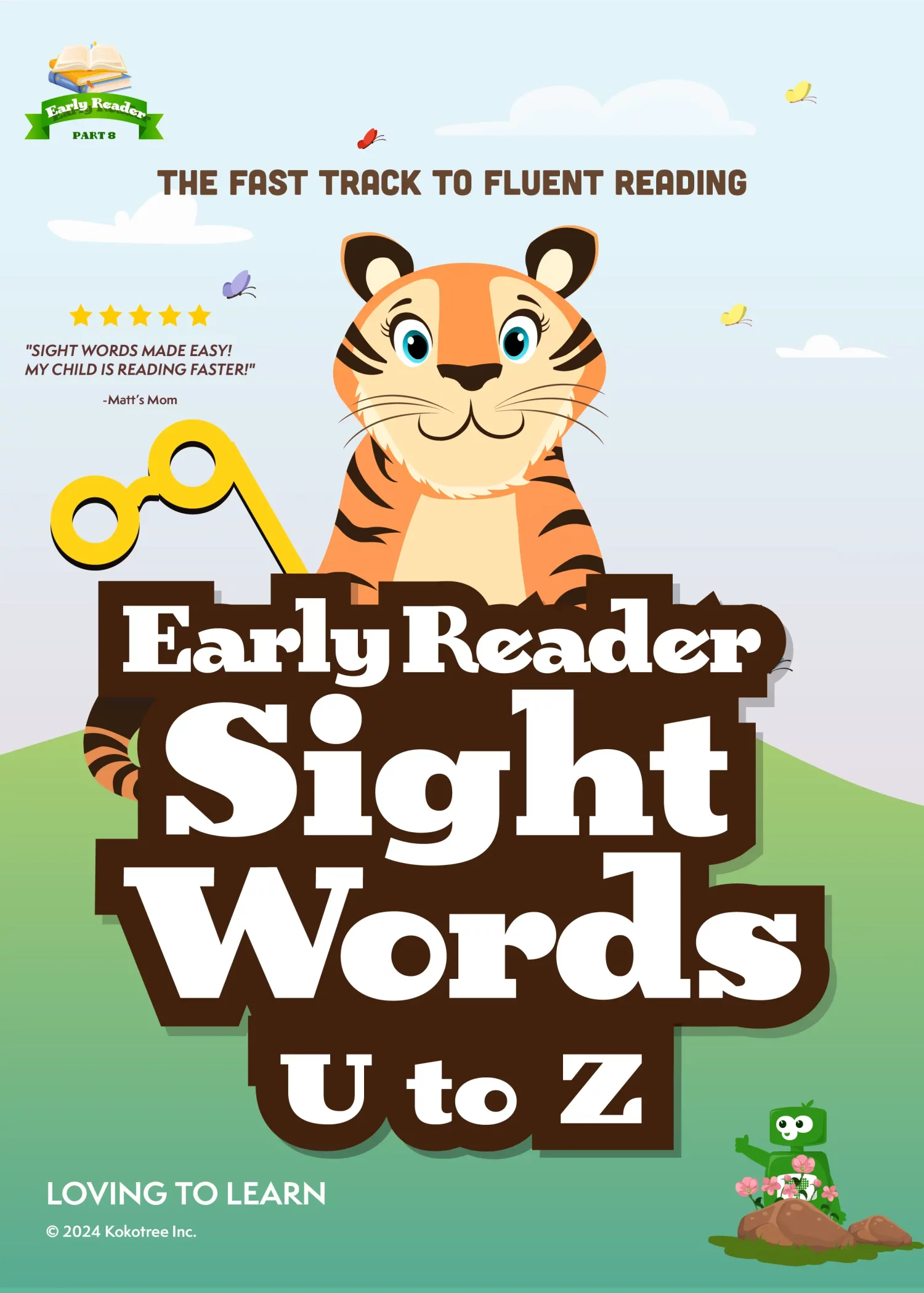
Your little one joins Meera in a beautiful jungle setting to learn and practice 23 essential sight words from U to Z! After watching, they'll recognize these high-frequency words instantly—a crucial skill for early reading success.
2.5 minutes
Ages 3-6
Skill: Reading readiness through sight word recognition
Your kid watches Meera teach sight words in a cheerful jungle. You get 2.5 minutes to finish that cup of coffee.
Meera, a friendly animal teacher, sits in a colorful jungle scene with birds chirping, butterflies floating by, and caterpillars wiggling on the ground. She introduces each letter group (U, V, W, Y, Z) and clearly pronounces each sight word, pausing for your child to repeat along.
What your child learns:
This video teaches 23 of the most common words in English—words that appear so frequently in books that recognizing them instantly helps children read smoothly. Your child practices pronunciation and builds their mental word bank.
- Recognizes sight words starting with U (up, use)
- Identifies V words (very, view, voice)
- Masters W words (was, with, what, were, when, we, which, will, word, work, world, would)
- Learns Y words (you, your, yes)
- Knows Z words (zoo, zero, zigzag)
They'll use these skills when:
- Spotting familiar words on signs, labels, and book covers
- Reading their first simple sentences and picture books
- Playing word games and matching activities
- Building confidence to sound out new words independently
The Story (what keeps them watching)
Meera welcomes young learners to her peaceful jungle classroom where butterflies dance and birds sing! She's excited to teach Part 8 of the Early Reader Program—the final stretch of sight words from U to Z. With her warm encouragement ("Rawrrr. Wonderful job!"), Meera guides children through each letter group, celebrating every small victory. The calm jungle atmosphere keeps little ones focused while the repeat-after-me format makes them active participants in their own learning adventure.
How We Teach It (the clever part)
- First 30 seconds: Meera creates a welcoming atmosphere and introduces the lesson goal—learning sight words from U to Z—getting children mentally ready to participate.
- Minutes 0:30-2:00: Each letter group is introduced systematically. Meera says each word clearly, pauses for repetition, and offers specific praise ("Fantastic!" "Super job!") to maintain engagement and confidence.
- Final 30 seconds: Meera celebrates the accomplishment, reinforcing that children have now completed all sight words from U to Z and building excitement for future learning.
Teaching trick: The repeat-after-me format with built-in pauses transforms passive watching into active learning. Children physically practice pronunciation, which strengthens memory far more than just listening.
After Watching: Quick Wins to Reinforce Learning
- Mealtime activity: "Can you find something we go UP to reach?" Point to high shelves or cabinets. Practice using 'up' in sentences like "The cups are UP there!" (Reinforces word meaning and usage)
- Car/travel activity: "Let's play the 'VERY' game! I see a VERY big truck. What do YOU see that's VERY something?" Take turns describing things. (Practices using sight words in natural speech)
- Bedtime activity: "What word starts with Z that has animals? Yes—ZOO! Let's name three animals we'd see at a zoo." (Connects sight words to familiar concepts)
- Anytime activity: "I spy something that makes a ZIGZAG shape!" Hunt for zigzag patterns on clothes, toys, or around the house. (Links abstract words to visual recognition)
When Kids Get Stuck. And How to Help.
- "My child can't remember all 23 words at once" - Totally normal! Sight word mastery happens through repeated exposure over weeks, not minutes. Pick 3-5 words to focus on this week, then add more gradually.
- "They mix up similar words like 'was' and 'with'" - These W-words do look alike! Point out the different endings and practice them in silly sentences: "I WAS WITh a wiggly worm!" Exaggerate the sounds.
- "The video seems too fast for my child" - Pause and replay! Watch one letter group at a time if needed. Repetition is the secret sauce—watching multiple times actually strengthens learning, not a sign of struggle.
What Your Child Will Learn
Prerequisites and Building Blocks
Children benefit most from this video after completing Parts 1-7 of the Early Reader Program, which cover sight words A through T. Familiarity with letter recognition (especially U, V, W, Y, Z) helps children connect written forms to spoken words. This video represents the culmination of the sight word series, building on previously established repeat-after-me learning patterns and preparing children for blending these high-frequency words into early reading.
Cognitive Development and Teaching Methodology
The call-and-response format leverages auditory processing and verbal production—critical for this age group's language development. Meera's clear pronunciation with deliberate pauses supports phonological awareness while the chunked presentation (words grouped by starting letter) reduces cognitive load. The multi-sensory jungle environment provides visual engagement without distraction, and positive reinforcement after each section triggers dopamine release that strengthens memory formation.
Alignment with Educational Standards
This video addresses Common Core Foundational Skills RF.K.3c (reading common high-frequency words by sight) and supports kindergarten readiness benchmarks for print awareness. The 23 words taught appear on Dolch and Fry sight word lists—research-backed collections that teachers use nationwide. Mastering these words helps children meet the expectation of recognizing 50-100 sight words by the end of kindergarten.
Extended Learning Opportunities
Pair this video with Kokotree's sight word flashcard activities and word-matching games in the app. Print simple sentences using these words for tracing practice. Create a "Word Wall" at home, adding each new sight word your child masters. The Kokotree phonics series complements sight word learning by teaching decoding skills for unfamiliar words—together, these approaches build complete early readers.
Transcript Highlights
- "It's time for learning more 'sight words'. Are ya ready? Let's go!" — Builds anticipation and activates learning mindset
- "Repeat after me! Up. Use." — Models the active participation expected throughout
- "Rawrrr. Wonderful job! Keep it up!" — Playful encouragement maintains engagement during the longest section (W words)
- "Excellent work! You've learned the sight words from U to Z!" — Celebrates completion and reinforces accomplishment
Character Development and Story Arc
Meera models enthusiasm for learning and patient teaching throughout the video. Her consistent encouragement ("Fantastic!" "Super job!" "You're doing great!") demonstrates growth mindset language that children absorb and internalize. The playful "Rawrrr" during the challenging W-word section shows that learning can be fun even when there's lots to remember. Meera's calm, confident demeanor reassures children that they're capable learners.
The Science of Sight Word Acquisition
Sight words—also called high-frequency words—make up 50-75% of all text in early readers. Unlike phonetically regular words that children can sound out, many sight words break spelling rules ("was," "were," "would") and must be memorized as whole units. This process, called orthographic mapping, requires repeated exposure for words to move from working memory into long-term storage.
Research shows that children need 4-14 exposures to a new word before achieving automatic recognition. The repeat-after-me format in this video provides the first critical exposure while engaging both visual and auditory memory pathways. When children say words aloud, they activate motor memory as well, creating multiple neural pathways to the same information.
The words selected for this video serve specific purposes: "up" and "use" introduce common U-words; "very," "view," and "voice" cover essential V vocabulary; the extensive W-word list reflects that W-starting sight words are among the most frequent in English. "You," "your," and "yes" are social words children encounter constantly, while "zoo," "zero," and "zigzag" introduce less common but phonetically interesting Z-words.
By completing this final segment (U-Z), children have now been introduced to sight words across the entire alphabet—a major milestone in reading readiness that prepares them to recognize familiar words instantly while applying phonics skills to decode new ones.