
What's The Hairy Caterpillar About?
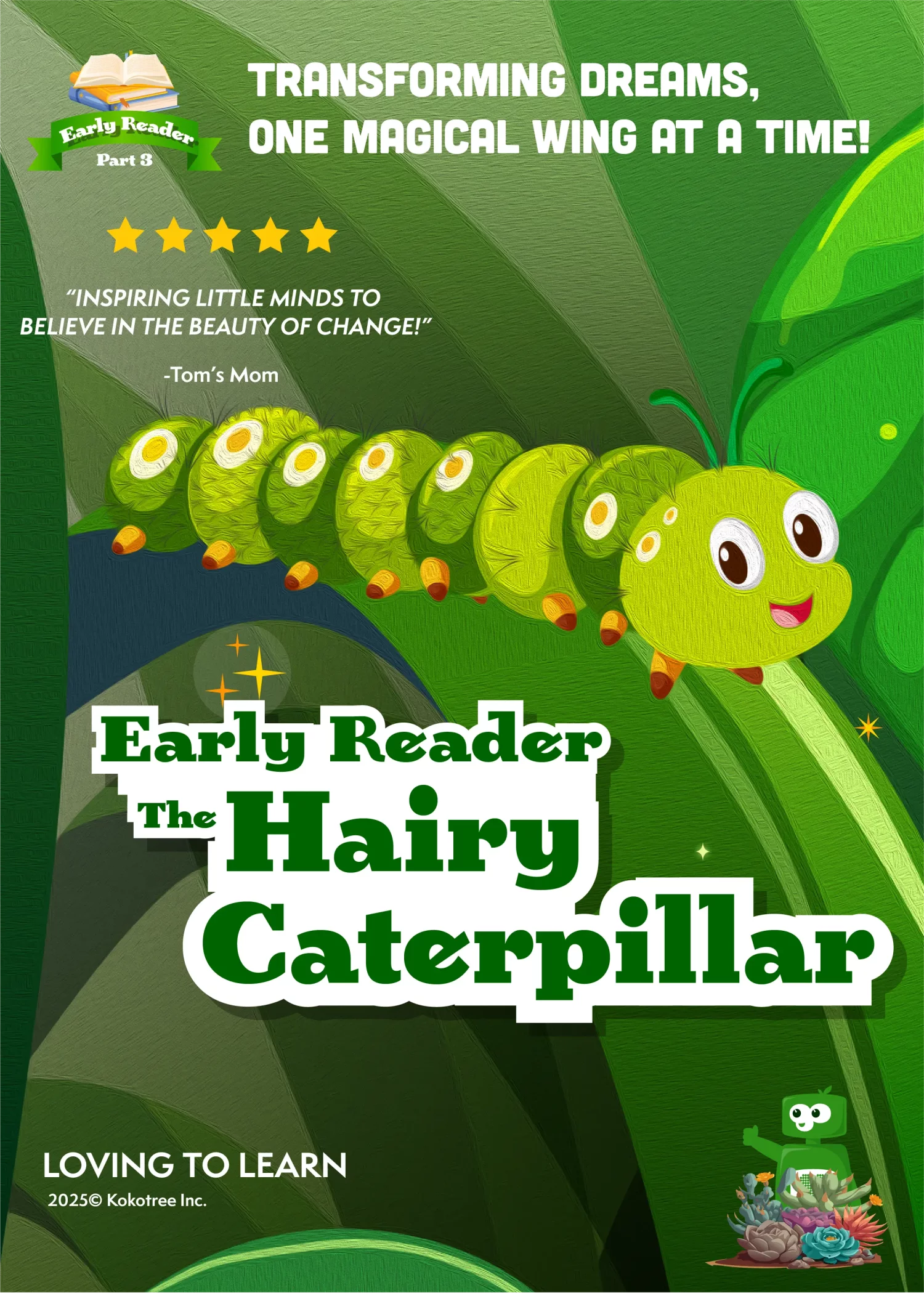
Watch Charlie transform from a chubby, leaf-munching caterpillar into a stunning butterfly! Your child will learn about life cycles, patience, and the amazing changes that happen in nature—all wrapped in a cozy bedtime story.
10 minutes
Ages 2-6
Skill: Understanding animal life cycles and metamorphosis
Your kid watches a caterpillar grow, sleep, and become a butterfly. You get 10 minutes to finally finish that cup of tea.
Charlie the caterpillar spends his days munching leaves and watching his garden friends hop and fly. He wishes he could move like them, but his stubby legs just won't cooperate. After wrapping himself in a cozy leaf cocoon for winter, Charlie emerges in spring as a beautiful butterfly with colorful wings—finally able to soar above the garden!
What your child learns:
This gentle story introduces the butterfly life cycle in a way little ones can understand and remember. Charlie's journey from caterpillar to butterfly shows that growth takes time, and amazing things happen when we're patient.
- Butterfly metamorphosis: caterpillar → cocoon → butterfly
- How different insects move (crawling, hopping, flying)
- What caterpillars and butterflies eat (leaves vs. nectar)
- Seasonal changes and how animals respond to them
- The concept that growth and change take time
They'll use these skills when:
- Spotting caterpillars on leaves during a nature walk
- Watching butterflies in the garden or park
- Noticing how seasons change the world around them
- Waiting patiently for something exciting (like a birthday or special event)
The Story (what keeps them watching)
Charlie is a fuzzy caterpillar who feels a little envious watching grasshoppers hop and frogs leap around the garden. His stubby legs can only crawl! But Charlie keeps eating his leaves and growing stronger. When winter comes, he wraps himself in a leafy cocoon and sleeps. Come spring, Charlie wriggles free and discovers something incredible—he has beautiful wings! Now he can fly from flower to flower, sipping sweet nectar. His garden friends are amazed, and Charlie learns that patience and hard work lead to wonderful transformations.
How We Teach It (the clever part)
- First 3 minutes: We meet Charlie and learn what caterpillars do—eat leaves and crawl. Kids see different garden insects and how they move.
- Minutes 3-7: Charlie compares himself to hopping grasshoppers and frogs, building curiosity about why he's different. He gets tired, wraps up in leaves, and sleeps through winter.
- Final 3 minutes: Spring arrives! Charlie emerges as a butterfly, discovers his wings, and learns to fly. The story reinforces that his hard work and patience paid off.
Teaching trick: The video uses Charlie's envy of hopping creatures to create anticipation—kids wonder what will happen to him. When he transforms, it feels like a magical reward, making the life cycle concept memorable and emotionally satisfying.
After Watching: Quick Wins to Reinforce Learning
- Mealtime activity: "Can you curl up small like a caterpillar in a cocoon, then stretch out your arms like butterfly wings?" (Reinforces the transformation concept through movement)
- Car/travel activity: "Let's look for butterflies! What colors do you think we'll see on their wings?" (Connects the story to real-world observation)
- Bedtime activity: "Charlie slept all winter to grow his wings. What do you think your body does while you sleep?" (Links the cocoon rest to their own sleep and growth)
- Anytime activity: "If you were a butterfly, which flower would you visit first for nectar?" (Encourages imagination while reinforcing what butterflies eat)
When Kids Get Stuck. And How to Help.
- "My child keeps asking why the caterpillar had to sleep so long." - This is great curiosity! Explain that big changes take time, just like how they've grown since they were a baby. Some things can't be rushed.
- "They don't understand why the caterpillar changed shape." - Try a simple comparison: "Remember when you lost a tooth and a bigger one grew? Animals change too, just in different ways." Revisit the video together and pause at the transformation.
- "My child seems confused about cocoons vs. chrysalises." - At this age, understanding that caterpillars wrap up and change is enough! The scientific vocabulary can come later. Focus on the wonder of the transformation itself.
What Your Child Will Learn
Prerequisites and Building Blocks
This video works best when children have basic familiarity with common animals and insects. Prior exposure to concepts like "growing" and "changing" helps, but isn't required. "The Hairy Caterpillar" builds on foundational nature awareness and prepares children for more detailed life cycle learning. It connects naturally to videos about seasons, other insects, and garden habitats, creating a web of nature knowledge.
Cognitive Development and Teaching Methodology
The narrative structure leverages preschoolers' natural love of stories to teach sequential thinking—first caterpillar, then cocoon, then butterfly. The video addresses multiple learning styles: visual learners see the transformation, auditory learners hear the story narration, and the suggested activities engage kinesthetic learners. Emotional engagement through Charlie's journey helps cement the scientific concept in long-term memory.
Alignment with Educational Standards
This video supports early science standards around life cycles and animal characteristics found in most kindergarten readiness frameworks. It addresses Next Generation Science Standards (K-LS1) about what animals need to survive and how they grow. Teachers expect entering kindergartners to understand that living things change over time—this video builds exactly that foundation.
Extended Learning Opportunities
Pair this video with simple butterfly life cycle worksheets showing the four stages. Create a "caterpillar to butterfly" craft using pasta shapes (spiral for caterpillar, bow-tie for butterfly). Explore related Kokotree videos about garden insects, seasons, or animal habitats. For extended screen-free learning, observe real caterpillars outdoors or watch time-lapse videos of actual metamorphosis together.
Transcript Highlights
- "Day after day, Charlie munched and crunched on the tasty leaves, growing a little bit bigger." (Introduces growth through eating)
- "He snuggled into his leafy blanket and fell into a deep, dreamy sleep." (Explains cocoon stage accessibly)
- "Charlie was no longer hairy or chubby... He was now a butterfly!" (Clear transformation moment)
- "Working hard helps everyone, not just hairy caterpillars, grow stronger and achieve their dreams." (Connects science to life lesson)
Character Development and Story Arc
Charlie models healthy responses to feeling different—he notices what others can do, feels a bit envious, but keeps doing his own work (eating leaves). He doesn't give up or become upset; he simply continues growing. When his transformation comes, it's presented as a natural result of patience and persistence. This demonstrates growth mindset without lecturing, showing children that everyone develops at their own pace.
Life Cycles and Metamorphosis: A Deep Dive
Metamorphosis is one of nature's most dramatic transformations, and butterflies offer the perfect introduction for young learners. The four-stage life cycle—egg, larva (caterpillar), pupa (cocoon/chrysalis), and adult (butterfly)—demonstrates that living things can change completely over time.
For preschoolers, understanding metamorphosis builds crucial scientific thinking skills. It introduces the concept that appearances can be deceiving—the same creature can look entirely different at various life stages. This challenges the common misconception that animals stay the same throughout their lives.
The video accurately portrays key biological facts in age-appropriate ways. Caterpillars really do spend most of their time eating, storing energy for their transformation. They do become less active before pupating. And butterflies genuinely use a proboscis (long tongue) to drink nectar instead of eating leaves.
This content also introduces comparative biology. Children see that different creatures move differently—caterpillars crawl, grasshoppers hop, frogs leap, butterflies fly. Each animal's body is suited to its movement style. This plants early seeds for understanding adaptation and biodiversity.
The seasonal element adds another science layer. Many butterflies do overwinter as pupae, emerging when temperatures warm. This connects life cycles to Earth's patterns, building toward understanding ecosystems. By presenting metamorphosis through story, children absorb complex biology naturally, creating mental frameworks they'll build upon throughout their education.