
What's Winning Isn't Everything About?
Watch Gina Giraffe learn a valuable lesson about friendship and perseverance after losing a race to her friend Ronnie Rhino. Your child will understand that participating, trying their best, and enjoying time with friends is more rewarding than always winning.
8 minutes
Ages 3-6
Skill: Handling disappointment and valuing effort over outcomes
Your kid watches friendly animals learn about good sportsmanship together. You get 8 minutes to [enjoy your coffee in peace].
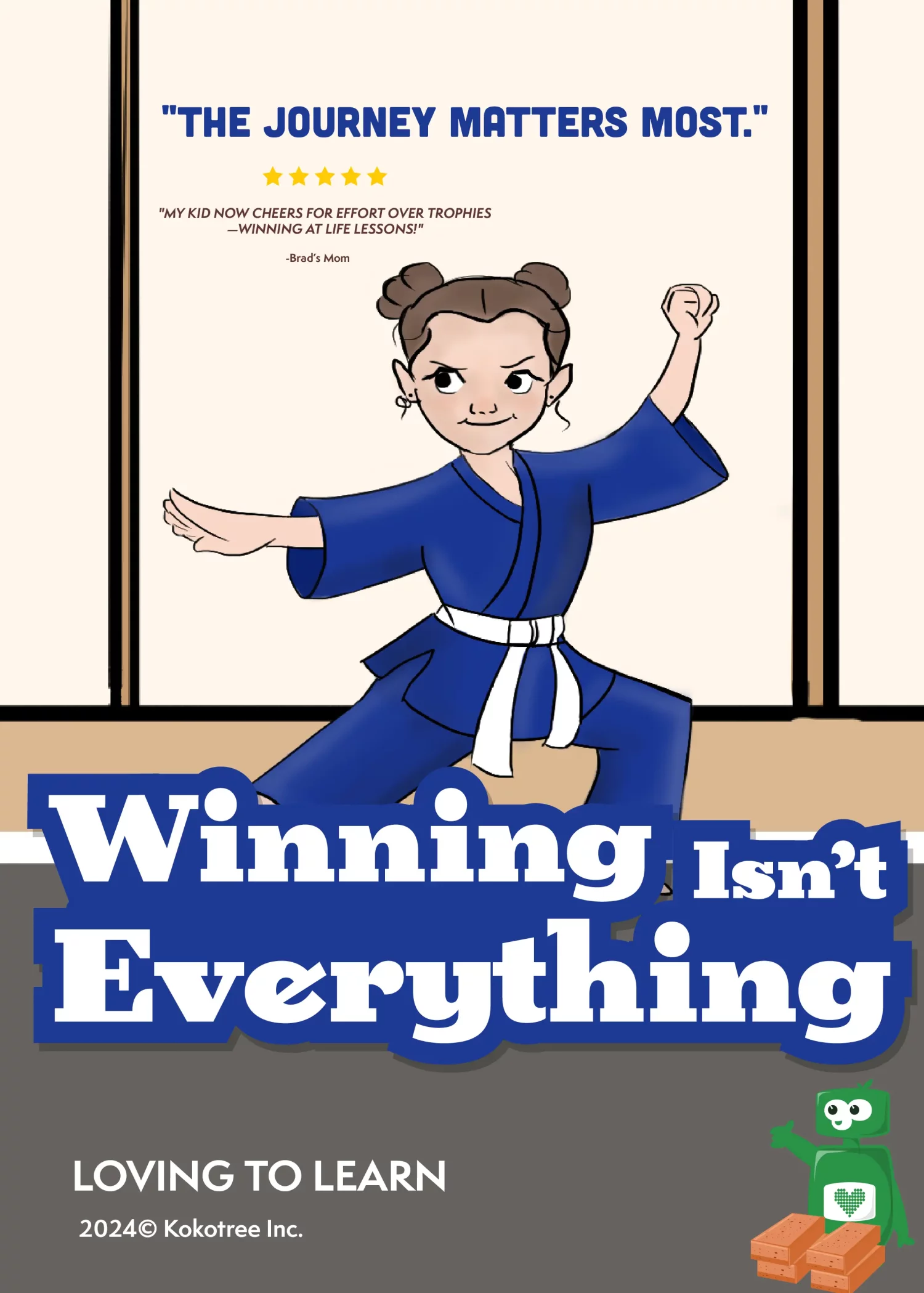
Gina Giraffe gets distracted by a butterfly during a race and trips, losing to Ronnie Rhino. She feels sad and wants to quit playing. Miss Meera, their teacher, shares a story about Maya who learns the same lesson in her martial arts class—that winning isn't everything when you're having fun and growing with friends.
What your child learns:
This video teaches children that losing is a normal part of playing and learning. Through relatable characters, kids discover that the real joy comes from participating, improving, and spending time with friends—not from always coming in first place.
- Handling disappointment when things don't go as planned
- Celebrating friends' successes without jealousy
- Understanding that practice and effort matter more than winning
- Recognizing the value of persistence and not giving up
- Building resilience through positive self-talk
They'll use these skills when:
- Losing a board game at home and learning to say "good game" instead of getting upset
- Coming in second during a playground race and still feeling proud of trying
- Watching a sibling or friend succeed and cheering them on genuinely
- Facing a challenging task and choosing to keep trying instead of quitting
The Story (what keeps them watching)
It's race day in the Kokotree jungle! Gina Giraffe is confident she'll win against Ronnie Rhino, but a pretty butterfly catches her eye and—oops!—she trips and loses. Feeling embarrassed and sad, Gina wants to quit playing altogether. Miss Meera gathers the friends for a story about Maya, who feels the same way about losing at martial arts. Through Maya's journey of almost quitting but choosing to persevere, the friends learn that the best part of any activity is growing, learning, and being together. Gina realizes losing one race doesn't mean she should stop having fun!
How We Teach It (the clever part)
- First 2 minutes: The problem is introduced through Gina's race loss—kids immediately relate to feeling disappointed when they don't win
- Minutes 2-6: Miss Meera's story about Maya provides a mirror example, showing another character working through the same feelings and making a positive choice
- Final 2 minutes: The lesson is reinforced as Gina and friends discuss what they learned, with Miss Meera directly addressing viewers with the takeaway message
Teaching trick: The video uses a "story within a story" technique—by watching Maya go through the same struggle as Gina, children process the lesson twice through different characters, reinforcing the message without feeling lectured.
After Watching: Quick Wins to Reinforce Learning
- Mealtime activity: "Tell me about a time you tried really hard at something, even if it was tricky." (Helps your child recognize effort as valuable, separate from outcomes)
- Car/travel activity: "Let's play 'I Spy' and whoever finds something gets to pick the next color—remember, we're all winners for playing together!" (Practices enjoying games without focusing on winning)
- Bedtime activity: "What was your favorite part of today? What did you try that was hard?" (Builds habit of celebrating effort and participation over results)
- Anytime activity: Next time you play a game together, model saying "That was so fun playing with you!" whether you win or lose. (Shows children how to respond graciously to any outcome)
When Kids Get Stuck. And How to Help.
- "My child still gets very upset when they lose" - This is completely normal! It takes many experiences to internalize this lesson. Keep gently reminding them what was fun about playing, and acknowledge their feelings: "I know it's disappointing. What part did you enjoy?"
- "They say they understand but still want to quit activities when they're not the best" - Understanding and emotional regulation are different skills! Keep encouraging participation and praise effort specifically: "I love how you kept trying even when it was hard."
- "Is this video too advanced for my 3-year-old?" - Younger children may not grasp every nuance, but they'll absorb the core message through the characters' emotions and actions. Revisit the video as they grow—they'll understand more each time!
What Your Child Will Learn
Prerequisites and Building Blocks
Children watching this video should have basic understanding of games and taking turns. This video builds on foundational social skills like playing with others and following simple rules. It connects to earlier Kokotree content about friendship and cooperation, preparing children for more complex concepts like teamwork, goal-setting, and self-regulation. This fits naturally after videos about sharing and playing together, and before content about trying new things and building confidence.
Cognitive Development and Teaching Methodology
This video uses narrative modeling, which is highly effective for preschoolers who learn best through story and character identification. The dual-narrative structure (Gina's story and Maya's story) provides repetition without redundancy—a key principle for this age group. Visual learners see characters' facial expressions showing emotions; auditory learners hear the dialogue explaining feelings; kinesthetic learners can act out the race or practice "good game" handshakes afterward.
Alignment with Educational Standards
This video aligns with social-emotional learning standards found in most early childhood frameworks, including CASEL competencies for self-awareness and relationship skills. It supports kindergarten readiness indicators around emotional regulation, peer interaction, and persistence. Teachers expect entering kindergarteners to handle minor disappointments, participate in group activities positively, and demonstrate beginning sportsmanship—all skills this video directly addresses.
Extended Learning Opportunities
Pair this video with simple board games or races where everyone practices saying "good game." The Kokotree app includes related activities about friendship and trying new things. Create a "Good Sport Certificate" your child can earn by handling a loss gracefully. Practice role-playing: "Let's pretend I won the race—what could you say?" Read books about characters who keep trying, and point out real-life examples of athletes or performers who improved through practice.
Transcript Highlights
- Miss Meera: "Did you have fun running?... That's the most important part! Having fun and playing with your friends."
- Maya's Dad: "Losing is a part of learning. Each time you lose, you learn something new."
- Maya: "Even when I lost, I'm glad I didn't quit."
- Miss Meera (to viewers): "It's not about winning or losing—it's about taking part and growing with every step!"
Character Development and Story Arc
Gina Giraffe demonstrates a realistic emotional journey from confidence to disappointment to acceptance. Her initial reaction (wanting to quit) validates children's real feelings, while her transformation shows growth mindset in action. Maya's parallel journey reinforces that these feelings are universal. Ronnie Rhino models good winner behavior by complimenting Gina, and the group demonstrates supportive friendship. Miss Meera serves as a gentle guide rather than a lecturer, asking questions that help characters reach their own conclusions.
Understanding Disappointment and Building Resilience in Early Childhood
Handling disappointment is one of the most important skills children develop between ages 3-6. At this stage, children are naturally egocentric and have limited emotional regulation abilities—losing genuinely feels catastrophic to them. This is developmentally normal, not a character flaw.
The video addresses this by first validating the feeling (Gina is allowed to feel sad), then reframing the situation (focusing on what was enjoyable), and finally providing a model for moving forward (Maya's choice to continue). This three-step approach mirrors what child development experts recommend: acknowledge, redirect, and encourage.
Research shows that children who learn to handle small disappointments early develop better coping skills for larger challenges later. The concept of "effort over outcome" connects to growth mindset research—children who believe abilities can improve through practice show greater persistence and achievement than those who believe talent is fixed.
Importantly, this video doesn't dismiss competitive feelings or suggest winning doesn't matter at all. Instead, it expands children's definition of success to include participation, improvement, and social connection. This balanced approach helps children stay motivated while building emotional resilience.
The repeated message "never give up" provides children with a simple mantra they can use when facing challenges, giving them a concrete tool for self-encouragement that they can apply across many situations.