
What's Baa Baa Black Sheep About?
Your little one joins a friendly woolly sheep in this classic sing-along that makes counting to three absolutely irresistible! After watching, they'll be counting everything in groups of three and talking about sharing with others.
2.5 minutes
Ages 1-6
Skill: Counting to three and understanding sharing
Your kid watches a cheerful sheep count and share wool bags. You get 2.5 minutes to finish your coffee.
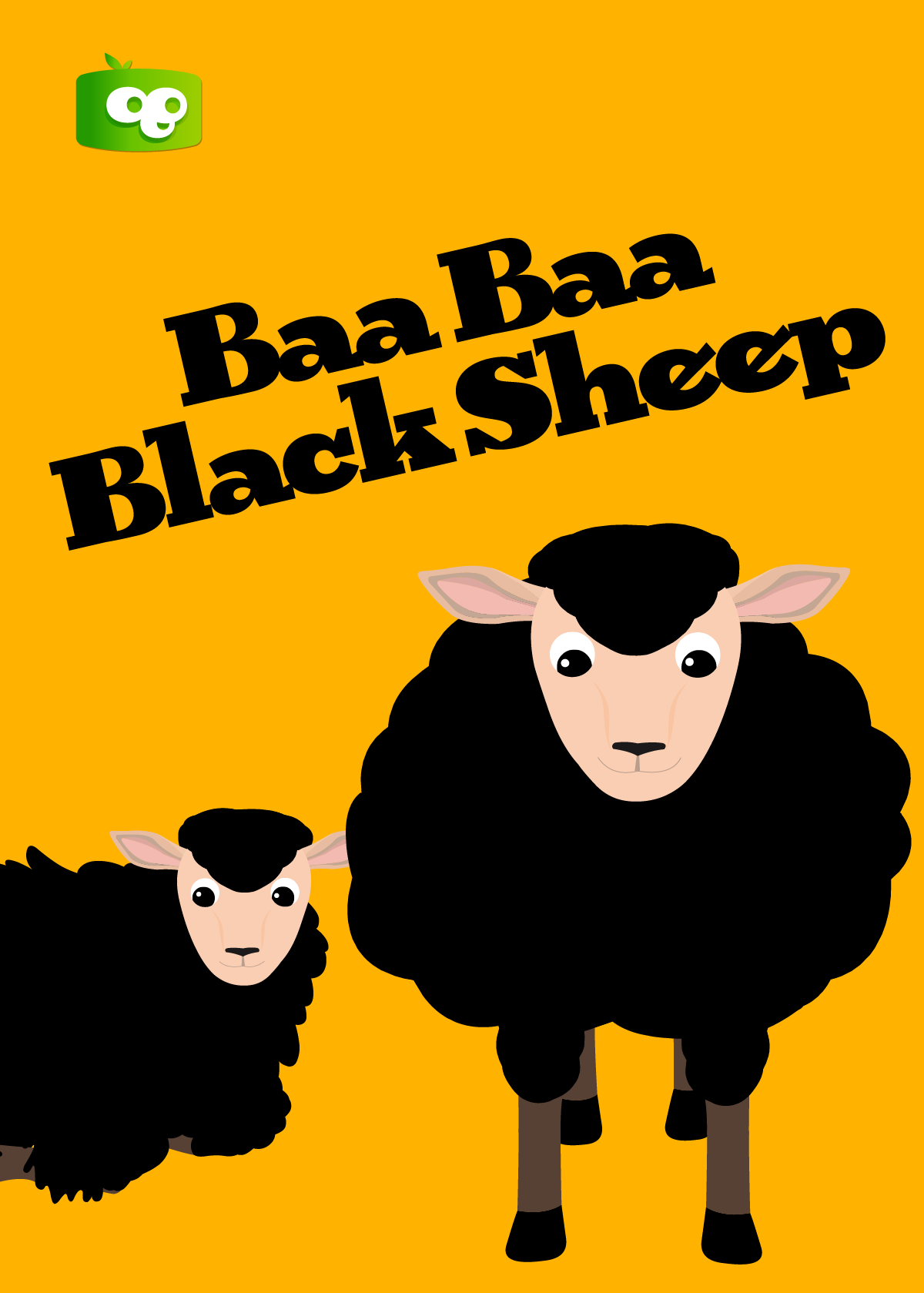
A friendly black sheep sings about having three bags of fluffy wool to share. Through catchy repetition, children watch as each bag goes to someone different—the master, the dame, and the little boy down the lane. The simple melody and repeated verses make it easy to follow along.
What your child learns:
This timeless nursery rhyme sneaks in early math concepts through its memorable counting sequence. The repetitive structure helps cement the number three while introducing the concept of fair distribution.
- Counting objects up to three with confidence
- Understanding equal sharing and distribution
- Recognizing animal sounds ("baa")
- Building memory through song repetition
- Developing rhythm and musical awareness
They'll use these skills when:
- Sharing snacks equally with siblings or friends at the playground
- Counting toys during cleanup time ("Let's put three blocks away!")
- Singing along to music and keeping rhythm during playtime
- Answering questions about quantities ("How many crackers do you want?")
The Story (what keeps them watching)
Meet a generous black sheep with a simple mission: share three bags of wool with friends who need them! The sheep cheerfully answers "Yes sir, yes sir, three bags full!" and explains exactly where each bag will go. One for the master, one for the dame, and one for the little boy down the lane—everyone gets their fair share. The catchy tune repeats throughout, giving little ones multiple chances to sing along, practice counting, and celebrate the joy of sharing. By the end, your child will be "baa-ing" right along!
How We Teach It (the clever part)
- First 30 seconds: The melody and main characters are introduced, capturing attention with the friendly sheep and catchy "baa baa" sounds
- Minutes 1-2: Through repetition, children hear the counting sequence (one, two, three bags) multiple times, reinforcing number recognition
- Final 30 seconds: The song wraps up with familiar verses, allowing confident sing-along participation
Teaching trick: The song uses the same verse structure seven times—this isn't filler, it's intentional! Research shows young children need 7-10 exposures to new information before it sticks. Each repetition builds confidence and mastery.
After Watching: Quick Wins to Reinforce Learning
- Mealtime activity: "Can you give everyone three grapes, just like the sheep shared three bags?" (Practices counting and one-to-one correspondence while reinforcing sharing)
- Car/travel activity: "Let's count three things we see outside—one for you, one for me, one for teddy!" (Extends the sharing concept to real-world observations)
- Bedtime activity: "Which three stuffed animals should sleep with you tonight? Let's count them together!" (Connects counting to comforting routines)
- Anytime activity: Sing the song together and have your child hold up fingers for each bag—one, two, three! (Adds physical movement to reinforce number concepts)
When Kids Get Stuck. And How to Help.
- "My child just babbles along but doesn't say the words clearly" - Totally normal for ages 1-3! They're absorbing the rhythm and melody first. Words come with repetition. Keep singing together and celebrate any sounds they make.
- "They can sing it but can't actually count three objects" - Singing numbers and counting objects are different skills! Use the song as a bridge—after singing, practice touching three real items while counting slowly together.
- "My toddler loses interest before the song ends" - At this age, even 30 seconds of engagement is a win. Try watching just the first verse together, then build up over time as their attention span grows.
What Your Child Will Learn
Prerequisites and Building Blocks
This video works beautifully for children just beginning their counting journey—no prior number knowledge required! It builds on basic animal recognition (sheep) and sound imitation skills. "Baa Baa Black Sheep" serves as an excellent foundation for more complex counting songs like "Five Little Ducks" and "Ten in the Bed." The simple one-two-three sequence prepares children for counting higher numbers and understanding quantity concepts in future Kokotree videos.
Cognitive Development and Teaching Methodology
Repetition is the cornerstone of early learning, and this video leverages it masterfully. Young brains form neural pathways through repeated exposure—hearing the same verse seven times isn't redundant, it's developmentally essential. The combination of visual imagery, melodic patterns, and rhythmic language addresses multiple learning styles simultaneously. Kinesthetic learners can clap along, auditory learners absorb the tune, and visual learners connect with the animated sheep.
Alignment with Educational Standards
This video supports Common Core Kindergarten standards for counting (K.CC.A.1: Count to 100 by ones) at its foundational level. It addresses Head Start Early Learning Outcomes for Mathematics, specifically "Child knows number names and the count sequence." Preschool teachers expect incoming students to count to at least three—this song makes that benchmark achievable through joyful repetition rather than rote drilling.
Extended Learning Opportunities
Pair this video with Kokotree's counting games featuring groups of three objects. Print simple coloring pages showing three bags and have children count while coloring. Create a "sharing station" with three containers and small objects to distribute. Follow up with other Kokotree nursery rhymes that feature counting, building toward higher numbers progressively.
Transcript Highlights
- "Yes sir, yes sir, three bags full" — Introduces the target number with enthusiasm and affirmation
- "One for the master, one for the dame, and one for the little boy" — Demonstrates sequential counting and fair distribution
- "Baa, baa, black sheep, have you any wool?" — Models question-and-answer conversation patterns
- The seven repetitions throughout reinforce learning through musical repetition
Character Development and Story Arc
The black sheep character models generosity and helpfulness throughout the song. When asked if they have wool, the sheep responds with an enthusiastic "Yes sir!"—demonstrating positive, helpful behavior. The sheep doesn't keep all the wool but thoughtfully distributes it to three different recipients, showing children that sharing creates happiness. This gentle modeling of prosocial behavior happens naturally within the song's narrative.
Early Numeracy Through Music: A Deep Dive
Musical counting represents one of the most effective methods for introducing number concepts to young children, and "Baa Baa Black Sheep" exemplifies this approach perfectly. The number three holds special significance in early childhood mathematics—it's the first number where children must truly count rather than simply recognizing "one" or "a pair."
When children sing about "three bags full," they're engaging in what educators call "subitizing preparation"—building toward the ability to instantly recognize small quantities without counting. The song's structure (one for X, one for Y, one for Z) introduces one-to-one correspondence, a foundational math concept where each object corresponds to exactly one number word.
The melodic delivery activates the brain's auditory processing centers while the counting activates mathematical reasoning areas. This dual activation creates stronger memory encoding than either method alone. Research in early childhood education consistently shows that children who learn numbers through song demonstrate better number sense than those who learn through flashcards alone.
The concept of equal distribution embedded in the lyrics ("one for the master, one for the dame, one for the little boy") plants early seeds for understanding division and fair sharing—concepts that become explicit in later mathematics education. Children aren't just memorizing a sequence; they're building intuitive understanding of how quantities can be divided equally among recipients.
Additionally, the repetitive structure allows children to predict what comes next, building pattern recognition skills essential for later mathematical thinking. Each verse gives another opportunity to solidify the counting sequence, with the familiar melody serving as a memory scaffold that makes recall easier and more enjoyable.