
What's Itsy Bitsy Spider About?
Sing along with this beloved nursery rhyme and watch your child discover the power of persistence! Through catchy repetition and simple storytelling, your little one learns that getting back up after a setback is what matters most.
2 minutes
Ages 1-4
Skill: Persistence, Fine Motor Skills & Weather Concepts
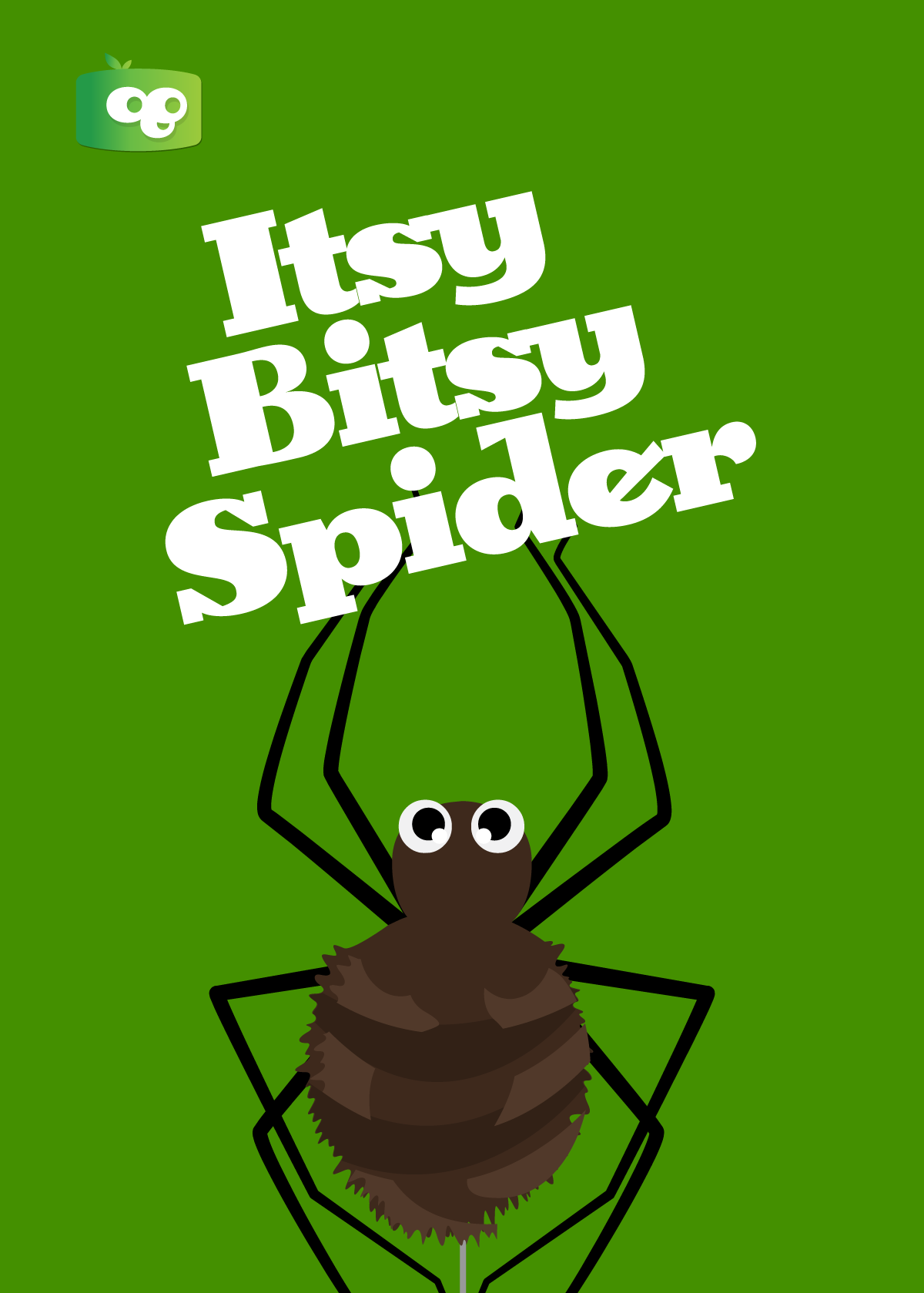
Your kid watches a determined spider climb up a water spout. You get 2 minutes to finish that cup of coffee.
A friendly spider climbs up a water spout, gets washed down by the rain, then waits for the sun to dry things up. Each time, the spider tries again—and your child sees that effort pays off through cheerful, repetitive verses.
What your child learns:
This timeless song teaches foundational concepts through movement and melody. The repetitive structure helps little brains anticipate what comes next while building vocabulary around weather and nature.
- Fine motor coordination through finger-play movements (spider climbing, rain falling, sun shining)
- Weather vocabulary — rain, sun, and their effects on the world
- Persistence and resilience — trying again after getting knocked down
- Sequencing skills — understanding the order of events (climb, rain, sun, climb again)
- Rhythm and memory — learning through musical repetition
They'll use these skills when:
- Trying to zip up their jacket and not giving up when it's tricky
- Noticing rain on the window and predicting when the sun might come back
- Building a block tower that falls down—and starting over with a smile
- Following along with action songs at playgroup or library time
The Story (what keeps them watching)
Meet the Itsy Bitsy Spider—a tiny creature with big determination! Our eight-legged friend has one simple goal: climb to the top of the water spout. But nature has other plans. Down comes the rain and whoosh—spider gets washed right out! Does our little spider give up? Not a chance. When the warm sun dries up all the rain, that spider starts climbing again. And again. And again! Each verse reinforces the same delightful message: setbacks are temporary, but determination is forever.
How We Teach It (the clever part)
- First 30 seconds: The song introduces the spider's journey and the core pattern—climb up, get washed down, try again. Children hear the full sequence for the first time.
- Minutes 1-2: Through cheerful repetition, children anticipate each part of the story. The predictable structure builds confidence as kids start "knowing" what comes next.
- Final 20 seconds: The song completes with one last triumphant climb, leaving children with the satisfying message that persistence pays off.
Teaching trick: The song repeats the entire verse five times—not by accident! Research shows toddlers need 5-7 repetitions to internalize new concepts. By the final verse, your child isn't just listening—they're predicting, singing along, and moving their fingers in rhythm.
After Watching: Quick Wins to Reinforce Learning
- Mealtime activity: "Can you make your fingers climb up your cup like the spider climbs the spout?" (Practices fine motor control and connects the song to real objects)
- Car/travel activity: "Look out the window—is it rainy or sunny? What would happen to the spider right now?" (Reinforces weather vocabulary and cause-and-effect thinking)
- Bedtime activity: "Let's do the spider fingers together—up goes the spider, down comes the rain!" (Calming repetitive movement that reinforces the song's sequence)
- Anytime activity: "Oh no, your blocks fell down! What does the spider do when it falls? Should we try again?" (Connects persistence lesson to real-life challenges)
When Kids Get Stuck. And How to Help.
- "My child doesn't do the hand motions yet." — Totally normal for ages 1-2! They're absorbing the rhythm and words first. Keep modeling the movements yourself, and one day they'll surprise you by joining in. Fine motor skills develop gradually.
- "They want to watch it over and over and over." — This is actually learning in action! Repetition is how toddler brains cement new information. Each viewing strengthens neural pathways. Set a reasonable limit, but know that "again!" means it's working.
- "My child gets upset when the spider falls down." — What wonderful empathy! Use this as a teaching moment: "The spider feels a little frustrated too, but look—here comes the sun! The spider gets to try again." This builds emotional vocabulary and resilience.
What Your Child Will Learn
Prerequisites and Building Blocks
This video is perfect for children just beginning their musical journey—no prior skills needed! It builds on basic listening abilities and introduces finger-play movements that prepare children for more complex action songs. Within the Little Seeds program, this foundational nursery rhyme establishes patterns of repetition and sequencing that support later phonics work, counting songs, and storytelling comprehension. Children who master this song are ready for more complex cause-and-effect narratives.
Cognitive Development and Teaching Methodology
The Itsy Bitsy Spider leverages several evidence-based learning principles ideal for ages 1-4. Repetitive structure supports memory consolidation, while the predictable pattern allows children to anticipate outcomes—a key cognitive milestone. The song addresses multiple learning styles: auditory learners absorb through melody, visual learners watch the action, and kinesthetic learners engage through finger movements. This multi-sensory approach ensures deeper encoding of both vocabulary and concepts.
Alignment with Educational Standards
This video supports early learning standards for language development, fine motor skills, and social-emotional growth. It addresses kindergarten readiness indicators including: following simple narrative sequences, demonstrating persistence, and developing hand-eye coordination. The weather vocabulary (rain, sun) aligns with early science standards for observing natural phenomena. Teachers expect entering kindergartners to know common nursery rhymes—this builds that cultural literacy foundation.
Extended Learning Opportunities
Extend learning with spider-themed counting activities ("How many legs does a spider have?"), weather observation journals, or water play exploring how things get wet and dry. Pair with other Kokotree nature videos about insects, rain, or sunshine. Create a simple paper spider craft to practice fine motor cutting and gluing. Use a real water spout or drain during bath time to recreate the spider's journey—hands-on learning that makes the abstract concrete.
Transcript Highlights
- "The Itsy Bitsy Spider went up the water spout" — Introduces directional vocabulary (up) and the central character's goal
- "Down came the rain and washed the spider out" — Demonstrates cause and effect; weather impacts the spider's progress
- "Up came the sun and dried up all the rain" — Shows natural cycles and problem resolution
- "And the Itsy Bitsy Spider went up the spout again" — Reinforces the persistence message; trying again after failure
Character Development and Story Arc
The spider character models essential growth mindset behaviors without saying a word. Despite repeated setbacks—being washed out by rain again and again—the spider never gives up. This demonstrates persistence, a foundational social-emotional skill for young children. The spider doesn't complain, cry, or quit; it simply waits for conditions to improve and tries again. Children internalize this problem-solving approach: sometimes we need to wait, sometimes things are hard, but we can always try again.
The Science of Persistence: Why "Try Again" Matters for Little Learners
The Itsy Bitsy Spider isn't just a catchy tune—it's a masterclass in resilience for developing minds. Between ages 1 and 4, children are constantly encountering frustration: blocks that won't stack, zippers that won't zip, words that won't come out right. How they respond to these small failures shapes their approach to challenges for years to come.
This song introduces what psychologists call "mastery orientation"—the belief that effort leads to improvement. Each time the spider climbs again, children see that setbacks are temporary and trying again is always an option. The repetitive structure is crucial: it's not a one-time message but a pattern reinforced five times in two minutes.
The weather elements add early science concepts naturally. Rain falls down (gravity!), the sun provides warmth and drying (evaporation!), and these natural cycles repeat predictably. Children begin understanding that the world follows patterns they can observe and anticipate.
Fine motor development happens through the traditional finger-play movements: fingers climbing up, hands wiggling down like rain, arms forming a sun circle. These movements strengthen the small muscles needed for later writing, cutting, and buttoning. The bilateral coordination (using both hands together) supports brain development across hemispheres.
Perhaps most importantly, this song gives children and caregivers shared language for tough moments. When a child struggles with a task, a gentle "What does the spider do?" becomes a powerful prompt for persistence—no lecture required.