
What's Days of the Week About?
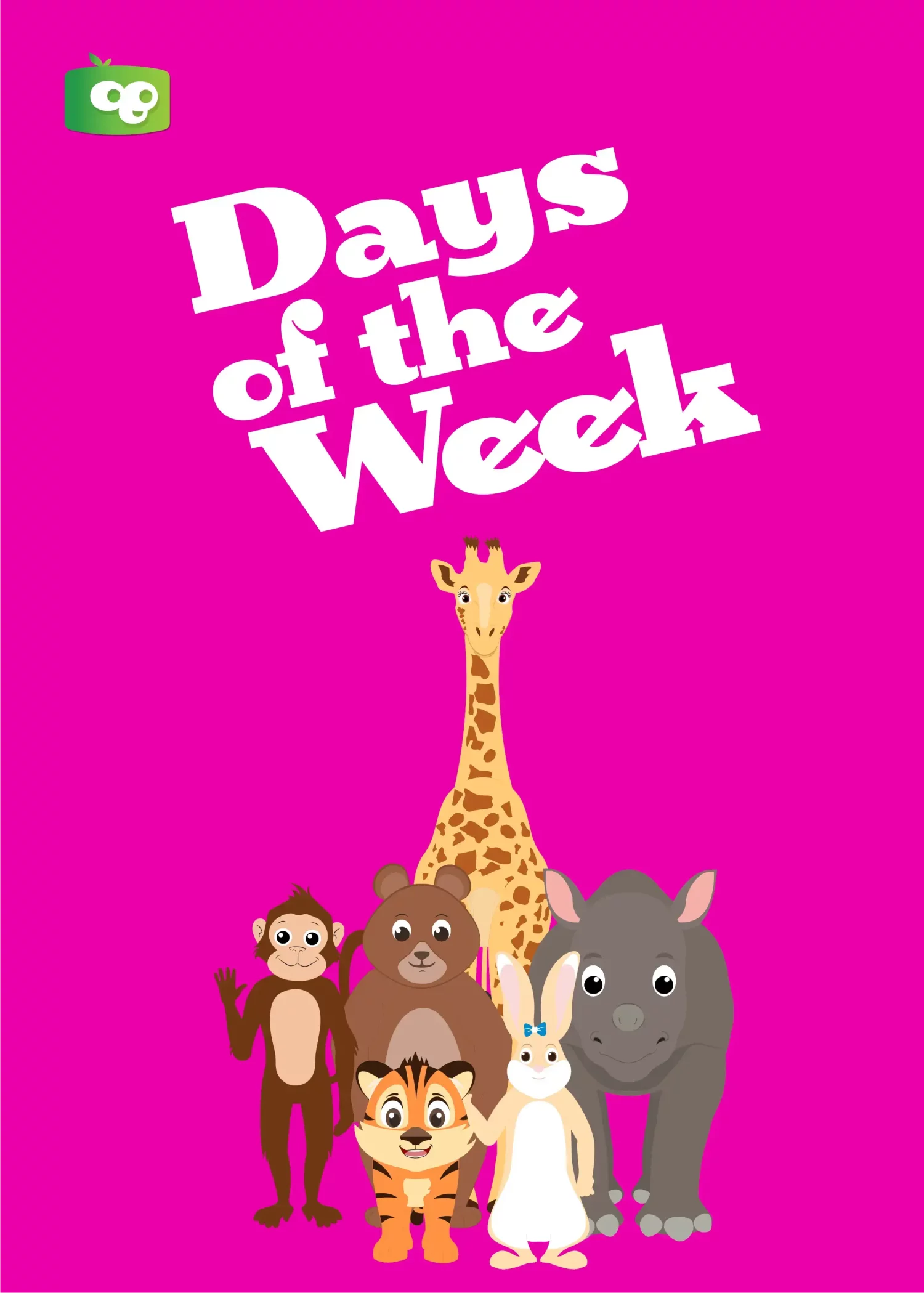
Your little one will sing, clap, and memorize all seven days through catchy repetition and cheerful music! After watching, they'll proudly recite the days in order and understand how the week is structured.
2 minutes
Ages 2-5
Skill: Time concepts and sequential ordering
Your kid watches friendly characters sing the days in order. You get 2 minutes to finish that cup of coffee.
Bright, colorful visuals accompany a catchy song that repeats the seven days of the week multiple times. Each day is introduced both as part of the sequence and with its ordinal position (first, second, third...). The upbeat melody and encouraging prompts like "Let's sing them together!" keep little learners engaged and participating.
What your child learns:
This video builds foundational time awareness by teaching the seven-day weekly cycle through musical repetition. Children learn both the day names and their sequential order, connecting each day to its position (Sunday is first, Monday is second, etc.).
- Names all seven days of the week in correct order
- Understands ordinal positions (first through seventh)
- Recognizes that weeks follow a predictable pattern
- Builds memory skills through musical repetition
- Develops early time and calendar awareness
They'll use these skills when:
- Asking "Is today the day we go to the park?" and understanding your answer
- Following along when you explain weekend plans versus weekday routines
- Anticipating special activities ("Two more days until...")
- Talking with friends about what happened "yesterday" or what's coming "tomorrow"
The Story (what keeps them watching)
This energetic sing-along takes children on a musical journey through the week! The song starts by introducing all seven days in a catchy, memorable sequence. Then it gets clever—teaching that Sunday is the FIRST day, Monday is the SECOND day, and so on through Saturday as the SEVENTH day. The repetition isn't boring; it's strategic! With encouraging calls like "Again!" and "Let's sing them together!" kids feel like active participants rather than passive viewers. By the celebratory "Woohoo!" at the end, most children are already singing along.
How We Teach It (the clever part)
- First 35 seconds: The complete sequence is introduced twice with the catchy "Sunday, Monday, Tuesday..." melody, establishing the pattern through pure repetition.
- Seconds 35-65: The teaching deepens by connecting each day to its ordinal number—"Sunday is the first day, Monday is the second day"—building mathematical thinking alongside calendar knowledge.
- Final 45 seconds: Full participation mode! Children are invited to sing along with two more repetitions, cementing the learning through active engagement.
Teaching trick: By teaching ordinal positions (first, second, third) alongside day names, this video sneaks in early math concepts while building calendar awareness—two skills for the price of one!
After Watching: Quick Wins to Reinforce Learning
- Mealtime activity: "What day is it today? Can you tell me what comes AFTER today?" (Practices sequential thinking and connects learning to real life)
- Car/travel activity: "Let's sing the days song together! I'll start: Sunday..." (Reinforces memorization through repetition in a fun, bonding moment)
- Bedtime activity: "Tomorrow is [day]. What number day of the week is that?" (Connects ordinal numbers to actual days, building anticipation for tomorrow)
- Anytime activity: Create a simple paper chain with seven links, each labeled with a day. Remove one each morning to visualize the week passing. (Makes abstract time concepts tangible)
When Kids Get Stuck. And How to Help.
- "My child always forgets Wednesday and Thursday" - Totally normal! The middle days are trickiest because they lack the "anchor" of beginning or end. Try clapping or stomping on those days specifically to create a physical memory hook.
- "They can sing it but don't know what day TODAY actually is" - The song teaches sequence; real-world application comes next. Start each morning by announcing the day and asking where it falls in the week. Connection takes time!
- "Is this too easy? They already know some days." - The ordinal number teaching (first, second, third) adds challenge! Focus on asking "What NUMBER day is Thursday?" to extend their learning.
What Your Child Will Learn
Prerequisites and Building Blocks
Children benefit from basic counting skills (1-7) and familiarity with the concept of "today" and "tomorrow" before watching. This video builds on early number recognition and introduces ordinal numbers (first, second, third) as a bridge to calendar skills. It fits into a broader time-awareness progression that later includes months, seasons, and telling time. No prior days-of-the-week knowledge is required—this is designed as an introduction.
Cognitive Development and Teaching Methodology
Repetition-based musical learning leverages procedural memory, which is highly developed in young children. The song format activates both auditory and linguistic processing centers simultaneously. By pairing sequential day names with ordinal numbers, the video creates dual encoding—children form two mental pathways to the same information. The call-and-response structure ("Let's sing them together!") shifts children from passive listening to active retrieval practice, dramatically improving retention.
Alignment with Educational Standards
This video addresses Common Core Math standard K.CC.A.1 (counting to 100 by ones) through ordinal number practice and supports kindergarten readiness indicators for calendar awareness. Most early childhood frameworks include "understands basic time concepts" as a pre-K benchmark. Teachers expect incoming kindergarteners to recognize days of the week and understand weekly patterns for classroom calendar routines and schedule following.
Extended Learning Opportunities
Pair this video with printable weekly calendars where children can mark each day with stickers. The Kokotree app includes interactive calendar games that reinforce this learning. Extend beyond the screen by creating a "day of the week" job chart or weather tracker. Drawing activities where children illustrate "what I do on Saturday" versus "what I do on Monday" build personal connections to abstract time concepts.
Transcript Highlights
- "SUNDAY IS THE FIRST DAY, MONDAY IS THE SECOND DAY, TUESDAY IS THE THIRD DAY" - Direct ordinal number teaching connects mathematical concepts to calendar knowledge
- "THESE ARE THE DAYS OF THE WEEK. THE SEVEN DAYS OF THE WEEK." - Emphasizes the complete set and specific quantity
- "LET'S SING THEM TOGETHER!" - Invitation to active participation increases engagement and memory formation
- "WOOHOO!" - Celebratory conclusion creates positive emotional association with learning
Character Development and Story Arc
The enthusiastic vocal delivery models joyful learning and curiosity about everyday concepts. The progressive structure—from listening to singing along—demonstrates how learners move from observation to participation. The encouraging "Again!" and "Let's go!" prompts show persistence and enthusiasm for repetition, teaching children that practicing something multiple times is fun, not tedious. The celebratory ending reinforces that mastering new knowledge is an achievement worth celebrating.
Understanding Time: How Young Children Develop Calendar Awareness
Time is one of the most abstract concepts young children must master, and the days of the week represent their first structured encounter with cyclical time patterns. Unlike counting objects (which children can see and touch), days are invisible units that must be understood through language and routine.
Developmentally, children ages 2-3 begin understanding "now" versus "not now." By ages 3-4, they grasp "today," "yesterday," and "tomorrow" as distinct concepts. The full seven-day sequence typically solidifies between ages 4-5, with ordinal understanding ("Thursday is the fifth day") emerging closer to age 5-6.
This video strategically supports this developmental progression by offering multiple entry points. Younger viewers benefit from the rhythmic repetition and melodic pattern, even if full comprehension comes later. Older viewers gain the ordinal number connection, which builds mathematical thinking.
The circular nature of weeks—Saturday leads back to Sunday—introduces children to cyclical patterns they'll later recognize in months, seasons, and years. This foundational understanding supports executive function skills like planning and anticipation. When a child can think "Grandma visits on Saturdays, and today is Thursday, so that's two more days," they're demonstrating sophisticated temporal reasoning that began with simply memorizing seven words in order.
Musical encoding is particularly effective for sequential information because melody provides a structural "scaffold" that holds the order in place. This is why most adults still sing the alphabet to remember letter order—and why your child will likely sing this days song well into elementary school!