
What's Move, Count, & Smile About?
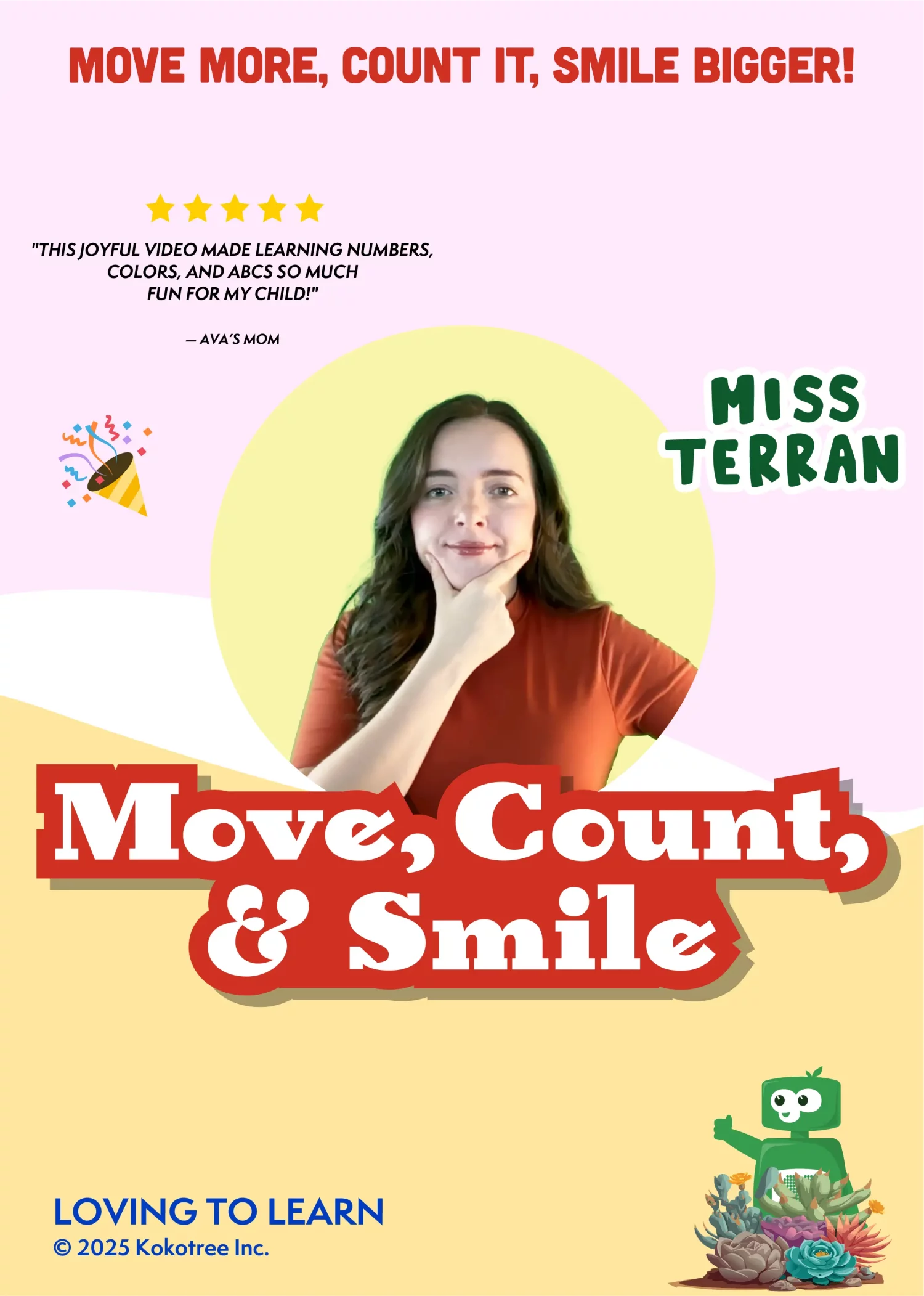
Your child will jump, stomp, spin, and clap alongside friendly animal characters while learning to count, recognize emotions, and follow directions. After watching, they'll be ready to count movements, express feelings, and move their bodies with confidence!
3.5 minutes
Ages 1-4
Skill: Movement, counting, and emotional awareness
Your kid watches animals dance and counts spins to four. You get 3 minutes to drink your coffee warm.
Miss Taryn guides children through fun movements while Eddie the Elephant stomps, Kango the Kangaroo jumps, and Ruby Rabbit spins. Colorful toys appear on screen, and children clap, twist, and celebrate their accomplishments with cheerful encouragement.
What your child learns:
This video combines gross motor movement with early math concepts and emotional recognition. Children practice counting while moving their bodies, making abstract numbers feel real and memorable.
- Counting to four with physical movements
- Identifying happy and sad facial expressions
- Following multi-step movement instructions
- Gross motor skills: stomping, jumping, spinning, clapping, twisting
- Connecting words to actions ("say play" → toys appear)
They'll use these skills when:
- Counting steps while climbing stairs or walking to the car
- Telling you how they're feeling when asked about their day
- Following directions during games at the playground
- Participating in group activities like music class or storytime
The Story (what keeps them watching)
Miss Taryn invites little learners to explore emotions by making happy and sad faces, then the real fun begins! Eddie the Elephant appears and everyone stomps together. Kango the Kangaroo hops in for jumping practice, and Ruby Rabbit leads a counting challenge—spin exactly four times! Children discover the magic word "play" that makes toys appear on screen. The video builds energy through clapping and twisting before celebrating everyone's hard work with enthusiastic praise.
How We Teach It (the clever part)
- First minute: Emotional check-in establishes connection, then stomping with Eddie introduces movement-based learning
- Minutes 1-2: Jumping and spinning build complexity while counting to four adds math practice during Ruby Rabbit's spinning challenge
- Final minute: Word recognition ("play"), rhythmic clapping patterns, and twisting reinforce following directions before a proud celebration
Teaching trick: Each animal models the movement first, giving children a visual example before they try. Counting happens during spinning—making abstract numbers physical and memorable.
After Watching: Quick Wins to Reinforce Learning
- Mealtime activity: "Can you stomp your feet four times like Eddie the Elephant?" (Reinforces counting while waiting for food—burns energy too!)
- Car/travel activity: "Show me your happy face! Now your sad face. How are you feeling right now?" (Practices emotional vocabulary and self-awareness)
- Bedtime activity: "Let's do four gentle claps together before stories. One, two, three, four!" (Calming countdown that reinforces number sequence)
- Anytime activity: "What animal should we move like? Stomp like an elephant or jump like a kangaroo?" (Encourages choice-making and animal recognition)
When Kids Get Stuck. And How to Help.
- "My child won't do the movements, just watches." - Totally normal! Young children often observe several times before participating. Watch together and do the movements yourself—they'll join when ready.
- "They can't count to four yet." - The video uses physical repetition to build number sense. Count out loud together during everyday moments: "One shoe, two shoes!" Counting during movement makes it stick faster.
- "The spinning makes them too dizzy." - Miss Taryn addresses this! Encourage slower spins or substitute with gentle turns. The goal is counting, not speed—adapt movements to your child's comfort level.
What Your Child Will Learn
Prerequisites and Building Blocks
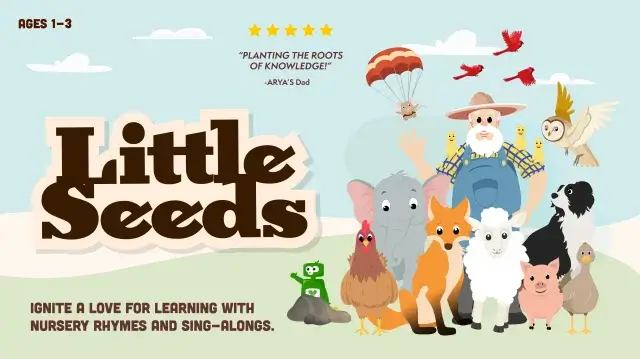
This video is perfect for children just beginning their movement and counting journey. No prior counting skills required—the video introduces numbers through physical repetition. Children benefit from basic ability to stand and move safely. This builds foundational skills for more complex counting videos and movement sequences in the Little Seeds program, preparing learners for number recognition and following multi-step directions.
Cognitive Development and Teaching Methodology
The video leverages embodied cognition—the principle that physical movement strengthens memory formation. For ages 1-4, kinesthetic learning is developmentally optimal because neural pathways are still forming. Visual modeling (animals demonstrating first), auditory cues (counting aloud), and physical participation address all learning styles simultaneously. The call-and-response format maintains engagement while building working memory.
Alignment with Educational Standards
This video supports Head Start Early Learning Outcomes Framework domains including Physical Development and Health (gross motor skills), Mathematics Development (counting and cardinality), and Social-Emotional Development (emotional expression). It addresses kindergarten readiness indicators for counting with one-to-one correspondence and following two-step directions—skills assessed in kindergarten screening.
Extended Learning Opportunities
Pair this video with Kokotree's counting songs and animal recognition activities. Create a simple movement dice game at home—draw animals on paper and roll to see which movement to do. Practice counting other body movements: "How many times can you touch your toes?" Use stuffed animals to recreate the video's animal appearances.
Transcript Highlights
- "Spin four times. One, two, three, four. Stop." — Direct counting instruction with clear start and end points
- "Are you happy? Make a big happy face. Or are you sad? Make a little sad face." — Emotional vocabulary building through facial expression
- "Let's say play and toys will appear on the screen. Ready? Play." — Word-action connection reinforcing language power
- "Be careful. All that spinning makes us feel a little dizzy." — Body awareness and safety consciousness
Character Development and Story Arc
Eddie the Elephant, Kango the Kangaroo, and Ruby Rabbit each model specific movements with enthusiasm, demonstrating that trying new physical challenges is fun and safe. Miss Taryn consistently offers encouragement ("You're such amazing jumpers!") modeling growth mindset language. The characters appear briefly then say goodbye, teaching children that friends come and go—and that's okay. The celebration at the end reinforces effort over perfection.
Movement-Based Mathematics: The Science of Counting Through Motion
Counting through physical movement activates multiple brain regions simultaneously, creating stronger memory traces than passive number exposure. When children spin "one, two, three, four" times, they experience numbers as quantities with real-world meaning—each spin is one unit, and stopping at four demonstrates cardinality (the last number represents the total).
This approach aligns with research on proprioceptive learning, where body position and movement contribute to cognitive understanding. Young children naturally learn through their bodies before abstract thinking develops. By age 2-3, children begin understanding that numbers represent quantities; by age 4, they can typically count objects with one-to-one correspondence.
The video's structure—stomp, jump, spin with counting, then clap in patterns—builds mathematical complexity gradually. Stomping introduces rhythm without counting pressure. Jumping adds energy. Spinning introduces explicit counting to four. Clapping patterns reinforce repetition and sequence recognition.
Gross motor activities also support executive function development. Following directions like "spin four times, then stop" requires working memory (remember the number), inhibitory control (stop at four), and cognitive flexibility (switch from spinning to standing). These executive function skills predict academic success more reliably than early academic knowledge alone.
The emotional check-in at the beginning serves dual purposes: it builds social-emotional vocabulary while also activating the limbic system, which enhances memory formation for the learning that follows.